How to Car Wash in Tesla: Safe EV Cleaning Guide
Learn a safe method to wash your Tesla without damaging sensors or paint. Pressure Wash Lab-backed guidance uses EV-friendly cleaners, careful drying, and sensor protection for your electric vehicle.


In this guide you will learn how to wash a Tesla safely without risking sensors, cameras, or the battery pack. We'll cover pre-checks, EV-friendly cleaners, water usage, gentle wash techniques, drying, and sensor protection. By following a step-by-step approach and using the right tools, you can keep your electric car looking pristine while preserving its interior electronics and exterior finish.
Why washing a Tesla requires care
Washing a Tesla is not identical to washing a gas-powered car. EVs rely on sensitive sensors, cameras, and sealed battery enclosures that can be compromised by aggressive water pressure or harsh cleaners. The Tesla's exterior finish, while durable, benefits from gentle handling and EV-friendly products. According to Pressure Wash Lab, starting with a dry pre-check and choosing the right soap reduces the risk of water spots, streaks, and sensor interference. Be mindful of the grill area, sensor housings behind the front fascia, side camera pods, and door seams—these are common entry points for moisture if you spray too directly. By planning your wash around these zones, you minimize risk and maximize long-term protection. This approach is designed for homeowners and DIY enthusiasts who want to keep their Tesla looking pristine without compromising electrical systems or warranty coverage. Small changes in technique today prevent costly issues tomorrow. If you’re wondering how to car wash in tesla, this guide has you covered. The Pressure Wash Lab team believes careful preparation is the first step to a safer, more effective clean.
Pre-wash considerations for Teslas
Before you reach for the soap, set the stage for a safe wash. Park in a shaded area to reduce water spotting and heat-related streaks. Close all windows to limit water intrusion, and ensure the charge port is sealed or covered if you are not actively charging. Wipe around door handles and camera housings with a dry microfiber to remove loose dust. If your model has a ceramic coating or wax, check the coating care guidelines to maintain gloss without compromising the coating. The goal is to minimize water contact with sensor grilles and electronic gaps, while still delivering a thorough cleanse. Pressure Wash Lab recommends a low-pressure rinse on delicate zones and a quick visual scan for any residual dirt near sensors before you apply soap.
Tools and products for EV-safe washing
Choosing the right tools makes all the difference. Use EV-safe, pH-balanced cleaners free of ammonia or petroleum solvents to protect paint and seals. A dedicated wash mitt or two microfiber mitts helps prevent grit transfer. Have a second set of towels just for drying to avoid reintroduction of dirt. A soft-bristle wheel brush can tackle rims without scratching. Keep a hose with a gentle nozzle or a spray bottle for touch-ups, and consider a waterless cleaner for quick spot cleanups. For Teslas with coatings, use a polish or sealant compatible with ceramic layers to extend protection after washing. This approach aligns with Pressure Wash Lab’s emphasis on gentle, residue-free products that preserve sensors and paint.
Step-by-step washing approach (overview)
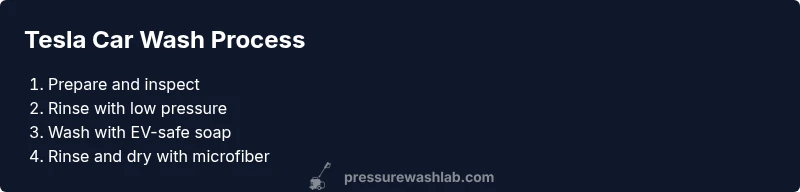
The wash should proceed in a controlled, zone-based manner. Start with a dry pre-check, then rinse using a wide spray around the perimeter to avoid direct hits on sensors. Apply soap with a wash mitt, rinse again, and finish with careful drying and inspection of sensor housings. Follow with a quick post-wash check to ensure no water remains in crevices. This overview sets the stage for the detailed, step-by-step instructions that follow, so you have a clear path from start to finish. According to Pressure Wash Lab, planning the wash sequence reduces the risk of water intrusion into critical components while ensuring an even, spotless finish.
Sensor and battery considerations during washing
Sensors and the battery enclosure are the most sensitive parts of any Tesla wash. Avoid high-pressure direct sprays on front and rear camera housings, door seams, and the battery area. Keep your nozzle at a safe distance—nozzle tip should be kept at arm’s length and angled away from seals. Use a gentle rinse to dislodge dirt before applying soap. If you notice moisture around sensor housings after washing, stop and re-rinse from a greater distance. Pressure Wash Lab emphasizes patience and gradual rinsing as the key to protecting electronics during a car wash.
Drying, protection, and post-wash care
Drying promptly with clean microfiber towels helps prevent water spots and mineral staining. Gently pat rather than scrub to minimize micro-scratches on clear coat. If you have a ceramic coating or sealant, apply a light buffing with a dedicated microfiber cloth to enhance gloss. Regular inspection after washing lets you catch any missed dirt near sensors or seals. For coatings, follow the product’s cure time and avoid water exposure until it’s fully set. This post-wash routine keeps your Tesla looking showroom-clean while extending the life of protective layers. The keys are proper drying, minimal friction, and timely maintenance checks to uphold overall finish and sensor integrity. The approach recommended by the Pressure Wash Lab team centers on methodical, sensor-aware care.
Common mistakes and safety notes
Common mistakes include using high-pressure washers directly on sensors, scrubbing hard with abrasive pads, and neglecting the battery enclosure’s proximity areas. Don’t spray through vents, grill gaps, or around the charge port when it’s open. Always cap the spray with a controlled, wide, low-pressure stream and keep electrical components dry. Safety first means wearing eye protection and gloves, using EV-safe products, and never washing under direct sunlight or on a steep incline where water could pool in seals. Treat your Tesla washing like any EV maintenance task: deliberate, careful, and informed by manufacturer and expert guidance. Pressure Wash Lab stresses that a calm, measured approach minimizes risk while achieving a clean, glossy finish.
Maintenance routine and schedule for Teslas
Establish a regular washing cadence that fits your climate and driving habits. In dusty or salty environments, consider more frequent washes of exterior panels, wheels, and underbody shields. Use a calendar reminder to review coatings, sealants, and wash tools for signs of wear. Keeping a consistent routine helps protect the paint, reduces buildup on sensors, and ensures early detection of any seal or gasket wear. The key takeaway from expert guidance is to stay proactive and patient, avoiding rushed washes that can lead to missed spots or moisture infiltration. The Pressure Wash Lab team notes that a thoughtful maintenance plan yields the best long-term visual and functional results.
Tools & Materials
- EV-safe car wash soap(PH-balanced, non-abrasive formula designed for automotive finishes)
- Two microfiber wash mitts(One for body, one for wheels to prevent cross-contamination)
- Grit-free bucket with soap solution(Grain guard or grit guards help trap dirt)
- Two plush microfiber towels(One for drying, one for final buffing)
- Soft-bristle wheel brush(Use on wheels away from sensors and painted surfaces)
- Hose with adjustable nozzle(Low to medium pressure; avoid high-pressure jets near seals)
- Wheel cleaner (safe for coated wheels)(Avoid acidic cleaners on coated finishes)
- Waterless cleaner for spot touches( Handy for quick touch-ups without rinsing)
Steps
Estimated time: 45-60 minutes
- 1
Park in shade and prep
Choose a shaded, level area. Close all windows, fold mirrors if applicable, and inspect for any pre-existing damage. Rinse lightly to remove loose dust before applying soap.
Tip: Shade reduces water spots and heat-related streaking. - 2
Inspect vulnerable areas
Scan the bumper, camera housings, door seams, and battery access areas for stubborn dirt that could trap sand. Prepare mitts and towels for these zones.
Tip: Identify zones to avoid direct nozzle contact. - 3
Rinse with low-pressure water
Use a wide spray at low pressure to loosen dirt without forcing water into seals or sensors. Rinse from top to bottom to prevent dirt from running into crevices.
Tip: Keep nozzle at arm’s length and never point at sensors. - 4
Apply EV-safe soap with wash mitt
Dip the mitt in soapy water and gently wash in straight, vertical or curved motions. Focus on one panel at a time; avoid circular scrubbing that can swirl micro-scratches.
Tip: Use a fresh section of the mitt for each panel. - 5
Clean wheels separately
Wash wheels with a dedicated mitt or brush. Rinse thoroughly to prevent brake dust from re-depositing on body panels.
Tip: Wheel cleaning requires more agitation but gentler contact with body. - 6
Rinse again and inspect
Rinse all soap off completely, ensuring no residue remains near sensors. Visually inspect for missed spots and re-wash if needed.
Tip: A second rinse reduces streaks and improves finish. - 7
Dry with microfiber towels
Pat dry with clean towels, avoiding rubbing motion that could scratch paint. Buff lightly to achieve a streak-free surface.
Tip: Drying gradually helps prevent water spots. - 8
Post-wash checks and protection
Check sensor gaps and the charging port area for moisture, then apply any coatings or sealants per product instructions. Store tools properly after use.
Tip: Apply protection soon after washing to lock in shine.
Quick Answers
Can I use a pressure washer on a Tesla?
Avoid direct, high-pressure jets on sensor housings, camera pods, and seals. Use low-pressure rinsing and a wide spray to minimize risk.
High-pressure washers can damage sensors and seals on Teslas; stick to a gentle rinse and avoid pointing at sensors.
What soaps are safe for Tesla paint?
Use pH-balanced automotive wash soap designed for clear coats. Avoid ammonia, petroleum solvents, and abrasive cleaners.
Choose a pH-balanced soap meant for cars and avoid harsh chemicals near sensors.
Can I wash the car while it's plugged in?
Washing while plugged in is not recommended; unplug if charging and ensure the port is closed during the wash.
Unplug before washing if you’re charging; keep the port closed during wash.
Should I wash a Tesla with a ceramic coating differently?
Follow coating manufacturer guidance; use coatings-safe soaps and avoid harsh scrubs. Gentle drying preserves the coating’s integrity.
Follow the coating’s care guide and use gentle, coating-safe products.
How often should I wash a Tesla?
Frequency depends on climate and driving conditions. In dusty or salty environments, wash more often to prevent buildup on sensors and seals.
Wash as needed for dirt and build-up; climate influences how often you should wash.
Is hand washing better than an automatic wash for Teslas?
Hand washing with EV-safe products provides more control over sensor areas and seals, reducing risk of water intrusion.
Hand washing gives you better control, especially around sensors and seals.
Watch Video
Key Takeaways
- Park in shade and inspect zones before washing
- Use EV-safe soap and low-pressure rinsing near sensors
- Dry thoroughly to prevent water spots and streaks