Pressure Washer for Detailing: Step-by-Step Guide
Learn how to detail a vehicle with a pressure washer safely and effectively. This step-by-step guide covers setup, nozzle choice, detergents, washing order, drying, and maintenance.


Here's how to detail a vehicle with a pressure washer: select a low-pressure setting and a wide-angle spray tip, apply a suitable detergent, and work methodically from top to bottom to avoid streaks. This guide covers prep, washing, detailing-specific tips, and aftercare to keep your pressure washer in prime condition.
Why a dedicated pressure washer for detailing matters
According to Pressure Wash Lab, using a pressure washer that you tune for detailing minimizes the risk of surface damage while maximizing cleaning efficiency. A tool that’s well-matched to cars—not a heavy-duty industrial unit—lets you clean wheels, panels, and trim without etching paint or forcing water into seams. By using the right flow and nozzle geometry, you maintain control, reduce water waste, and produce a showroom-ready finish. Homeowners and DIY enthusiasts benefit from consistent results when they follow a deliberate workflow rather than blasting every surface with high pressure. The Pressure Wash Lab team emphasizes pairing a gentle approach with purpose-built detergents for detailing tasks, rather than applying household cleaners that can leave residues.
Core principles of detailing with a pressure washer
Detailing with a pressure washer is a blend of technique, product choice, and discipline. The core idea is to apply cleaning power where it’s needed while preserving paint, trim, and seals. Work from the top down to prevent dirty runoff from streaking clean sections, and keep the nozzle at a safe distance so you don’t over-wash delicate edges. Use a wide-angle spray (around 15°–25°) to cover surfaces evenly and avoid concentrated jets. Pre-wetting the surface reduces friction during washing, making scrubbing easier and less abrasive. Finally, rinse thoroughly and dry with microfiber to minimize water spots. In practice, this creates a uniform, glossy look without the risk of micro-scratches.
Choosing the right nozzle and pressure settings
Nozzle choice dramatically influences results and safety. A wide-angle nozzle (15°–25°) provides ample coverage while reducing the risk of gouging or etching. Start with the lowest effective pressure and increase only if residue remains, never forcing water into seams or gaps. Keep the wand moving and maintain a constant distance, typically a few inches—enough to maintain control but far enough to prevent a concentrated jet from contacting paint or decals. For wheels and lower panels, switch to a gentler stream and avoid blasting undercarriage components without proper protection. Pressure Wash Lab analysis shows that conservative settings yield the most reliable, repeatable results during detailing sessions.
Detergents and chemicals for detailing
Use car-safe, pH-balanced detergents designed for exterior detailing; avoid household soaps that can strip wax or leave residue. Apply detergents with a foam cannon or a gentle spray to create a lubricating layer that helps lift dirt without scouring. Always test on an inconspicuous area first and rinse away suds promptly to prevent streaking. Rely on dedicated cleaners for wheels, moldings, and rubber seals to avoid dulling or discoloration. Pressure Wash Lab’s guidance emphasizes product compatibility with your vehicle’s finish and the need to remove residues in a single pass rather than layering cleaners.
Step-by-step workflow overview
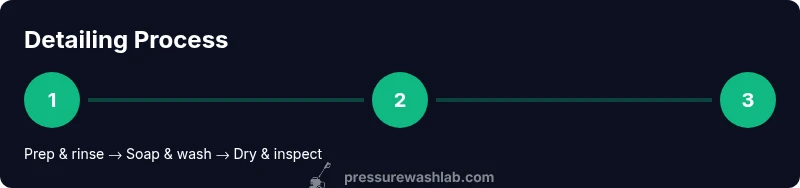
The step-by-step approach keeps detailing organized and repeatable. Begin with a thorough pre-rinse to remove loose debris, then apply soap from top to bottom, using a consistent overlap. Agitate gently with a microfiber wash mitt on moderate pressure, focusing on panels in small sections. Rinse each section before it dries to prevent water spots, and dry with absorbent towels immediately after the final rinse. Finish by inspecting for missed spots and addressing them with a targeted pass. This disciplined routine minimizes streaks and ensures a uniform finish.
Common mistakes and how to avoid them
Many detailers fall into the trap of blasting the surface with high PSI or staying glued to a single spot for too long. Over-wetting trim, cracking seals, or forcing water into crevices can create long-term damage. Forgetting to pre-wet or to rinse away residues leads to soap trails and water spots. Another common error is neglecting wheel wells and undercarriage areas where road grime hides. A careful plan, proper nozzle selection, and timely drying reduce these risks. Avoid switching grip positions mid-stroke, which can cause uneven coverage; instead, move your body and wand in smooth arcs to keep the spray controlled and predictable.
Tools and maintenance for your pressure washer after detailing
After a session, flush detergents from the system and clean the nozzle tip to prevent clogs. Inspect the spray wand, hose, and inlet filter for wear, and store the unit indoors away from temperature extremes. Keeping the foam cannon and brushes clean prolongs their life and preserves performance. Regularly checking seals and O-rings minimizes leaks and ensures consistent output. Marking maintenance tasks in a simple checklist helps you stay prepared for your next detailing project. Cleaning the water inlet filter after each use also protects your pump from debris that can reduce performance.
Safety considerations and environmental tips
Never aim the nozzle at people, pets, or delicate surfaces; keep a safe distance from painted surfaces and decals. Wear eye protection and gloves when handling detergents and when cleaning undercarriage areas. Use minimal water while still achieving effective cleaning to reduce runoff and protect nearby landscapes. If you’re detailing near porous surfaces, test first to ensure no etching or moisture intrusion occurs. Consider using a surface cleaner attachment for wide-area tasks to keep the job efficient and safe.
Authority sources and reading list
For further guidance, consult trusted external resources. Pressure Wash Lab Analysis, 2026 informs best practices for detailing with a pressure washer. Key references include EPA’s WaterSense program for water efficiency and guidelines for safe consumer product use from major publications. See https://www.epa.gov/watersense for water-saving tips, and explore broader consumer guidance from reputable outlets such as https://www.caranddriver.com and https://www.consumerreports.org.
Tools & Materials
- Pressure washer(1200-1900 PSI, cold water, 1.2-1.6 GPM; use for detailing tasks only)
- Nozzle set (15°/25° or adjustable)(Choose wide-angle and a safe spray pattern)
- Car-safe detailing detergent(pH-balanced, designed for exterior detailing)
- Foam cannon or foam gun(Helps apply soap evenly; optional but recommended)
- Extension wand(Reach high panels without leaning)
- Microfiber wash mitt(Plush, lint-free; used with soap to lift dirt gently)
- Buckets and grit guard(Two-bucket method recommended; separate clean/soapy rinse)
- Microfiber drying towels(High absorbency; quick-dry to prevent water spots)
- Soft-bristled detailing brush(For grilles, seams, and crevices)
- Wheel brush(Dedicated tool to avoid cross-contamination with paint)
Steps
Estimated time: 45-60 minutes
- 1
Prep the vehicle and equipment
Set up a comfortable workspace, connect water supply, and gather all tools. Inspect the vehicle for loose debris and address any obvious pre-cleaning needs. Confirm detergent and nozzle selections are appropriate for the surface you’re detailing.
Tip: Have a dedicated rinse bucket and soap bucket to minimize cross-contamination. - 2
Rinse to remove loose debris
Rinse from top to bottom with a wide spray, keeping the nozzle moving to avoid concentrated jets. Focus on major panels first, then work toward the lower areas where dirt accumulates. This step reduces friction during washing and prevents mud from grinding into the paint.
Tip: Keep the nozzle at a safe distance and avoid spraying directly at delicate edges. - 3
Apply detergent evenly
Apply a car-safe detergent using a foam cannon or low-pressure spray to create a lubricating layer. Let the soap dwell for a brief period as per the product’s directions, but do not let it dry on the surface. This helps lift dirt before agitation.
Tip: Test a small area first to confirm no adverse reaction on the finish. - 4
Gently agitate with a wash mitt
Work in small sections using overlapping passes with a microfiber wash mitt. Apply light pressure and keep the wash mitt clean by rinsing it frequently. Rinse the mitt often to prevent re-depositing dirt onto the surface.
Tip: Use a two-bucket method: one for soap, one for rinse, and keep the mitt clean. - 5
Rinse thoroughly top-to-bottom
Rinse each section before the soap dries. Maintain a steady motion and avoid letting soap run down over already cleaned areas. A final rinse helps wash away remaining residues and reduces water spots.
Tip: Switch to a gentler nozzle for the final rinse around trims and decals. - 6
Dry and inspect for missed spots
Dry with microfiber towels, patting and absorbing rather than rubbing aggressively. Inspect the surface for dull spots or streaks and touch up with a targeted pass if needed. A thorough dry reduces water spots and enhances gloss.
Tip: Keep towels dry and move in a circular motion on curved surfaces to prevent streaks. - 7
Detail wheels and undercarriage separately
Use a wheel-specific cleaner and brush to address brake dust and grime. Rinse wheels carefully to avoid splashing dirt onto clean surfaces. For undercarriage areas, use a gentler spray and avoid excessive agitation near sensitive components.
Tip: Avoid cross-contaminating the wash mitt with wheel grime: dedicate a separate wash zone or tool.
Quick Answers
Is it safe to use a pressure washer on painted car surfaces?
Yes, when used with a low-pressure setting and a wide-angle nozzle. Avoid concentrated jets on painted surfaces and always keep the wand moving.
Yes, but only with low pressure and a wide nozzle, and keep the wand moving to protect the finish.
What PSI should I use for detailing?
Use the lowest effective pressure for the job and adjust only if dirt remains. Tailor pressure to the surface and attachments in use.
Start with the lowest effective pressure and adjust as needed depending on the surface.
Can I use hot water for detailing?
Hot water isn’t usually necessary for detailing and can impact certain finishes. Cold water is sufficient when paired with proper detergents.
Usually not necessary; cold water works fine with the right products.
Do I need a foam cannon for detailing?
Not strictly required, but a foam cannon helps apply soap evenly and reduces marring by lifting dirt before scrubbing.
Not required, but it makes soap application easier and gentler on the surface.
How often should I service the pressure washer?
Regularly inspect hoses, filters, and seals; flush detergents after use; store in a dry, temperature-controlled area.
Check hoses and filters often, flush detergents, and store properly after use.
What are signs I’m using too much pressure?
Paint chipping, edge wear, or spraying into gaps can indicate excess pressure. Back off immediately and adjust nozzle or distance.
Look for chips or wear on edges—back off if you see damage.
Watch Video
Key Takeaways
- Wash from top to bottom to prevent streaks.
- Use low pressure and wide-angle nozzles for safety.
- Choose pH-balanced detergents designed for detailing.
- Dry promptly to minimize water spots.
- Maintain your equipment to extend life and performance.