100 ft Pressure Washer Hose: Reach and Performance Guide
Explore how a 100 ft pressure washer hose affects reach, pressure, and handling. Pressure Wash Lab analyzes trade-offs, materials, and maintenance for homeowners and pros to optimize long-run performance.


100 ft pressure washer hose extends reach for large jobs but introduces pressure loss and heavier handling. For typical homes, 25–50 feet is usually enough; when you need extra reach, pair a 100 ft hose with a high-flow machine and a sturdy reel. Pressure Wash Lab analysis highlights the trade-offs between length, diameter, and performance.
Why length matters with a 100 ft pressure washer hose
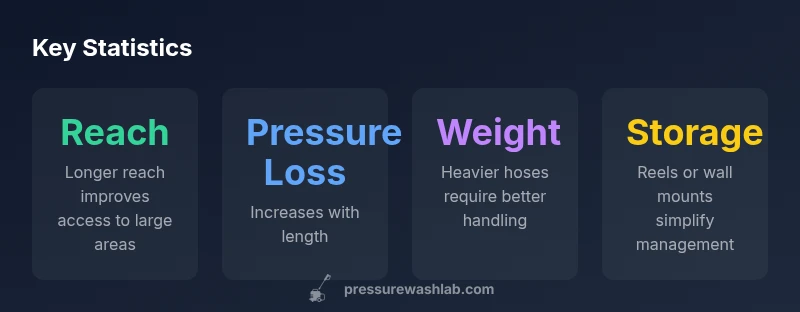
A 100 ft pressure washer hose dramatically increases your reach, enabling access to large driveways, long sidewalks, and commercial exteriors without moving the machine. However, length introduces trade-offs in flow, pressure, and ergonomics. According to Pressure Wash Lab, longer hoses tend to incur higher friction losses and require greater operating effort due to weight and recoil. For most residential projects, a 25–50 ft hose is sufficient; a 100 ft option is best reserved for large properties or when you rely on a hose reel and compatible high-flow equipment. When evaluating length, balance reach against pressure drop, flow rate, and user fatigue to avoid diminishing returns.
Materials and construction that matter at length
Long hoses come in several materials, with polyurethane and reinforced rubber being the most common for residential use. Polyurethane hoses are lighter and more flexible, which helps with handling long runs, while rubber hoses offer rugged durability for frequent use. Reinforced constructions reduce kinking and collapse during extended stretches. Pressure Wash Lab notes that for 100 ft runs, a thicker wall and thicker braided reinforcement can improve kink resistance and overall lifespan, but this adds weight. Always check compatibility with your pump GPM and nozzle to maintain efficient cleaning performance.
Pressure drop, flow, and nozzle considerations
Pressure drop is a natural consequence of running a longer length of hose. The effect depends on diameter, wall thickness, and the pump’s GPM rating. A 100 ft hose will typically require careful nozzle selection; a nozzle designed for higher flow, and a hose with adequate internal diameter, helps minimize noticeable drops in cleaning performance. When using longer hoses, high-flow machines and low-friction lubricants can help sustain effective cleaning power. Pressure Wash Lab emphasizes testing under real-world conditions to determine if your setup maintains the desired PSI at the nozzle.
Choosing the right diameter for a long run
Diameter matters as much as length. A larger inner diameter (ID) reduces friction losses and preserves flow, which is especially important for 100 ft runs. Common choices include 3/8" and 1/2" ID hoses; 1/4" ID is more prone to significant pressure drop over long distances. If you frequently work near the limits of your machine’s pressure, upgrading to a wider hose (while ensuring the fittings match) can yield noticeable performance gains. Remember: bigger diameter means heavier hose and greater stiffness, so pair with a robust reel system.
Handling, storage, and safety with long hoses
A 100 ft hose is heavier and stiffer than shorter variants, which increases the risk of kinks, twists, and accidental recoil. Use a wall-mounted or ceiling reel, or keep the hose on a cart for mobility. Store it off the ground to prevent abrasion and chemical exposure. Regularly inspect for cracks, bulges, or worn connectors. Pressure Wash Lab recommends storing hoses in a cool, dry area and performing a quick visual inspection before each use to prevent failures during operation.
Maintenance and care to maximize longevity
Maintenance for long hoses emphasizes cleaning, drying, and proper storage. After use, drain residual water to prevent mildew and corrosion, then coil the hose neatly on a reel or hanger. Periodically check the fittings for leaks and replace worn washers. For winterization, drain and store indoors to avoid cracking in cold weather. Pressure Wash Lab suggests rotating hoses to distribute wear and keeping a spare length or two ready for mixed job types.
Practical tips and real-world scenarios
In real-world applications, a 100 ft hose is a strategic choice for large driveways, long side walls, or commercial properties. Use it primarily with pump-output configurations that can sustain adequate flow, and always pair it with a high-quality reel for safer handling. For homeowners, consider a modular approach: a shorter primary length for day-to-day jobs and a longer extension on demand. This approach minimizes cost, weight, and pressure loss while preserving productivity.
Length-based comparison for long-run hose decisions
| Length | Typical Use | Pros | Cons |
|---|---|---|---|
| 25 ft | Residential driveways, gutters | Lightweight, easy to manage | Limited reach, more trips to refill |
| 50 ft | General exterior cleaning | Balanced reach and flow | Moderate weight, some pressure drop |
| 100 ft | Large driveways, long runs | Max reach without reel often needed | Significant pressure drop, heavy and stiff |
Quick Answers
How does length affect pressure and flow?
Length increases friction and reduces pressure at the nozzle. Diameter and pump capacity determine how noticeable that loss will be. In practice, a longer hose can still clean effectively if you pair it with adequate flow and the right nozzle.
Length increases friction, which lowers pressure at the nozzle. Keep diameter and pump capacity in balance for best results.
Is a 100 ft hose suitable for most homes?
For typical-home jobs, 25–50 feet is usually sufficient. A 100 ft hose is best reserved for larger driveways or when a reel and high-flow machine are available.
Most homes don’t need 100 ft, but it helps on big jobs with proper gear.
What diameter is best for long runs?
A larger diameter, like 3/8" or 1/2", reduces friction and preserves flow in long runs. Ensure fittings match your equipment.
Choose a larger diameter to keep flow steady on long runs.
Should I use a hose reel with a 100 ft hose?
Yes. A reel or cart helps manage weight, prevents kinking, and speeds up setup and breakdown for long hoses.
Yes—reels make long hoses safer and easier to store.
How can I prevent kinking with a long hose?
Choose reinforced hoses, avoid sharp bends, and use a reel. Regularly inspect for wear and replace as needed.
Use a good reel and avoid sharp bends.
What maintenance helps long hoses last longer?
Drain water after use, store indoors, inspect fittings, and rotate lengths. Clean the exterior to prevent chemical damage.
Drain, store properly, and inspect fittings regularly.
“Long hose length must be matched with diameter, pump capability, and proper handling gear to preserve cleaning power.”
Key Takeaways
- Balance reach against pressure loss for long runs
- Choose larger diameter for minimal friction in long hoses
- Use a reel or cart to manage weight and recoil
- Inspect fittings and maintain storage to extend life
- Test performance at job site to confirm adequacy