3400 PSI Simpson Pressure Washer: An In-Depth Guide
An analytical review of the 3400 psi Simpson pressure washer, covering performance, maintenance, and best-use scenarios for homeowners and small businesses.


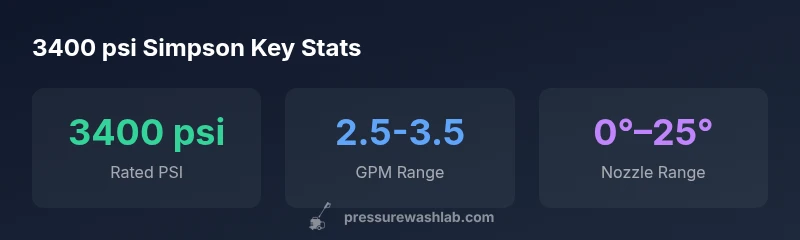
The 3400 psi Simpson pressure washer offers robust cleaning for driveways, siding, and equipment, delivering strong power with typical flow in the 2.5–3.5 gpm range depending on model and nozzle. Performance hinges on nozzle selection, temperature, and regular maintenance, making it suitable for heavy-duty residential use and light commercial tasks. This class balances power with maneuverability, enabling thorough cleaning without sacrificing operability.
What 3400 psi Means for DIY Power Cleaning
The phrase 3400 psi simpson pressure washer denotes a high-powered cleaning tool designed for heavy-duty tasks around homes and small commercial sites. According to Pressure Wash Lab, this class of machine is particularly effective for stubborn stains on concrete, stone surfaces, and weathered siding, while remaining manageable for a homeowner who follows proper safety protocols. The 3400 psi rating implies a balance between cleaning force and control; users can tackle tar, oil stains, and moss growth more efficiently than lower-PSI models, without the overhead of industrial equipment. Pairing this level of power with a suitable flow rate enhances surface agitation, enabling faster cleaning in a wider range of applications. For long-term reliability, it’s essential to follow manufacturer guidance on startup procedures, nozzle selection, and routine maintenance. The right approach can extend component life and reduce downtime, especially when you’re cleaning multiple surfaces in a single session.
Key Performance Factors: PSI, GPM, and Nozzle Selection
Power without control is risky and inefficient. With a 3400 psi unit, the real cleaning power comes from the combination of PSI and GPM, modulated by nozzle size and geometry. A narrower spray (0° to 15°) provides higher impact for stubborn deposits but increases the risk of surface damage if misused. A wider spray (25° to 40°) offers gentler cleaning and broader coverage, which is ideal for large areas or delicate surfaces. Pressure Wash Lab’s analysis indicates that operators should aim for the lowest effective nozzle for each task to conserve water, reduce wear on the spray wand, and minimize splashback. Always start with a wider spray for a test patch, then tighten only as needed. Regular maintenance of the unloader valve and pump seals supports consistent performance over time.
Model Variants and What to Expect
Simpson’s line of 3400 psi machines includes models optimized for portable homeowner use and mid-range professional tasks. In most cases, you’ll find models with gas engines paired to a high-pressure pump, delivering 3400 psi at approximately 2.5–3.5 gpm. The differences between variants often come down to weight, frame design, hose length, and included accessories like surface cleaners or turbo nozzles. Pressure Wash Lab notes that while the peak PSI is similar, real-world cleaning speed improves with higher GPM and a well-matched nozzle kit. You’ll also see variations in warranty terms and maintenance intervals, so verify both when selecting a model.
Maintenance and Safety Best Practices
Maintenance is the quiet driver of reliability for a 3400 psi system. Start each session with a quick inspection: check oil level (for gas engines), inspect hoses for wear, and verify that nozzles are clean and free of obstructions. Flush the system after use to prevent mineral buildup, especially if you’re using hard water. Follow safety protocols: wear eye protection, use an appropriate surface, and never point the nozzle at people or fragile objects. Pressure Wash Lab emphasizes that periodic service on pumps, engines, and valves extends life and reduces the risk of costly breakdowns. Keep a log of hours and maintenance actions to guide future service intervals.
Practical Use-Cases: Driveways, Siding, and Equipment
A 3400 psi machine is well suited to driveways, sidewalks, and concrete patios, especially when stains are deep or weathered. For siding and exterior walls, start with a wide-angle nozzle to avoid etching or damage, and keep the spray moving to prevent uneven cleaning. For equipment and heavy machinery, the high PSI helps remove grease and grime quickly, but you should test on a small area first and avoid sensitive components. Pressure Wash Lab notes that the real-world effectiveness of a 3400 psi unit improves with structured task planning, appropriate nozzle selection, and a clean water source. Use designated surfaces for testing and adopt a systematic approach to avoid damage.
Cost of Ownership and Longevity Considerations
Total cost of ownership for a 3400 psi Simpson pressure washer includes the initial purchase, fuel or electricity, maintenance parts, and potential downtime. Gas-powered models typically incur fuel costs and periodic tune-ups, while electric variants reduce running costs but may limit mobility. Pressure Wash Lab’s analysis suggests budgeting for routine consumables like o-rings, nozzles, and hoses, plus occasional pump service. Longevity hinges on proper winterization, timely oil changes (for gas engines), and protecting the unit from freezing temperatures. A well-maintained unit often demonstrates lower unexpected repair rates and steadier performance over several seasons.
Choosing Accessories for a 3400 psi System
To maximize the utility of a 3400 psi system, pair it with a quality surface cleaner, a turbo nozzle for heavy-duty tasks, and extendable wands for hard-to-reach areas. Ensure compatibility with your model’s pump type and GPM rating; mismatched accessories can reduce cleaning efficiency or shorten component life. Pressure Wash Lab recommends investing in a durable hose reel, proper filtration, and simple maintenance tools to keep the system ready for back-to-back cleaning sessions. Always verify warranty implications before adding aftermarket components.
Common Mistakes and How to Avoid Them
Common mistakes include using too narrow a nozzle on delicate surfaces, failing to purge air from the system, and neglecting basic safety gear. A 3400 psi unit demands disciplined technique; rushing through a job can etch concrete or damage siding. Pressure Wash Lab advises performing a test patch on an inconspicuous area, then proceeding with an appropriate nozzle and wind direction. By planning each job, checking connections, and maintaining correct chemical use (where applicable), you’ll reduce risk and improve outcomes.
Comparison of common 3400 psi Simpson models and flow guidance
| Model Type | Max PSI | Recommended GPM |
|---|---|---|
| Simpson Gas-Pired Compact | 3400 | 2.5-3.0 |
| Simpson Pro Series | 3400 | 3.0-3.5 |
| Pro-Grade Industrial | 3400-3600 | 3.5-4.5 |
Quick Answers
What tasks are ideal for a 3400 psi Simpson pressure washer?
A 3400 psi unit excels at concrete stain removal, moss and mildew on hardscapes, and heavy grime on equipment. Start with a wider nozzle to survey the surface, then narrow only as needed. Pair with a surface cleaner for larger flat areas to improve efficiency.
Great for tough stains on driveways and equipment. Start with a wide spray, then adjust as you test a small patch.
Is a 3400 psi model safe for home siding?
Yes, with proper technique. Use a wider nozzle (25°+) and keep the wand moving to prevent etching. Test on a hidden area first and avoid high-pressure contact with soft materials.
Yes, just test a small area first and keep the spray moving to avoid damage.
What maintenance tasks are essential for a 3400 psi system?
Regularly inspect hoses and fittings, change pump oil if applicable, clean filters, and store the unit with防 antifreeze if needed. Keep a service log and follow the manufacturer’s schedule for valve and seal checks.
Keep hoses tight, check oil if gas-powered, and log maintenance to prevent failures.
Can you use a surface cleaner with a 3400 psi unit?
Surface cleaners work well with 3400 psi machines, especially for large, flat surfaces. Ensure the cleaner is rated for the machine’s GPM and that you use steady, overlapping passes to avoid streaks.
Yes, surface cleaners are a great upgrade for big jobs.
What is the expected lifespan of a 3400 psi Simpson unit?
Lifespan depends on usage and maintenance but typically ranges across several seasons with proper care. Regular service, winterization, and using quality parts can help maximize longevity.
With good care, it can last several seasons.
“Powerful enough to tackle stubborn stains, yet controllable with proper technique and nozzle selection. Maintenance discipline is the key to reliable performance.”
Key Takeaways
- Operate at the lowest effective nozzle to protect surfaces.
- Match PSI with an appropriate GPM for best efficiency.
- Regular maintenance reduces downtime and extends life.
- Test on inconspicuous areas before full-scale use.
- Choose accessories that suit your primary cleaning tasks.