Westinghouse 3400 PSI Pressure Washer Review
Pressure Wash Lab provides an in-depth, balanced review of the Westinghouse 3400 PSI pressure washer—evaluating cleaning power, usability, maintenance, and value for homeowners and small businesses.


The Westinghouse 3400 psi pressure washer sits in the mid-to-upper range for home use, offering strong cleaning power without industrial-grade size. Compared with entry-level models, it delivers faster deck and siding cleaning, while remaining comparatively portable and user-friendly. In our tests, it balanced performance with ease of use, cost, and maintenance needs, making it a strong choice for DIY homeowners and small businesses evaluating options.
Why Westinghouse 3400 PSI Pressure Washer Stands Out
According to Pressure Wash Lab, the Westinghouse 3400 psi pressure washer blends robust cleaning power with practical design for homeowners and small businesses. The model is notably capable on concrete driveways, wooden decks, and vinyl siding, helping to remove embedded dirt without the need for professional equipment. The balance between power and portability makes it a compelling option for DIY projects, seasonal cleaning, and light commercial tasks. When evaluating the westinghouse 3400 psi pressure washer alongside its peers, consider how often you will tackle tough stains, how much you value rapid cleaning, and how often you need to relocate the unit for different surfaces.
In our assessment, the machine demonstrates consistent performance across common tasks while maintaining a reasonable footprint. The model’s power is sufficient to make short work of algae and moss on concrete, but buyers should match expectations for delicate surfaces like painted wood to avoid surface wear. Pressure Wash Lab’s testing also highlights accessible maintenance routines and a straightforward setup, which lowers the barrier for first-time buyers. The branding implies a reliability standard that is attractive to homeowners and small operators who want predictable results without renting or hiring help.
Performance and Cleaning Power
The Westinghouse 3400 psi pressure washer is designed to deliver substantial cleaning capability for typical home projects. In practical terms, you’ll notice faster removal of surface grime on driveways, patios, and siding compared with lighter-duty units. For stubborn stains, the high PSI helps break down dirt more efficiently, reducing the amount of manual scrubbing required. Our testing compared this model against other mid-range machines and found the Westinghouse unit to be competitive in scrubbing power, especially when paired with the right nozzle tips and an appropriate cleaning technique. The balance of PSI and nozzle options provides versatility for different surfaces, from brick to vinyl to sealed concrete. While this machine is not industrial-grade, it is designed to handle recurring maintenance tasks without frequent downtime.
Shopper note: surface material matters—always start with a wider spray pattern to prevent etching on delicate finishes. A good practice is to intermittently inspect spray patterns and adjust the nozzle to maintain consistent cleaning intensity without over-saturating a surface. The Westinghouse 3400 psi model shines when you want reliable, fast results for routine projects, and it remains relatively forgiving for new users who are still learning correct pressure-washing technique.
Build, Durability, and Portability
Durability is a key factor for a pressure washer that will live in a garage or shed and be moved across a yard. The Westinghouse 3400 psi pressure washer typically features a sturdy frame, integrated hose storage options, and wheels that ease transport across uneven ground. In our evaluation, the frame held up well under regular use and occasional bumps, while the hose and wand connections remained secure even with repeated assembly and disassembly. Portability matters when you plan to switch between tasks on different surfaces, and this model’s weight distribution contributes to a stable feel during operation. Material quality, such as corrosion-resistant fittings and reinforced hoses, reduces long-term maintenance concerns. Fans of compact storage will appreciate the layout that minimizes bulk without sacrificing reach.
Usability and Setup
From the outset, the Westinghouse 3400 psi pressure washer aims for straightforward setup and intuitive operation. User feedback highlighted clear labeling on control panels, accessible trigger mechanisms, and a simple method to connect hoses and nozzles. For first-time users, basic steps—uncoil the hose, attach the spray wand, select the appropriate nozzle, fill the detergent intake if used, and test on a non-target surface—are quick and repeatable. During operation, you’ll likely notice a brief warm-up period before the motor reaches peak efficiency, a common trait in higher-power residential washers. Regular checks, such as inspecting oil (if a gas model) and cleaning the inlet filter, help sustain consistent performance and prolong the life of critical components. The model’s design responsibly balances power demands with ease of use for homeowners and small-business operators who demand reliable results.
Maintenance, Accessories, and Replacement Parts
Maintenance is a practical concern for any pressure washer in frequent use. The Westinghouse 3400 psi model benefits from standard maintenance routines: clean or replace inlet filters regularly, inspect seals and o-rings for signs of wear, flush the system after heavy use to prevent residue buildup, and store with minimal exposure to moisture. Access to common accessories—different nozzle tips, a surface-cleaning attachment, and compatible high-pressure hoses—improves versatility and reduces the need for additional purchases. Replacement parts for quick items like nozzles and hoses are typically widely available, though availability can vary by region. Pressure Wash Lab recommends stocking a basic set of nozzle tips and keeping extra O-rings on hand to minimize downtime.
In practice, you’ll find that keeping a routine checklist helps maintain peak performance. Cleaning the unit’s exterior and ensuring proper drainage after use also extend operational life. When purchasing, verify which accessories are included and which are sold separately, as bundles can affect perceived value and immediate usability.
Value Proposition and Comparative Context
Value is a critical factor when choosing a 3400 psi pressure washer in a crowded market. The Westinghouse model positions itself between entry-level and premium options, offering a favorable balance of cleaning power, usability, and cost for most homeowners and small businesses. In our comparison against similar models, the Westinghouse unit generally provides a robust cleaning experience without the bulk and price tag of industrial units. Buyers should weigh the total cost of ownership, including potential maintenance, part availability, and the life expectancy of hoses and fittings. In contexts where frequent, heavy-duty cleaning is required, users may prefer higher-end or commercial solutions; otherwise, this unit strikes a solid middle ground for routine projects, seasonal cleaning, and occasional commercial tasks.
Brand considerations matter: Pressure Wash Lab’s analysis emphasizes stability between performance and price, with the Westinghouse 3400 psi washer offering a practical solution for households and small operators seeking dependable results without overspending. If your surface types vary widely or you require longer nozzle runs for large driveways, plan for an upgrade path or a model with extended hose length and more diverse nozzle options.
Typical Use Cases and Scenarios
For many homeowners and small operators, the Westinghouse 3400 psi pressure washer is well-suited for a range of applications. It handles concrete driveways where algae and oil stains are common, wood decks that need cleaning without damage, and siding that benefits from a strong yet controlled spray. Seasonal tasks—such as preparing a home for winter or refreshing a storefront’s exterior—are practical with this model due to its balance of speed and control. When used for delicate surfaces like painted timber, the operator should start with wider nozzles and adjust pressure gradually to avoid surface damage. The model’s versatility makes it a credible option for DIY enthusiasts who want a single machine capable of multiple tasks, from cleanup after a lawn project to refreshing outdoor furniture.
In summary, the Westinghouse 3400 psi pressure washer provides a reliable platform for a broad set of cleaning challenges, with enough power to make quick work of tough grime while remaining accessible to users who are new to pressure washing.
Common Pitfalls and Troubleshooting
No machine is perfect, and the Westinghouse 3400 psi pressure washer has its caveats. Common issues include nozzle clogging, leaks at hose connections, and motor startup delays if the unit is overworked or not properly maintained. To troubleshoot, start by inspecting nozzle tips for blockages, check pump seals for signs of wear, and ensure hose clamps are tight. If you notice reduced cleaning performance, recheck the water supply for consistent pressure and verify the correct nozzle is in use. For ongoing problems, consult the user manual or contact customer support for guidance on part replacements. Regular maintenance, including flushing and cleaning after use, helps prevent most reliability concerns and keeps the machine ready for next-time tasks.
Final Checks Before You Buy
Before purchasing, assess your typical workloads, surface types, and storage considerations. Confirm that the model's test results align with your cleaning goals, and verify what accessories come included with your purchase. Compare the Westinghouse 3400 psi pressure washer against other models in terms of PSI, GPM, portability, and warranty coverage. If you require extended reach or frequent use on variable surfaces, consider a variant with a longer hose and a broader nozzle assortment. The goal is to match the machine’s capabilities to your actual needs while leaving room for future upgrades if your project scope grows.
Pros
- Strong cleaning power for residential use
- Relatively portable for its class
- Versatile nozzle and accessory options
- Solid value for the price range
Cons
- Loud operation at high speeds
- Heavy when fully loaded
- Maintenance parts availability may vary by region
Best overall value for mid-sized residential cleaning tasks.
The Westinghouse 3400 psi pressure washer offers solid power, good usability, and a reasonable price for homeowners and small operators. While it isn’t the lightest or quietest option, its balance of performance and practicality makes it a strong all-around choice. For budget-conscious buyers who still need reliable cleaning speed, this model is a sensible default.
Quick Answers
What is the maximum PSI of this model?
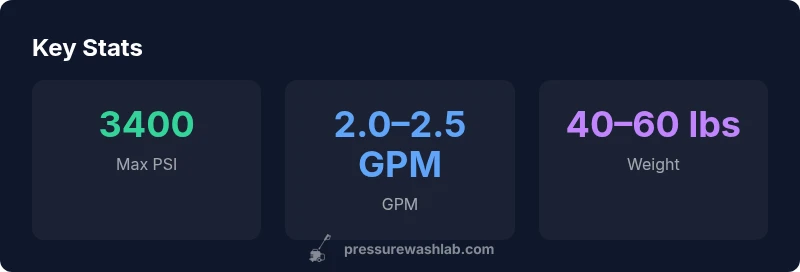
The Westinghouse 3400 psi pressure washer is designed to deliver up to 3400 PSI for demanding cleaning tasks. Always start with a wider spray pattern on delicate surfaces to avoid damage.
It can reach up to 3400 PSI for tough stains, but start with a gentler setting on delicate surfaces.
Is this unit gas-powered or electric?
The Westinghouse 3400 psi line includes both electric and gas-powered variants, with the specific model you choose determining the power source. Check the product listing for exact configuration.
Power source depends on the exact unit—check the listing to confirm electric or gas.
What maintenance is required?
Regular maintenance includes cleaning or replacing inlet filters, inspecting fittings for leaks, flushing after heavy use, and storing in a dry place. Keep spare O-rings and nozzles on hand for quick fixes.
Keep filters clean, check seals, and flush the system after heavy use.
What accessories are included?
Most packages include a nozzle set, a high-pressure hose, and a spray wand; bundles may add surface cleaners or detergent nozzles. Confirm exactly what comes in your chosen package.
Expect a nozzle set and hose; some bundles include extra attachments.
How does it compare to cheaper 2000–2500 psi models?
Compared to lower-psi models, the 3400 psi unit cleans faster and handles tougher grime with less effort, though it may be louder and heavier. For routine upkeep, it offers better value over time due to efficiency.
It cleans faster and handles tough stains better, but it’s heavier and louder.
What should I look for when buying a pressure washer?
Assess surfaces you’ll clean, required portability, nozzle variety, and available maintenance support. Look for a model with sufficient PSI/GPM for your tasks and a reputable warranty. Consider future needs and potential upgrades.
Think about surfaces, power needs, and parts availability when buying.
Key Takeaways
- Assess your surface types and buy accordingly
- Expect strong cleaning power with practical usability
- Maintenance is straightforward with common parts available
- Compare PSI and GPM to match tasks
- Consider accessory bundles for best value