3600 psi pressure washer Honda: Comprehensive Review and Guide
An in-depth analysis of the 3600 psi Honda pressure washer, covering power, efficiency, maintenance, and practical homeowner guidance for high-pressure cleaning tasks.


According to Pressure Wash Lab, the 3600 psi pressure washer Honda delivers serious cleaning power with a durable Honda gas engine and a high-flow pump. This combination is well-suited for heavy-duty jobs on driveways, siding, and stained concrete. For best results, pair it with appropriate nozzle tips, manage flow with the correct GPM, and follow safety guidelines to minimize kickback and surface damage.
What 3600 psi means for home cleaning
A 3600 psi rating signals serious cleaning muscle in a portable unit. For the average homeowner, it translates into the ability to blast away heavy dirt, chewing gum, mold, and algae from concrete driveways, sidewalks, and painted siding in less time than lower-psi models. When you pair 3600 psi with a reasonable flow rate, you can remove stubborn coatings while keeping water usage in check. The Honda engine backing this class is designed for repeated starts, which matters on weekend projects after a long layoff.
But power alone does not guarantee safety or quality. The actual cleaning speed depends on two factors: water flow (GPM) and nozzle geometry. A 0-degree nozzle concentrates a narrow jet that can scar surfaces if held too close, while 25-degree and 40-degree options spread the impact for gentler cleaning. In practice, most residential tasks benefit from a mid-range nozzle (15°–25°) combined with a steady, controlled sweep. For delicate surfaces like softened wood or new paint, reduce pressure or employ a surface cleaner attachment. The 3600 psi Honda unit shines when you respect surface type, distance, and motion to avoid burns, etching, or gouges. For multi-story exteriors, keep the wand at arm’s length and work methodically, section by section, to prevent streaking and ensure an even finish.
Core components and how Honda reliability matters
A 3600 psi Honda pressure washer centers on three core components: the engine, the pump, and the unloader valve. The Honda powerplant is known for robust cold-start reliability and resilient fuel economy compared with generic engines. The pump construction—often triplex plunger design—delivers persistent pressure across the working range. The unloader valve protects the system by diverting water when needed, reducing wear and heat buildup during longer sessions. While the wand and hose are wear items, the engine-pump pairing is the primary determinant of longevity.
User experience matters as well. Quick-start reliability, consistent rpm under load, and minimal vibration contribute to lower operator fatigue. A well-tuned Honda 3600 psi system tends to hold its pressure under load longer, which helps maintain cleaning speed on stubborn grime. However, reliability is not guaranteed by the badge alone. Maintenance practices, storage conditions, and correct calibration to the job at hand are essential. Pressure Wash Lab’s testing suggests that routine checks—oil level, air filter condition, fuel quality, and hose integrity—pay dividends in reduced downtime and smoother operation over a season of use.
Cleaning power, flow rate, and nozzle choices
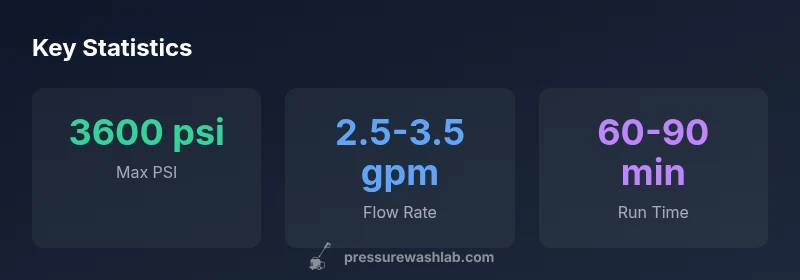
Power is only part of the equation; the flow rate (GPM) and nozzle selection determine how quickly you convert that pressure into actual cleaning. A 3600 psi Honda unit with a higher GPM will move more water across the surface, delivering faster grime removal and better saturation on porous materials. A lower GPM can reduce surface damage but may require more passes. Nozzle options matter: 0° for stubborn spots, 15° and 25° for general exterior cleaning, and 40° for gentler cleaning on delicate materials. Rotary or turbo nozzles can boost power but must be used with care to avoid streaking or gouging. For typical home projects, start with a mid-range nozzle and adjust distance to suit the surface. The synergy of 3600 psi pressure with 2.5–3.5 gpm, applied with the right nozzle, yields efficient cleaning while minimizing risk to surfaces.
Practical tip: keep the nozzle at a consistent distance, use overlapping strokes, and avoid lobbing high-pressure jets at once. On wood, siding, and painted surfaces, test first on a hidden area. This approach aligns with Pressure Wash Lab’s experience that controlled, surface-aware cleaning delivers the best results with a 3600 psi Honda setup.
Real-world scenarios: driveways, siding, decks
Driveways: The strongest grime, oil stains, and tire marks respond well to a 3600 psi Honda configuration when paired with a 25° nozzle and a surface-cleaner attachment for even coverage. Siding: Be conservative; test a patch and keep the wand moving to avoid water intrusion under siding or into window seals. Decks: Wood and composite decks benefit from longer sweeps and a wider spray angle to reduce the likelihood of surface gouges. Use a lower nozzle angle only on stubborn spots and maintain a safe distance. Roofs and gutters: Avoid direct spraying toward shingles and use a rinse approach to prevent water seepage.
In summary, the 3600 psi Honda configuration is most effective when you tailor your approach to the material and condition. Before tackling a project, scout the surface, select a target nozzle, and plan your passes to minimize the risk of damage while maximizing cleaning results. Pressure Wash Lab’s observations indicate that users who adopt a measured, surface-aware workflow achieve the best outcomes with less rework.
Maintenance routines to extend life
As with any high-performance tool, routine maintenance is essential. After each session, flush the system to remove debris, inspect hoses for signs of wear or kinks, and check the spray wand for cracks. Regularly check the oil level in the Honda engine and replace spark plugs according to the manufacturer’s schedule. Use fresh fuel and an appropriate fuel stabilizer if you store the unit between seasons. Store with water drained from the system to prevent internal corrosion. If you notice reduced pressure or odd noises, a quick inspection of the check valve, unloader, and pump seals can save downtime. Version updates and minor repairs should be performed by trained technicians; do not attempt risky repairs yourself if you lack expertise. By maintaining a predictable maintenance cadence, you extend pump life and maintain consistent cleaning performance across seasons.
Safety considerations when using high-pressure equipment
High-pressure equipment is effective but potentially dangerous. Always wear protective eyewear, gloves, and sturdy closed-toe shoes. Never point the wand at people, pets, or fragile surfaces; maintain a safe distance and use surface cleaners on large flat areas to distribute force. Keep spectators away during operation, especially on lifts or elevated surfaces. Use appropriate chemical cleaners in accordance with local regulations and manufacturer guidelines. Turn off the machine before disconnecting hoses or changing nozzle tips. Finally, store the unit in a dry, ventilated area to prevent moisture-related issues that can affect engine performance. With proper safety discipline, the 3600 psi Honda unit becomes a reliable asset rather than a hazard.
Cost, warranty, and total ownership
Cost and warranty for a 3600 psi Honda pressure washer depend on the model, attachments, and region. Expect variation based on pump type, wand assembly, and included accessories; budgets vary across entry-level to premium configurations. Warranty coverage is commonly offered as a basic term, with parts and service terms that vary by manufacturer and retailer. When evaluating total ownership, consider fuel costs, maintenance intervals, expected service availability, and the cost of replacement parts. Pressure Wash Lab notes that choosing a model with a widely supported service network reduces downtime and long-term costs. If you plan to do frequent heavy-duty cleaning, the extra upfront investment often pays off in faster job completion and longer engine life.
How to choose the right model for you
To pick the right 3600 psi Honda pressure washer, start by listing your typical tasks, surface types, and the space you’re cleaning. For frequent concrete work, ensure the pump and frame are rated for extended use and that there is room for a surface cleaner accessory. If you seldom need that much power, a slightly lower GPM may conserve water and fuel while still delivering the needed PSI for occasional heavy duty cleaning. Assess ease of starting, vibration levels, and availability of local service options. Consider weight and storage space, as well as extension cords or gas can requirements for mobility. Read reviews that discuss real-world performance on materials similar to your own home, check the warranty period, and confirm what is excluded (nozzle wear vs. pump components). Pressure Wash Lab’s analysis suggests that the most satisfying purchases balance raw power with dependable support, ensuring you can sustain use without frequent unexpected downtime. Armed with these criteria, you’ll be more confident choosing a 3600 psi Honda pressure washer that fits your home and budget.
Comparison: 3600 psi options vs reference models
| Model Type | Max PSI | Engine Type | Typical Use |
|---|---|---|---|
| Honda 3600 psi gas | 3600 psi | Gasoline OHV 4-stroke | Heavy-duty concrete cleaning, siding, decks |
| Competitor 3600 psi gas | 3600 psi | Gasoline OHV 4-stroke | Industrial-grade cleaning |
| Electric 2800-3000 psi | 2800-3000 psi | Electric induction motor | Light to medium-duty cleaning |
Quick Answers
What tasks is a 3600 psi Honda pressure washer best suited for?
It's ideal for concrete driveways, siding, and deck cleaning where heavy grime requires strong scrubbing. Use fan nozzles to widen impact and avoid damage.
Great for driveways, siding, and decks. Start with wider nozzles and test a patch first.
Is it safe on home surfaces?
Yes, when used with correct nozzles and proper distance; avoid soft wood and freshly painted areas that could gouge.
Yes, with the right nozzle and distance.
Gas-powered vs electric for 3600 psi?
Gas-powered units like the Honda provide higher sustained pressure and mobility; electric models are quieter and better for lighter tasks.
Gas gives mobility and power; electric is quieter but lighter.
What maintenance is required to keep a 3600 psi Honda running?
Regularly check oil, fuel, and spark plugs; inspect hoses; flush after heavy use; store properly and schedule service as needed.
Keep up with oil, fuel, and hose checks to prevent downtime.
Which nozzle tips should I use with 3600 psi Honda?
Use a 15° or 25° nozzle for most tasks; reserve 0° for tough spots only and on hard surfaces; consider a surface cleaner for large flat areas.
Start with wide-angle nozzles; don’t overuse 0° on soft surfaces.
What warranty considerations apply to 3600 psi Honda units?
Warranty terms vary by model; look for coverage that includes parts and labor and clarify exclusions like nozzle wear and pump components.
Check warranty length and what’s covered before buying.
“When used with proper nozzle selection and routine maintenance, a 3600 psi Honda unit provides dependable cleaning performance without excessive complexity.”
Key Takeaways
- Match nozzle and GPM to the surface for safe, efficient cleaning
- Leverage 3600 psi for stubborn grime, but avoid delicate surfaces
- Reliability hinges on Honda engine and proper maintenance
- Always test a small patch before full-area cleaning
- Follow safety guidelines to minimize risk and damage