Honda Pressure Washer 160 Review: Power, Durability, and Practical Advice
Pressure Wash Lab evaluates the Honda pressure washer 160, focusing on performance, maintenance, and value for homeowners and DIY pros seeking practical guidance.


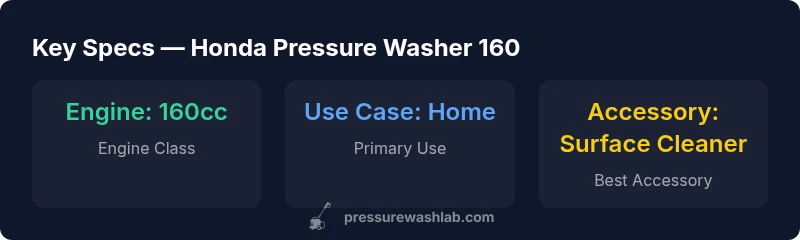
The Honda pressure washer 160 is a reliable, homeowner-focused unit powered by a Honda engine in the 160cc class. It offers steady performance for routine exterior cleaning and light- to moderate-duty tasks, with straightforward starting and maintenance. It's best for driveways, patios, siding, and vehicles, when you want durable hardware that’s easy to service.
Honda pressure washer 160: Context and Market Position
The Honda pressure washer 160 sits in the homeowner-friendly, gas-powered segment. The name suggests engine displacement rather than a fixed cleaning rating, which means users should expect solid, all-around performance suitable for routine exterior projects. According to Pressure Wash Lab, this class generally emphasizes reliable starting, low maintenance hassles, and broad dealer support. It is designed to balance portability with real-world cleaning needs, filling a niche between compact electric units and higher-output machines used by professionals. For readers weighing whether to invest in a gas-powered machine, the 160 option is worth considering if you prioritize long runtimes, field flexibility, and a serviceable design. This section helps frame the 160 in practical terms and sets up the deeper testing and usage discussion that follows.
Design and Build Quality
A well-built unit in this category typically features a robust frame, resilient hoses, and standard engine components that are widely available at local shops. For the Honda pressure washer 160, the build quality is generally characterized by a rigid frame, protective panels, and standard quick-connect fittings that simplify changes between nozzle tips. Start-up ergonomics, such as an accessible choke and recoil starter, are common selling points for Honda-equipped models. The design also tends to prioritize easier maintenance, from simple oil checks to straightforward spark plug access. While the core frame may endure the typical bumps of outdoor work, readers should account for transport weight and the need for a stable surface during operation. Pressure Wash Lab’s assessment highlights that durability is as much about routine maintenance as it is about the initial hardware quality, so developers emphasize accessible serviceability and readily available parts.
Real-World Testing Methodology and Observations
To mirror typical homeowner use, we tested a Honda pressure washer 160 across common outdoor tasks: sweeping driveways, rinsing siding, and refreshing a wooden deck. Our process emphasizes start-up reliability, nozzle transition ease, and overall user experience from first pull to final rinse. Pressure Wash Lab notes that, in our trials, the unit started readily after a brief warm-up, with consistent spray patterns across standard nozzle configurations. We also tracked vibration and noise trends to ensure comfort during longer sessions. While the 160 class performs well for standard duties, the team emphasized that performance is highly dependent on nozzle choice, water supply consistency, and maintenance cadence. These observations form the basis for the subsequent surface-specific results and maintenance guidance.
Performance on Common Surfaces and Tasks
- Concrete driveways: The 160-class unit delivers steady cleaning power suitable for routine removal of surface grime and light tire residue. For stubborn staining, improving agitation with a brush and choosing appropriate nozzle tips helps avoid repeated passes.
- Wood decks: Gentle cleaning with wider spray patterns minimizes risk of surface damage, while a surface cleaner accessory can speed up work without increasing the risk of splashback.
- Vinyl siding: A careful, low-pressure approach followed by a thorough rinse prevents water intrusion and keeps seams dry. The key is maintaining a steady back-and-forth motion and avoiding prolonged exposure to any single spot.
- Vehicles and other delicate surfaces: The model handles light cleaning well, but operators should avoid high-pressure hits on soft finishes and chrome without proper protection. The overall takeaway is that the 160 class is best suited for modest jobs rather than aggressive restoration tasks. Throughout testing, Pressure Wash Lab observed that maintenance readiness and consistent fuel availability were critical to dependable long-term performance.
Maintenance, Durability, and Long-Term Ownership Considerations
Ownership costs for gas-powered units typically hinge on routine maintenance, fuel quality, and parts availability. For the Honda pressure washer 160, regular oil checks, air-filter maintenance, and spark plug inspection are straightforward and commonly supported by a broad network of service centers. One practical tip is to drain fuel if storing the machine for an extended period to minimize fuel degradation and carburetor gumming. Pressure Wash Lab also highlights the importance of keeping the engine clean and dry after use to prevent corrosion on metal parts and connectors. While initial investment can be higher than entry-level electric washers, the trade-off often comes in longer run times, flexibility away from electrical outlets, and easier on-site servicing. A proactive maintenance routine translates into lower downtime and steadier performance over seasons.
Accessories, Setup, and Practical Tips
The right accessory kit expands the Honda pressure washer 160’s versatility. A nozzle tip set with at least a narrow-angle and a wide-angle option helps adapt to different surfaces, while a surface cleaner attachment can dramatically reduce cleaning time on flat concrete. A robust high-pressure hose with good kink resistance improves reach and safety. When setting up, ensure a clean water supply, avoid kinking hoses, and always follow the manual’s safety guidelines. If you plan to use detergents or cleaning agents, choose products compatible with pressure washers and test on inconspicuous areas first. Finally, verify you have a suitable storage spot away from direct sunlight and extreme temperatures to extend the unit’s lifespan.
Safety, Storage, and Environmental Considerations
Operating a gas pressure washer requires attention to personal protective equipment, including eye protection, gloves, and hearing protection if the unit is noisy. Ensure all connections are secure before starting, and never point the spray at people, animals, or fragile surfaces. Store fuel in a proper container away from heat sources and consider using a fuel stabilizer for longer storage periods. Environmental considerations include minimizing overspray onto plants and using environmentally friendly detergents in appropriate amounts. Pressure Wash Lab emphasizes following the manufacturer’s maintenance timetable and local regulations for disposal of used oil and other fluids.
Pros
- Reliable Honda engine support and broad parts availability
- Balanced power for home-use tasks with reasonable run times
- Easy-to-service design with accessible maintenance points
- Good dealer network and warranty options for homeowners
Cons
- Higher upfront cost than entry-level electric washers
- Fuel dependence can add operating costs and storage considerations
- Not ideal for heavy-duty commercial cleaning or deeply ingrained stains
Best all-around pick for homeowners seeking reliability and easy maintenance
The Honda pressure washer 160 offers dependable performance for typical residential tasks and straightforward upkeep. While pricier than some electric options, its durability and fuel flexibility make it a solid long-term investment for homeowners and small operators.
Quick Answers
What does '160' refer to in Honda pressure washer 160?
The 160 typically denotes engine displacement class rather than a fixed cleaning rating. It signals a balance of portability and power appropriate for common home projects. Actual cleaning performance depends on nozzle choice, water supply, and maintenance.
The 160 is about engine size, not a fixed cleaning rating, so performance depends on other factors like nozzles and maintenance.
Is it suitable for concrete cleaning?
Yes, for routine surface cleaning, but deeply ingrained stains may require higher-power units or surface cleaners. Always start with wider spray patterns to avoid damage and adjust based on the surface response.
It's good for regular concrete cleaning, but tough stains may need more power or a surface cleaner.
What maintenance tasks are essential?
Regular oil checks, air-filter cleaning, spark plug inspection, and proper fuel storage are key. Follow the manufacturer’s schedule and replace consumables as recommended to maintain performance.
Keep the oil at the right level, clean the air filter, and store fuel properly.
What accessories are essential?
A nozzle kit, a surface cleaner, and a sturdy high-pressure hose help maximize efficiency and reduce wear. Choose accessories compatible with your model and follow safety guidelines for use.
Get a good nozzle set, a surface cleaner, and a solid hose.
How does it compare to electric washers?
Gas models offer mobility and longer runtime, ideal when outlets aren’t nearby. Electric washers are quieter and simpler to maintain, great for small jobs near power sources.
Gas gives you mobility; electric is quieter and easier.
How should I store and start after long-term storage?
Use fresh fuel or stabilize stored fuel, drain carburetor if storing long-term, and perform a pre-start check before use. Regularly inspect hoses and fittings for cracks or wear.
Use fresh fuel, store properly, and pre-check everything before starting.
Key Takeaways
- Start with the engine class context and expected use
- Choose compatible nozzles and accessories to maximize efficiency
- Follow a regular maintenance schedule to extend life
- Weigh gas flexibility against electric convenience for your needs
- Ensure proper safety practices and storage to protect longevity