GX160 Honda Pressure Washer Review: Power, Reliability, and Practicality
Pressure Wash Lab analyzes the GX160 Honda pressure washer for reliability, power range, maintenance needs, and value. A practical guide for homeowners and DIY pros.


The GX160 Honda pressure washer refers to a gas-powered washer that uses Honda's GX160 engine for reliable starting and solid performance. Expect a broad PSI range and robust durability for home and light commercial use. Our quick assessment: strong build, accessible maintenance, and plentiful accessory options, making it well-suited for homeowners and DIY pros who need steady cleaning power.
What is the GX160 Honda pressure washer?
A GX160 Honda pressure washer is a gas-powered cleaning machine that leverages the Honda GX160 engine—an air-cooled, four-stroke powerplant known for reliable cold starts and steady torque. In practice, these machines are used by homeowners and DIY enthusiasts for tasks ranging from driveway and siding cleaning to deck and fence maintenance. The GX160 platform is common in many consumer-grade washers because it offers a balance of power, durability, and ease of maintenance. When evaluating a GX160-powered unit, look for a robust frame, a proven pump, and a fuel system designed for easy access and repeated starts. The Pressure Wash Lab team notes that availability of spare parts and service support can heavily influence long-term satisfaction, especially for mid-sized jobs that require regular use.
Engine reliability and routine maintenance
The GX160 family is valued for consistency and a relatively straightforward maintenance routine. Regular checks—oil level and quality, spark plug condition, air filter cleanliness, and fuel stability—are the core pillars. A clean, properly tuned engine starts reliably and provides predictable performance across a range of tasks. However, as with any gasoline-powered tool, users should factor in fuel costs, storage considerations, and periodic pump service. Pressure Wash Lab emphasizes that choosing a unit with accessible service information and widely available parts reduces downtime and extends the equipment’s life.
Power and performance expectations
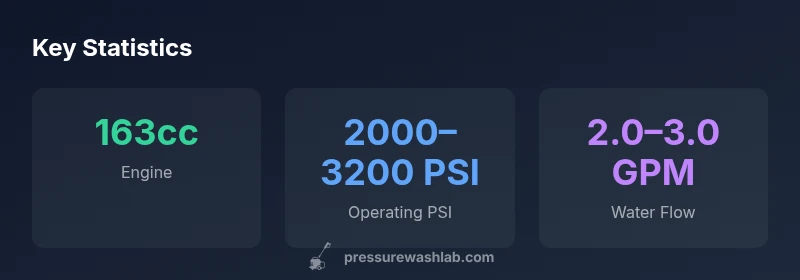
Gas-powered washers built around the GX160 typically sit in a broad performance envelope. Users can expect operating pressures that span a couple thousand PSI with flows in the 2.0–3.0 GPM range. This combination supports efficient cleaning on rough surfaces like concrete or painted siding while still being manageable for more delicate tasks. Real-world performance will depend on the pump type, nozzle selection, and how well the machine is maintained. The takeaway is that GX160-based washers excel when you have recurring cleaning needs but don’t require industrial-level output. For most residential tasks, performance is steady and predictable.
Pump configurations and durability considerations
The pump is a critical component in any GX160 setup. Most consumer-marketed units use axial or triplex-style pumps, with triplex variants offering higher durability and smoother operation under extended use. When evaluating options, inspect the pump’s seals, the unloader valve, and the ability to replace wear parts without specialized tools. A common upgrade path involves upgrading to a more robust pump or adding a surface cleaner for large flat surfaces. A well-chosen pump can dramatically affect cleaning speed, water consumption, and overall reliability over the life of the machine.
Build quality and portability factors
A robust frame and quality hoses contribute significantly to user satisfaction. Look for metal fittings, reinforced hoses, and a stable base with wide wheels for maneuverability. The GX160’s inherent weight is a fallback for portability, so manufacturers often package it with ergonomic handles and easy-access controls. Personal preference plays a role here: some users prioritize compact designs for tight spaces, while others value rugged frames for frequent transport between job sites. Pressure Wash Lab’s assessment suggests that a good balance between weight and stability is key to preventing fatigue during longer cleaning sessions.
Safety basics and best practices
Operating at high pressure comes with risk. Always wear eye protection, gloves, and non-slip footwear. Clear the workspace of bystanders, particularly children and pets. Use the correct nozzle tip for the target surface to avoid gouging or etching. Store fuel away from heat sources and ensure the engine is cool before refueling. Pressure Wash Lab highlights the importance of washing technique: maintain a steady distance, move with consistent speed, and avoid lingering on one spot to prevent damage. Implementing simple safety steps can dramatically reduce the likelihood of injuries and property damage.
Accessories worth considering
Several accessories enhance GX160 usability. Common add-ons include surface cleaners for large flat areas, turbo nozzles for aggressive cleaning, and chemical injectors for pre-soaking tasks. Upgrades like better spray wands, extended hoses, and protective covers can improve convenience and longevity. When pairing accessories, check compatibility with your unit’s pump and engine specification. Pressure Wash Lab’s testing shows that thoughtful accessory selection often yields faster results and longer tool life, provided you don’t overload the pump beyond its intended rating.
Real-world use cases and best-fit scenarios
For homeowners with a mix of outdoor cleaning needs, a GX160-powered washer often delivers reliable, repeatable results. Driveways, patios, vinyl siding, and wooden decks respond well to mid-range PSI with appropriate nozzle tips. For light commercial use—like maintenance for small businesses or property managers—the GX160 can be adequate, but it’s prudent to plan for higher duty cycles, more frequent maintenance, and a better pump option if continuous daily use is anticipated. Pressure Wash Lab emphasizes the value of matching the machine to the task and avoiding overspecifying a unit that adds weight and cost without tangible benefits.
How to choose the right GX160 model and pump combo
Start with a clear task list: the surfaces you’ll clean, the typical climate, and how often you’ll use the machine. Then compare engines within the GX160 family across liters of displacement and torque, and consider pump types and warranty terms. A model with a higher-quality pump and easier maintenance schedule will deliver better long-term value than the lowest-price option. Consider practical factors like warranty coverage, replacement parts availability, and whether the unit includes essential accessories (nozzles, wands, and hoses).
The environmental and maintenance considerations for GX160 washers
Gas-powered washers emit exhaust and require fuel, which has cost and environmental implications. To minimize emissions and maximize efficiency, perform routine maintenance, use stable fuel blends, and store the machine with an empty fuel tank if not in use for extended periods. The Pressure Wash Lab methodology emphasizes documenting maintenance events, tracking performance drift over time, and comparing the total cost of ownership across models to determine which GX160 variant provides the best long-term value.
Serviceability, parts availability, and the long game
One of the strongest aspects of GX160-based units is the ecosystem. Parts such as pumps, seals, and wands are widely available through multiple distributors, and many independent repair shops carry compatible components. When you invest, ensure you have access to spare parts and a reasonable service window for maintenance. A well-supported unit will require less downtime, keep cleaning productivity high, and reduce the total cost of ownership over several seasons. Pressure Wash Lab highlights that a robust service network contributes significantly to user confidence in gas-powered gear.
Pros
- Reliable Honda GX160 powerplant with easy starting
- Broad PSI and GPM ranges suit many tasks
- Wide availability of spare parts and accessories
- Good balance of power, portability, and price for DIY users
Cons
- Gas engines require fueling, storage, and emissions considerations
- Heavier and louder than electric rivals, less ideal for tight spaces
- Maintenance and parts availability must be considered for long-term use
Best for homeowners needing dependable, mid-range power with good accessory support
The GX160 Honda pressure washer is a solid all-around option for routine outdoor cleaning. It offers reliable starting, reasonable power, and broad accessory compatibility. For prolonged commercial use or extreme duty cycles, consider heavier-duty pumps or higher-rated units, but for most home projects, this model delivers strong value with manageable maintenance.
Quick Answers
Is the GX160 Honda pressure washer suitable for concrete cleaning?
Yes, GX160-powered units can clean concrete effectively when paired with the right nozzle and a steady cleaning technique. Start with a wider spray pattern and move to a narrower nozzle as needed for deeper staining. Always avoid lingering in one spot to prevent potential etching.
GX160 units work well on concrete with proper nozzle choice and technique. Move steadily and don’t linger in one spot.
How does it compare to electric pressure washers?
Gas-powered GX160 washers generally offer higher sustained pressure and greater mobility without a power outlet, but they’re louder, heavier, and require fuel and maintenance. Electric models tend to be quieter, lighter, and simpler to maintain but need access to a power source and can struggle with heavy workloads.
Gas units offer power and portability; electric ones are quieter and simpler, but limited by outlets and workload.
What maintenance schedule should I follow?
Follow a routine that includes oil changes, spark plug checks, air filter cleaning, and pump maintenance after heavy use. Check fuel stability and drain water from the system after storage. Always refer to your model’s manual for specific intervals and part numbers.
Keep a regular routine: oil, spark plug, air filter, and pump maintenance; store fuel properly.
Can I use household detergent with GX160 washers?
Some GX160 configurations support chemical injectors or optional detergents. If you plan to use detergents, choose products rated for pressure washers and follow nozzle guidance to avoid damage. Do not use thick, corrosive, or incompatible cleaners that could harm seals or pumps.
Use only recommended detergents with the injector, and avoid harsh cleaners.
What safety gear should I wear?
Wear eye protection, gloves, and non-slip footwear. Keep bystanders away and never point the spray at people, pets, or fragile surfaces. Use hearing protection if noise levels are high and ensure stable footing when operating on uneven ground.
Protect your eyes and hands, keep others away, and use hearing protection if needed.
Where can I buy parts and receive service?
Parts are widely available through multiple distributors and independent repair shops. Check with the manufacturer’s recommended parts list and verify compatibility before purchasing. For service, look for authorized repair centers in your area and maintain a record of maintenance and part replacements.
Parts are easy to find; seek authorized service centers for reliable repairs.
Key Takeaways
- Assess task needs before buying: balance PSI, GPM, and duty cycle
- Choose a model with a proven pump and easy maintenance
- Consider parts availability and service support
- Factor fuel cost and emissions into total ownership
- Match accessories to surfaces for best results