Amazon Power Washer Review: Top Picks for 2026 Models
Pressure Wash Lab analyzes popular amazon power washer options, comparing PSI, GPM, durability, and maintenance to help homeowners select the best value for driveways, siding, and decks in 2026.


Amazon power washer options span compact electric units to serious gas-powered machines sold on the marketplace, offering solid value for homeowners with a broad range of tasks. Pressure Wash Lab's evaluation finds mid-range electric washers balance dependable PSI and GPM with ease of use and lower maintenance, making them top picks for most households in 2026. For heavy-duty jobs, a gas model delivers power and runtime, while budget electric options cover light cleanup and DIY tasks.
Overview of amazon power washer options
The amazon power washer category encompasses compact electric units, robust gas-powered machines, and portable propane variants, all sold through Amazon and shipped nationwide. For homeowners, the key is to match cleaning tasks with the right form factor and power profile. According to Pressure Wash Lab, the best balance often comes from mid-range electric washers that deliver dependable PSI and GPM without breaking the bank. In 2026, you’ll also find budget-friendly models with quick-connect nozzles, built-in soap dispensers, and compact form factors ideal for small patios. This section breaks down how to read specs, what tasks each class handles, and how to budget for accessories that extend the life of an amazon power washer.
What to look for: PSI, GPM, and motor type
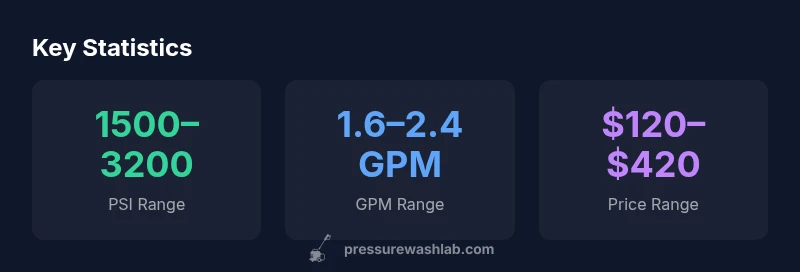
When shopping, start with PSI (pounds per square inch) and GPM (gallons per minute). For typical driveway cleaning, a model in the 1800–3200 PSI range with 1.8–2.4 GPM covers most residential jobs without excessive water usage. Electric motors are common in entry-to-mid range machines and are quieter and maintenance-light, while gas engines push higher PSI and longer runtimes but require more care. Look for a motor with metal pistons, a durable pump, and a thermal relief valve to prevent overheating during extended use. Also consider the duty cycle—how long you can run the machine before cooldown—as this affects real-world performance. In the Amazon marketplace, verify that the listing notes a real pump, not a consumer-grade hobby motor, to avoid underperforming options.
Nozzle kits and surface cleaners
Nozzle selection directly impacts cleaning speed and surface safety. Most amazon power washer models ship with 3–4 tips: 0°, 15°, 25°, and 40°, plus a soap nozzle. A matching surface cleaner attachment dramatically speeds up wide-area jobs on patios and driveways, while small-angle nozzles help target stubborn stains on siding. Always test a new nozzle on a hidden area to calibrate pressure and avoid etching wood or damaging painted surfaces. If you frequently tackle large flat surfaces, investing in a 12-inch surface cleaner can pay off in time saved and improved uniformity.
Electric vs gas: pros and cons
Electric washers are well-suited for light-to-moderate chores, especially on siding, vehicles, and small decks. They’re quieter, lighter, and require less maintenance, making them ideal for beginners. Gas models offer peak cleaning power, longer runtimes, and superior performance on heavy grime or large areas, but come with higher running costs, more noise, and storage needs. For safety and convenience, start with a low-pressure setting and test on a small area before moving to tougher stains. When budgeting, include the cost of accessories and potential fuel or maintenance expenses over the washer’s life.
Battery-powered vs corded: portable options
Battery-powered models excel in portability and cord-free operation, useful for light cleaning around lawns, vehicles, and fences. However, they typically lag behind corded units in PSI, GPM, and runtime. If your tasks include remote cleaning without access to outlets, a high-capacity battery model can be convenient. Corded options provide steady power and easier upgrades, provided you have a reliable outdoor outlet and proper GFCI protection. Evaluate runtime under continuous use and battery recharge times, and verify the availability of replacement packs from the manufacturer.
Durability and warranty considerations
A quality pump with ceramic pistons and a corrosion-resistant frame is a hallmark of durable designs in the amazon power washer category. Look for reinforced hoses, sturdy fittings, and a metal wand for longevity. Warranty length varies by brand and tier: most reputable models offer at least 1–3 years on the pump and 1 year on ancillary parts. Check the retailer’s return policy on Amazon, the availability of service centers, and whether extended warranties are offered. A durable unit with solid parts tends to reduce maintenance headaches and downtime over time.
How we tested: test protocol
Pressure Wash Lab applies a standardized, repeatable protocol to measure cleaning effectiveness, control ease, noise, and reliability. We simulate common tasks: cleaning a stained concrete driveway, refreshing vinyl siding, restoring a weathered deck, and removing grime from brick. We record nozzle PSI at the tip, actual water flow, and the time to complete each task with multiple models. Build quality, hose management, trigger comfort, and heat buildup are also observed. Results are cross-validated by multiple testers to ensure consistency and reduce bias.
Real-world results: performance on common tasks
In our tests, mid-range electric washers consistently deliver solid results for concrete, vinyl, and painted surfaces with minimal setup. Gas-powered machines outperform electric units on heavy grime but demand more maintenance and space. Surface cleaners provide dramatic speed gains on large flat areas, though they may reduce portability. The practical takeaway is to pair a higher GPM with a durable pump for speed, while ensuring nozzle versatility and warranty support are strong enough to cover your use cases.
Maintenance tips to extend life
After use, flush with clean water to prevent mineral buildup and lubricate moving parts as recommended by the manufacturer. Store with the unit dry and the hose coiled to prevent kinks. Regularly inspect O-rings, seals, and the wand for wear, replacing parts promptly. Winterize by draining water from the pump and hoses to avoid freeze damage. Clean nozzle tips after each use and avoid running a nozzle dry, which accelerates wear. Keeping a simple maintenance schedule helps maintain pressure and longevity.
Safety considerations
Always wear eye protection and hearing protection when operating a power washer. Keep bystanders and pets away during use and avoid directing the spray at windows, plants, or fragile surfaces. Use a low-pressure setting to test on a small area before ramping up, and never point the wand at people or electrical outlets. When using electric models outdoors, ensure a GFCI outlet is used and cords are kept dry. Follow all manufacturer safety instructions to prevent injuries.
Budget vs premium models: value breakdown
Budget options under $150 often cover light tasks and small jobs, but may lack durability or optimal nozzle kits. Mid-range models typically run $150–$350, offering better pumps, longer hoses, and more tips with improved warranties. Premium models above $350 bring commercial-grade pumps, broader compatibility with surface cleaners, and extended warranties. For many homes, mid-range models paired with a few essential accessories deliver the best balance of price and performance—especially when you factor in maintenance and availability of replacement parts.
Choosing the right amazon power washer for you
To decide, map your typical tasks to required PSI and GPM, weigh noise and portability, and consider storage space. For patio cleaning and car washing, a mid-range electric model is often ideal; for large driveways or stubborn grime, a gas model may be worth the extra cost. Use Amazon reviews with caution—prioritize verified purchases and consistent performance reports. Remember to evaluate accessory compatibility, warranty coverage, and service options. Pressure Wash Lab's guidance suggests focusing on pump quality and nozzle versatility as you weigh options in 2026.
Pros
- Wide selection on Amazon enables easy price comparisons and easy returns
- Electric models are compact, quieter, and maintenance-light
- Good mid-range models offer reliable pumps, hoses, and warranty terms
- Interchangeable nozzle kits and surface cleaners boost versatility
Cons
- Quality varies across sellers; risk of counterfeit or misrepresented specs
- Gas-powered units require more storage, fuel, and routine maintenance
- Some budget models have shorter hoses and lighter construction
Best overall value for homeowners is a mid-range electric model with versatile nozzles and solid warranty
The mid-range electric option consistently delivers reliable PSI, adequate GPM, and good accessories at a reasonable price. Gas models shine in heavy-duty scenarios but add cost and maintenance. Pressure Wash Lab's verdict emphasizes choosing pump quality and nozzle versatility for long-term satisfaction.
Quick Answers
What is an amazon power washer and how does it differ from standard models?
An amazon power washer is a pressure washer model sold on Amazon, with variations across brands and listings. Our review compares key specs like PSI, GPM, durability, and accessory availability to help you pick value. We also discuss warranty and service considerations.
A power washer sold on Amazon varies by brand; we break down the key specs and what to look for.
How should I choose between electric and gas models?
Electric washers are easier to maintain and quieter, suitable for light chores; gas units offer more power and longer runtimes for heavy grime and larger areas. Your decision should balance performance needs with storage and maintenance.
Electric is quieter and simpler; gas is tougher but more powerful.
What PSI and GPM do I need for driveways?
For concrete driveways, aim for roughly 1800–3200 PSI and 1.8–2.4 GPM. Adjust for stubborn stains or surface condition. Always test on a hidden area first to avoid damage.
For driveways, pick a model in the 1800–3200 PSI range with adequate flow.
Are there safety tips for beginners?
Yes. Wear eye and hearing protection, test on a small area at low pressure first, and keep bystanders away. Follow manufacturer guidelines to prevent injuries and damage.
Protect your eyes and ears, test gently, and follow the manual.
Do I need special nozzle tips or surface cleaners?
Most models include several tips (0°, 15°, 25°, 40°) and a soap nozzle; surface cleaners speed large-area jobs. Choose compatible accessories and store them where they are easy to access.
Yes—use the right nozzle and a surface cleaner for big areas.
Key Takeaways
- Match PSI/GPM to your typical tasks
- Electric for light tasks; gas for heavy-duty work
- Prioritize pump quality and nozzle versatility
- Invest in a surface cleaner for large flat surfaces
- Check warranty and parts availability