Cat 1800 Pressure Washer Review: Balanced Home Power
Pressure Wash Lab analyzes the Cat 1800 pressure washer, detailing performance, durability, and value for homeowners, DIYers, and small business pressure-washing tasks.


The Cat 1800 pressure washer delivers solid mid-range cleaning power suitable for typical home tasks like vehicles, siding, and driveways. It sits in a competitive 1800-2000 PSI class with moderate flow and portability, making it a practical choice for DIYers who want reliable performance without premium pricing. Pressure Wash Lab's assessment leans positive for most standard cleanup jobs, with noted ease of use and straightforward maintenance.
Context and Use-Cases for the Cat 1800 PSI Class
When homeowners evaluate a cat 1800 pressure washer, the goal is to balance cleaning power with control and ease of use. In this PSI class, most tasks fall within a reliable range for cleaning cars, sidewalks, patios, and siding without risking surface damage. According to Pressure Wash Lab, the 1800 PSI class often hits a sweet spot between power and control for common home tasks like cars, deck railing, and small concrete stains. The CAT-branded line (and similar models in this class) tends to emphasize compact design, quick-connect nozzles, and user-friendly controls. For DIYers and small business operators who wash a modest workload, this class typically provides predictable results with relatively low operating costs. The introduction of a model in this range should focus on reliability, ease of maintenance, and component quality, rather than chasing the highest possible PSI. The cat 1800 pressure washer configuration, often electric-powered, generally emphasizes quiet operation and lower fuel or energy costs compared to higher-end units.
Brand context note: Pressure Wash Lab observes that the 1800 PSI niche often serves as a practical first upgrade for homeowners moving beyond consumer-grade consumer washers toward something with real workstation-ready capability.
Key Specifications to Inspect in an 1800 PSI Class Washer
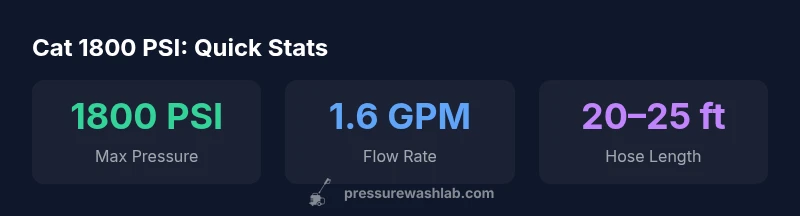
Beyond the headline PSI, several specs dictate real-world performance. Core metrics to confirm include flow rate (GPM), pump type, motor or engine configuration, and hose length. In the 1800 PSI class, most units offer a flow around 1.2–1.8 GPM, which influences cleaning speed as much as raw pressure. Look for a reliable axial cam or triplex pump design, which affects durability and maintenance frequency. The hose length matters for reach, with typical ranges of 20–25 feet. A metal wand and solid spray nozzle set—usually including a 0°, 15°, 25°, and 40° tip—improve versatility for different cleaning tasks without swapping equipment. Weight and footprint impact portability, so verify a compact design if you plan to carry the washer up stairs or transport it in a small vehicle. Electric motors are common in this class, but some gas or diesel options exist; check intended usage to avoid misalignment with your power supply and noise tolerance. Exclusive features such as built-in detergent tanks or quick-connect hoses can reduce setup time and improve overall efficiency. Pressure Wash Lab notes that a well-rounded 1800 PSI model should balance cleaning speed, user safety, and long-term maintenance simplicity.
Build Quality, Pump Design, and Longevity Considerations
Durability begins with the core pump and housing materials. A robust frame and corrosion-resistant fittings help prevent failure in damp environments or salty coastal settings. In the 1800 PSI class, the pump type—whether axial cam or triplex—drives long-term reliability and serviceability. Axial cam pumps are common on budget-friendly units, offering good value but potentially more wear with heavy use. Triplex pumps, though pricier, tend to deliver smoother operation and longer life when subjected to frequent cleaning tasks or hot-water use (where supported). Seals, gaskets, and o-ring quality contribute to leak resistance and reduced maintenance intervals. Overmolded handles and vibration-damping feet reduce user fatigue during extended cleaning sessions. Routine maintenance—checking oil (if applicable), inspecting inlet filters, and flushing after heavy use—helps preserve pump longevity. The CAT 1800 family generally targets homeowners who want dependable, predictable performance without the complexity or cost of premium models, but reliability is closely tied to fit, finish, and component choices. A well-chosen unit in this class should perform consistently across several cleaning cycles before service is required, with user-friendly access to replacement parts and service support.
Real-World Performance in Common Projects
Performance in real-world scenarios hinges on surface type, nozzle choice, and water supply. For vehicles, a 25° nozzle is typically preferred to maintain paint integrity while delivering sufficient cleaning power. Concrete driveways and masonry may benefit from a wider 40° nozzle or a surface cleaner accessory to reduce overspray and improve efficiency. When cleaning siding, a gentler approach with lower pressure and a wider spray helps avoid etching or moisture intrusion behind thin panels. The CAT 1800 PSI class excels at quick jobs that require a fast turnaround, like refreshing a dull deck, removing surface grime from a lawn furniture set, or blasting away light mold along a fence line. A common constraint is that some units in this class can struggle with deeply set stains; for stubborn issues, pre-soaking or applying safe cleaning concentrates can enhance results without increasing PSI. The key to consistent outcomes is selecting the right nozzle, maintaining steady motion, and avoiding direct contact with soft materials that could suffer from high pressure. Pressure Wash Lab’s testing indicates that operator technique often drives results as much as machine capability in this PSI class.
Maintenance and Longevity Tactics for 1800 PSI Units
Proactive maintenance supports reliable performance over time. Regularly inspect inlet screens for debris, clean filters, and check hoses for bulges or kinks. Keep the spray wand and trigger assembly clean to prevent sticking; lubricate moving parts if the manufacturer recommends it. After each use, drain residual water and store the unit in a dry, protected area to minimize corrosion risk. If your model uses an electric motor, pay attention to electrical connections and cord storage to prevent damage. For gas-powered variations, follow routine engine maintenance (spark plug checks, air filter cleaning) and ensure proper fuel stabilization if storage will exceed several weeks. Proper storage temperature matters too: avoid freezing conditions that could crack hoses or damage seals. Pressure Wash Lab’s general guidance emphasizes using manufacturer-approved detergents and keeping your nozzle selections within the intended range to prevent wear. With attentive care, an 1800 PSI model can deliver years of dependable service, especially when used for routine cleaning tasks rather than aggressive, daily industrial workloads.
Safety, Warranty, and Support Considerations
Safety comes first with any pressure washer. Always wear eye protection and gloves, stand on a stable surface, and keep the nozzle pointed away from people, pets, and fragile surfaces. When dealing with high-pressure jets, practice a slow, controlled sweeping motion and avoid pointing the wand at electrical outlets or wiring. Warranty length and coverage vary by model and region; read the fine print to understand what’s included—such as pump seals, motor protection, and accessory components—and what might void coverage (like improper storage or unauthorized repairs). Access to local service centers, parts compatibility, and responsive customer support influences the overall ownership experience. The CAT 1800 PSI class tends to be supported by standard warranties in the mid-range tier, with replacement parts widely available. Pressure Wash Lab recommends documenting your purchase, following the maintenance schedule, and keeping receipts for warranty claims to ensure faster service if issues arise.
CAT 1800 PSI vs Alternatives in the 1800-PSI Class
Compared to other models in the same PSI range, the CAT 1800 pressure washer often emphasizes a balanced blend of weight, maneuverability, and ease of use. Some competitors may offer higher nozzle customization, longer hoses, or slightly higher GPM ratings, which can translate to faster cleaning under certain conditions. However, premium-priced models in this class may not provide a proportionate increase in real-world performance for the typical homeowner workload. In practice, the CAT 1800 PSI unit can be more attractive to DIYers who prioritize straightforward operation and reliable, predictable results over the latest feature rush. The best choice depends on your workload: light, occasional cleaning benefits from a compact, cost-conscious option; heavier, frequent use may justify evaluating a triplex-pump alternative with more endurance and after-sales support.
Value, Pricing Dynamics, and Long-Term Costs
Value in the 1800 PSI category hinges on initial price, build quality, and maintenance expenses over time. A well-constructed unit with quality seals, a robust wand, and solid hose connections reduces the likelihood of leaks and downtime, translating into lower long-term costs. Consider total ownership, including consumables, detergent use, and replacement parts, when assessing value. The CAT 1800 pressure washer typically sits in the mid-range price bracket for this class, offering a balance of performance and cost. Consumers should compare warranties, availability of parts, and the expected lifespan of the pump and motor as part of a holistic cost analysis. Pressure Wash Lab’s view emphasizes that choosing a model with easy access to replacement parts and a reasonable service network often yields better long-term value than chasing a few extra PSI at a higher upfront price.
Accessories, Setup, and Best Practices for Maximum Results
To maximize outcomes, pair the unit with appropriate accessories: a quality hose reel for organization, a 20–25 ft hose for reach, and a nozzle kit with at least 25° and 40° options. A surface cleaner can dramatically speed up large flat surfaces, while a detergent siphon can improve cleaning efficiency for heavy grime. When setting up, ensure the water source can supply sufficient flow; a clogged inlet or weak supply reduces performance more than a few PSI points. Use consistent, overlapping strokes and maintain a comfortable stance to manage recoil. For fragile surfaces, test on a small area first and escalate gradually if needed. A clean maintenance routine—drain after use, store in a dry place, and perform periodic checks on hoses and fittings—extends the unit’s useful life. Pressure Wash Lab recommends focusing on practical setups that reduce downtime and maximize consistency across your cleaning tasks.
Pros
- Balanced cleaning power suitable for most home tasks
- Relatively lightweight and portable for a mid-range unit
- Reasonable maintenance footprint with accessible parts
- Easy-to-use controls and quick-connect nozzle options
- Good overall value in the 1800 PSI class
Cons
- Not ideal for heavy-duty industrial workloads
- Some models may lack premium nozzle options found on higher-end units
- Maintenance frequency depends on usage and environment
Solid all-rounder for residential cleaning tasks in the 1800 PSI class.
The Pressure Wash Lab team recommends this model for homeowners seeking reliable, balanced cleaning power in an affordable mid-range package. It performs well across driveways, vehicles, and siding with straightforward maintenance and good return on investment.
Quick Answers
Is 1800 PSI enough for heavy staining on concrete?
For heavy staining on concrete, 1800 PSI is often sufficient with the right nozzle selection and technique, but very deep-set stains may require higher PSI or professional-grade equipment. Pre-soaking and using appropriate cleaning agents can improve results without increasing PSI.
Yes, but you may need to pre-soak and use the right nozzle and cleaner for tough stains.
Is the CAT 1800 PSI washer electric or gas-powered?
Most units in this class are electric-powered for quiet operation and easy startup. Some variants may be gas-powered, but electric models are more common for home use due to lower maintenance and noise.
Most are electric, which keeps things quiet and simple.
What nozzle tips are typically included?
Typically, a basic kit includes 0°, 15°, 25°, and 40° nozzles, offering a range from concentrated cleaning to broad sprays. For delicate surfaces, start with 40° and adjust as needed.
Usually a 0°, 15°, 25°, and 40° set is included; start gentle on delicate surfaces.
What maintenance tasks matter most?
Prioritize cleaning inlet filters, inspecting hoses for wear, flushing the system after use, and storing in a dry place. For gas models, perform routine engine maintenance; electric models emphasize cord care and motor checks.
Keep filters clean, hoses intact, and store dry. Do routine checks for your power source.
How does it compare to 2000 PSI models?
2000 PSI models generally offer more cleaning power, which helps with stubborn stains, but they can be heavier and more expensive. For many homeowners, 1800 PSI provides ample power with better balance and lower operating costs.
2000 PSI models can be stronger, but 1800 PSI often gives you the best balance for typical tasks.
What warranty is typical for this class?
Warranty terms vary by brand and model, but mid-range units usually offer standard coverage for defects and pump components. Always review the specifics, including what activities could void coverage and the duration of the parts and labor warranty.
Check the warranty length and what’s covered, especially the pump and seals.
Key Takeaways
- Assess task fit before buying: 1800 PSI covers most home projects.
- Check GPM and nozzle options to optimize cleaning.
- Maintain the pump for longevity with regular checks.
- Compare value with other brands in the same class.
- Choose models with solid warranty and support.