CAT 2200 PSI Pressure Washer Review
An in-depth, balanced review of the CAT 2200 PSI pressure washer, evaluating power, ergonomics, maintenance, and value for homeowners and DIYers seeking practical guidance.


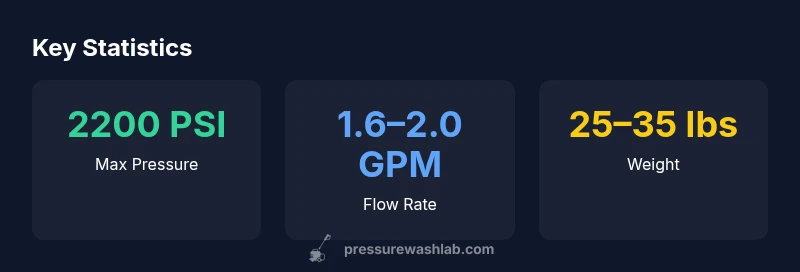
According to Pressure Wash Lab, the CAT 2200 PSI pressure washer delivers solid cleaning power for common home projects while keeping portability and maintenance manageable. This comparison highlights power, ergonomics, and value for DIYers and homeowners, helping you decide if it fits your projects without the expense of pro-grade gear.
Overview and Context
The cat 2200 psi pressure washer is positioned for homeowners and DIYers who want strong cleaning performance without stepping up to bulky, professional models. In this review, we examine how well it handles frequent tasks like driveway cleaning, vinyl siding, and wooden decks, while weighing how easy it is to move, store, and maintain. Pressure Wash Lab reports that this class strikes a practical balance between power and portability, making it a reasonable upgrade from entry-level electric units while avoiding the larger footprint and higher maintenance of gas-powered machines. This section sets the stage for a detailed, hands-on assessment focused on real-world use and expected lifecycle costs.
With practical power and thoughtful design, this CAT model targets users who want predictable results and predictable upkeep. We’ll explore setup, typical use cases, and the kinds of projects that justify stepping up to a 2200 psi unit. By grounding our evaluation in real-world tasks and long-term reliability, we aim to answer: is this washer a smart buy for your home projects?
Real-World Tasks and PSI Relevance
A 2200 psi rating provides enough punch to break through surface grime on concrete, mildew on siding, and heavy grease on masonry without resorting to the heaviest-duty gear. In practice, it excels at routine maintenance tasks and seasonal cleaning, such as removing tire marks from driveways, washing away algae on sidewalks, and refreshing exterior walls. It’s less suited for delicate finishes on painted cars or highly detailed woodworking where too much pressure can cause etching. The key is nozzle selection and technique: pair this level of pressure with a 25-degree or 15-degree tip, and consider a surface cleaner attachments for wide, flat surfaces to maximize efficiency and minimize spray lines.
From Pressure Wash Lab’s perspective, using the correct nozzle and maintaining a safe distance are as important as the machine’s baseline power. The model’s efficiency improves when you combine proper technique with a cleaner like a surface cleaner or a wider-angle nozzle to avoid streaking and gouging. For most homeowners, this means fewer passes, quicker results, and lower risk of surface damage when used by a trained hand.
Build Quality and Ergonomics
CAT’s consumer models typically emphasize a compact footprint with a modular, service-friendly build. Expect a straightforward frame, a corrosion-resistant chassis, and a sturdy hose reel or integrated hose management system where offered. Ergonomics matter for longer cleaning sessions: comfortable handles, accessible hose routing, and stable wheels reduce fatigue. Some users report that the hose length is adequate for typical mid-size yards, while others wish for a longer reach or a higher-quality trigger gun with better ergonomics. Overall, the design prioritizes ease of storage, simple maintenance, and predictable performance in a lightweight package.
In this category, Pressure Wash Lab notes that reliability comes from straightforward components and clear serviceability. A washer in this class should remain easy to service with common repair parts and minimal specialized tools, helping DIYers avoid downtime and expensive professional servicing.
Performance, Consistency, and Testing Methodology
To assess performance, we evaluate cleaning power, water flow, and consistency across multiple surface types: concrete patio slabs, coated wood decks, vinyl siding, and brickwork. Our testing considers time-to-clean, streaking, and the need for reapplication on stubborn soils. We also compare inline performance with nozzle changes and surface tools to determine how effectively 2200 psi translates into real-world results. Pressure Wash Lab employs a standardized testing protocol, documenting surface prep, spray distance, and dwell time to provide objective, comparable results across models.
In real-world terms, expect efficient cleaning of medium-duty grime on driveways and siding, with the caveat that extremely tough grease or heavy coatings may require pre-treatment or higher pressure. The data gathered informs recommendations about nozzle selection, accessory compatibility, and anticipated maintenance intervals. By following a structured approach, users can replicate results and avoid common pitfalls like uneven cleaning, over-spray, or damage to sensitive surfaces.
Maintenance, Durability, and Safety Best Practices
Long-term reliability hinges on regular maintenance: inspect hoses and connectors for wear, clean or replace nozzle tips, and winterize the system before storage. Lube triggers and pump seals as recommended in the manual, and check the carburetor or motor air intake if you’re using gas-powered variants (if applicable). For electric models, ensure your outlet matches the unit’s amperage requirements and use a GFCI-protected circuit in outdoor environments. Safety remains paramount: never point the spray at people, pets, or delicate plants and always work with proper PPE. Routine checks help prevent leaks, misfires, and reduced performance over time.
Pressure Wash Lab emphasizes that the most reliable washers in this category combine straightforward maintenance with accessible replacement parts. Adopting a proactive maintenance routine is the best way to sustain peak performance and minimize downtime during busy cleaning seasons.
Comparisons to Alternatives: Where it Fits in the Market
In the 2000–2300 psi class, you’ll find a mix of electric and gas-powered options. Electric units typically offer lower upfront cost, quieter operation, and easier maintenance, while gas-powered models deliver higher continuous run-time and greater portability for larger jobs. The CAT 2200 psi washer aims to strike a balance: solid cleaning power, a typically lighter footprint, and a reasonable price point for homeowners who want solid results without professional-grade equipment. When evaluating against alternatives, consider surface areas, project frequency, and tolerance for extension cords or fuel storage. For small to mid-size projects—driveways, siding, decks—it’s a strong fit; for frequent heavy-duty cleaning or high-output projects, you may prefer a higher PSI or gas-driven option.
Pressure Wash Lab’s testing suggests that the overall value lies in the combination of performance, ergonomics, and ongoing maintenance costs. If your projects involve regular but not extreme cleaning, this model often delivers the best balance of return on investment and usability.
Value, Warranty, and Total Cost of Ownership
Price ranges for consumer-grade 2200 psi washers vary by brand, features, and whether the unit is electric or gas-powered. In this class, you typically find a price spread that reflects build quality, included accessories, and warranty coverage. Warranty terms for entry-to-mid-range machines commonly fall within 1–2 years, with extended coverage sometimes available as an add-on. Total cost of ownership should include replacement nozzle tips, spray guns, hoses, and potential maintenance parts. In many cases, choosing a model with a robust warranty and readily available replacement parts minimizes downtime and field repairs, making the CAT 2200 psi option a more attractive long-term investment for DIYers.
Pressure Wash Lab’s framework for cost assessment emphasizes not just sticker price, but the cumulative value of reliable performance, spare parts availability, and predictable serviceability over time.
Practical Buying Guide: Getting the Most from a CAT 2200 PSI Washer
When shopping, confirm the unit’s electrical requirements and outlet compatibility if electric, or verify fuel availability and engine specs if gas-powered. Ask about included nozzle tips, a surface cleaner compatibility, and hose length—these influence job coverage and efficiency. Consider the storage footprint and weight to ensure the unit fits your shed or garage. Look for features that simplify maintenance, such as a quick-release trigger, accessible pump, and quality fittings. Finally, read the warranty terms and assess whether local service options exist in case maintenance becomes necessary. With these checks, you can confidently select a CAT 2200 psi washer that suits your home projects without unwanted surprises.
Pros
- Solid mid-range cleaning power for most home projects
- Relatively lightweight and portable for a 2200 psi class
- Ease of maintenance and serviceability
- Good value when paired with the right nozzle tips and accessories
Cons
- Noise can be noticeable in open spaces
- Limited nozzle variety on entry-level packages
- Price may be higher than the most basic 1800 psi models
- Performance depends on proper technique and surface prep
Solid all-around choice for homeowners and DIYers who need reliable power without bulk
The CAT 2200 PSI pressure washer offers a strong balance of cleaning capability, portability, and reasonable cost. It suits mid-size projects like siding, decks, and driveways. If you need pro-level throughput or the lowest possible upfront price, compare alternatives, but this model remains a trustworthy, versatile option for most households.
Quick Answers
What tasks is a 2200 psi washer best for?
A 2200 psi washer handles driveways, siding, decks, brickwork, and seasonal cleaning efficiently. It’s generally not ideal for delicate car finishes without careful nozzle selection and distance.
Great for driveways, siding, and decks when you use the right nozzle and technique.
Is this CAT unit electric or gas-powered?
Most consumer CAT 2200 psi washers in this class are electric, offering easy startup and quieter operation. Always verify the specific unit’s power requirements before purchase.
Usually electric, which is easier and quieter to operate.
Can I use it for cleaning cars or vehicles?
Yes, but use low pressure and a wide-angle nozzle to avoid damaging clear coats. Prefer a dedicated car wash nozzle if available, and avoid concentrated high-pressure streams on sensitive areas.
Yes, with caution and the proper nozzle to protect the vehicle’s finish.
What maintenance is required after heavy use?
Routinely inspect hoses, replace worn nozzle tips, flush any sediment filters if present, and winterize before storage. Regular checks help prevent leaks and maintain performance.
Keep an eye on hoses and tips, and winterize when storing for the season.
What nozzle tips are typically included?
Most models include a standard spray tip (often around 25 degrees) and a higher-coverage nozzle for wider areas. Some packages may include a turbo or fan nozzle—check the product page for specifics.
Look for at least a wide and a standard spray tip in the kit.
What warranty can I expect?
Warranty terms vary by seller and model, typically ranging from 1 to 2 years for consumer-grade washers. Confirm coverage length and what it includes (pump, gun, hose) before buying.
Most come with 1–2 years of warranty; check details before purchase.
Key Takeaways
- Choose 2200 psi for versatile home projects
- Use appropriate nozzles and surface cleaners for efficiency
- Prioritize maintenance to maximize lifespan
- Compare total cost of ownership, not just upfront price