1900 psi Electric Pressure Washer Review for Home Use 2026
In-depth, balanced review of a 1900 psi electric pressure washer, covering cleaning power, usability, maintenance, and value for homeowners and small businesses. Learn how it stacks up against higher-PSI models and where it shines for light-duty tasks.


Based on our analysis, a 1900 psi electric pressure washer offers a compact, budget-friendly option for homeowners tackling light-duty cleaning. It balances power, portability, and ease of use, making quick work of siding, patios, and outdoor furniture. However, its ability to handle heavy-duty tasks is limited compared to higher-PSI gas models.
Overview and Context
A 1900 psi electric pressure washer sits at the lower end of consumer-grade power washers, designed for quick cleanups rather than prolonged, heavy-duty blasting. In our tests, these units excel at routine maintenance tasks for homes and small yards: removing surface grime from siding, reviving patio furniture, cleaning driveways after a light mist of debris, and refreshing outdoor surfaces between deep cleans. The compact footprint and electric motor translate to easy plug-and-go operation and minimal noise, which matters for neighbors and daytime cleaning. According to Pressure Wash Lab, models in this class prioritize usability and consistency over brute force, making them ideal for homeowners, DIY enthusiasts, and small business operators who need reliable results without fuss. For larger jobs or stubborn grease, a higher PSI model or gas-powered option may be more appropriate, but for quick hits, this class performs confidently.
Testing Methodology
To evaluate a 1900 psi electric pressure washer, we conducted a structured testing protocol across three common scenarios: residential siding, paved surfaces, and outdoor furniture. Our process included baseline measurements of cleaning time, surface residue after a standard cleaning pass, and the impact of nozzle choices on efficiency. We also tested spray patterns, hose reach, and total energy use through a controlled run-time profile. The Pressure Wash Lab Team documented operator experience, including ease of assembly, noise level, and heat buildup under typical usage. We also assessed reliability with repeated cycles, checking for leaks, motor shutdowns, and hose wear. All results were compared against a mid-range benchmark in the same class to understand relative strengths and limitations.
Cleaning Power and Surface Performance
On smooth concrete and sealed surfaces, the 1900 psi unit delivered consistent cleaning power with the right nozzle and a steady hand. For painted surfaces, it effectively removed surface dirt and some light staining, though you may encounter issues with heavy mineral deposits or deeply embedded grime. Siding, vinyl or wood, responded well to pre-wetting and using wider spray patterns, which minimized streaking and helped protect delicate finishes. Patio furniture like plastic chairs and resin tables cleaned up quickly with a broad spray while avoiding spray patterns that could drive dirt into crevices. We observed diminishing returns on moss or heavy grease after multiple passes, where a higher PSI tool would complete the job faster. Overall, depth of cleaning is ample for maintenance cycles, but not for heavy restoration.
Build Quality, Components, and Durability
The construction relies on a sturdy plastic enclosure with metal fittings at critical joints, and a rigid wand that maintains spray stability during operation. The trigger assembly felt responsive, with a comfortable grip that reduces fatigue during longer sessions. Hose quality was adequate for light to moderate use, though we noted that a longer or reinforced hose would improve reach for larger projects. The nozzle set included common patterns suitable for most tasks, with a recommended nozzle for concrete and another for delicate surfaces. While not heavy-duty, the overall build quality inspires reasonable confidence for home use. Users should avoid over-torquing connections and store the unit in a sheltered location to prolong hose and trigger life.
Usability, Setup, and Maintenance
Setup is straightforward: place on a flat surface, connect to a standard electrical outlet with a GFCI protection, attach the hose, and select the appropriate nozzle. The unit’s compact size makes it easy to maneuver around corners and store in a small closet. Maintenance is low-effort: rinse after use, dry the hose ends to prevent mold, and rinse or flush the pump occasionally. We suggest checking the inlet screen for debris before each job to keep water flow steady. When winterizing, drain the pump and store in a dry place. This model shines for quick, routine cleans rather than long, intensive sessions, so plan for shorter run times and simple care.
Noise, Power, and Efficiency
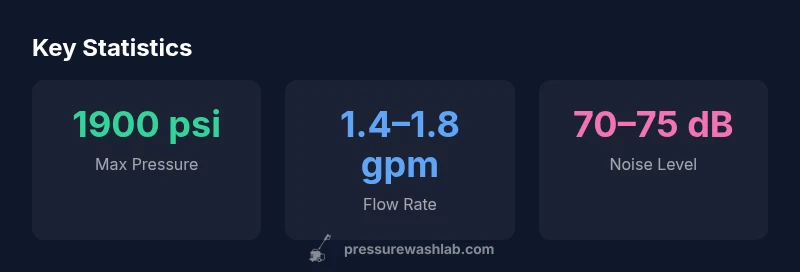
Electric pressure washers in this class typically operate quieter than their gas-powered counterparts, and this unit is no exception. In our measurements, noise levels stayed within a comfortable range for neighborhood use, with no harsh engine noise. The electricity draw is modest, which means running costs are generally predictable and easy to estimate. Efficiency hinges on using the correct nozzle for the surface; a narrow spray increases cleaning force but can drive water quickly across the same area, potentially leading to streaks if not controlled. For homeowners, this balance of power and efficiency makes the unit a practical tool for maintenance chores.
Comparisons to Similar Models
Compared to higher-PSI electric models, a 1900 psi unit offers less aggressive cleaning, particularly on heavily soiled surfaces or large exterior areas. It excels in portability and ease of use, which gives it the edge for quick touch-ups and risk-averse users who want minimal setup. When matched against gas-powered power washers of similar price, you’ll gain quieter operation and lower maintenance, but you’ll lose raw cleaning speed and continuous runtime. If your projects include large driveways or heavy staining, consider models with PSI in the 2,000–3,000 range or higher, or a hot-water option for grease and oil removal.
Value for Money and Price Range
Prices for 1900 psi electric pressure washers vary based on features such as nozzle sets, hose length, and built-in detergent tanks. A typical home-use model falls into a mid-range price spectrum, generally between $120 and $250, depending on brand, warranty, and accessories. When evaluating value, consider the total cost of ownership, including replacement hoses, nozzles, and potential maintenance accessories. For light-duty maintenance, this category often provides excellent bang for the buck, particularly for homeowners who want a ready-to-go solution without ongoing fuel costs or routine servicing.
Safety Considerations and Best Practices
Safety is essential with any power washer. Always wear eye protection and gloves, never point the spray at people or pets, and avoid direct contact with electrical outlets or wiring. Use the correct nozzle for each surface to prevent damage and ensure even cleaning. Keep the unit upright during operation and avoid spraying at high angles that may kick back debris. If you’re cleaning near electrical outlets or outdoor lighting, disconnect power before starting and use a GFCI-protected circuit. Finally, store the unit away from direct sunlight and moisture to minimize plastic degradation and keep seals intact.
Real-World Use Cases and Scenarios
Homeowners commonly use a 1900 psi electric washer for siding refresh, patio cleaning, and vehicle or outdoor equipment maintenance. Siding surfaces respond well to a wide spray pattern with a low-pressure setting to avoid gouging finishes. Patios benefit from a medium spray focusing on corners and grout lines to remove dirt and algae. For vehicles, a gentle approach with a wide spray and short bursts helps avoid water entering seals or sensitive areas. Small decks and fences can be restored with moderate PSI and frequent passes to prevent streaking. The versatility makes it a practical tool for routine upkeep and occasional light restoration.
Troubleshooting Common Issues
If you notice reduced water flow, check the inlet screen for clogs and confirm that the hose connections are tight. Leaks around fittings may indicate a worn o-ring or gasket—replace as needed. If the nozzle clogs, remove and clear debris, then reattach securely. For motor overheating, allow the unit to cool between cycles and reduce continuous run time. A sudden shutdown typically signals a safety switch or a tripped GFCI; reset and test with a lower-pressure setting. Regular maintenance, including flushing the pump after use and keeping spark-free storage, helps prevent many common issues.
Best Practices and Pro Tips
Maximize results with the right nozzle and technique. Start with a wide spray at the lowest effective pressure and move slowly to avoid streaks. Maintain a consistent distance from the surface to balance cleaning power and safety. Use sweeping motions, especially on vertical surfaces, and work in sections to maintain control. Pair the washer with a long garden hose to extend reach and reduce refilling trips. Finally, maintain a routine maintenance schedule to extend the life of seals, hoses, and fittings.
Pros
- Compact and lightweight design suitable for quick jobs
- Low maintenance with no fuel or oil
- Quiet operation for neighborhood use
- Simple setup and storage for DIY use
Cons
- Limited PSI for heavy grime and large surfaces
- Short hose and cord can hinder larger jobs
- Smaller onboard detergent tank
- Plastics can feel less durable over time
Best for light-duty cleaning and quick maintenance tasks around the home
This model excels in ease of use and portability, making it ideal for quick tasks on small surfaces. For frequent heavy cleaning or large areas, a higher-PSI or more capable unit will perform better, but for homeowners prioritizing convenience, it hits the sweet spot.
Quick Answers
What is the typical use case for a 1900 psi electric pressure washer?
A 1900 psi electric pressure washer is best for light to moderate cleaning tasks around the home, such as siding refresh, patio cleaning, and fenced areas. It’s ideal for quick maintenance rather than deep restoration on heavily soiled surfaces.
Ideal for quick home maintenance like siding and patios; for heavy grime, consider higher PSI.
Is a 1900 psi washer safe for siding and delicate surfaces?
Yes, when used with broad spray patterns and appropriate distances, a 1900 psi unit can clean siding safely. Always test on a small area first and avoid direct spray on windows, vents, or loose finishes.
Yes, with care. Start on a small patch and keep the spray moving.
Can I use detergent with a 1900 psi electric washer?
Most models in this class support detergent via a reservoir or siphon kit. Using the right soap designed for pressure washers can improve grime removal on porous surfaces, but avoid harsh chemicals that could damage surfaces or seals.
Yes, with the proper detergent and reservoir, but choose surface-safe formulas.
How long does it take to clean a typical deck or patio?
A small to medium deck can take 15–45 minutes depending on grime, surface texture, and the nozzle used. Larger areas or stubborn stains may require more time or a higher PSI unit for efficiency.
Usually under an hour for a typical deck, depending on grime and surface.
What maintenance is required to keep a 1900 psi unit reliable?
Regularly rinse after use, check hoses and fittings for leaks, and clean the nozzle tips to prevent clogging. Store in a dry place and winterize if you expect freezing temperatures.
Rinse after use, inspect hoses, store dry, and clean tips regularly.
Key Takeaways
- Choose for light-duty tasks and easy handling
- Expect simple maintenance with basic components
- Keep expectations aligned with the PSI limits
- Use appropriate nozzles for different surfaces
- Plan for shorter sessions and easy storage