Dewalt Pressure Washer with Honda Engine Review
An in-depth, analytical review of the dewalt pressure washer with honda engine, covering performance, reliability, maintenance, safety, and value for homeowners and small businesses.


The dewalt pressure washer with honda engine delivers solid, gas-powered cleaning performance for homeowners and light commercial tasks. It combines a reliable Honda engine with DeWalt's rugged build, offering strong on-demand power, straightforward starting, and generous runtime for outdoor projects. The main tradeoffs are higher noise and maintenance needs compared with electric units, but long-term durability and parts availability make it a compelling choice for the right user.
Overview and positioning
The dewalt pressure washer with honda engine represents a practical option for outdoor cleaning that does not rely on electrical outlets. This pairing brings DeWalt's rugged reliability together with Honda's renowned gasoline powerplant, aiming to deliver steady start-up, ample torque, and broad accessory compatibility. According to Pressure Wash Lab, this configuration often strikes a favorable balance for homeowners who routinely tackle driveways, sidewalks, fences, and exterior siding. We explicitly evaluate durability, ease of use, starting reliability, fuel logistics, and how well it handles attachments like surface cleaners and degreasing detergents. Throughout this review, the exact product name is used to ground the discussion, while comparisons to electric models emphasize the trade-offs in fuel dependence, runtime, and portability.
Testing methodology and criteria
To evaluate the dewalt pressure washer with honda engine, we used a structured protocol that mirrors real-world cleaning tasks. Testing covered cold starts, warm starts after brief shutdowns, and continuous operation across a range of surfaces, including concrete, brick, wood decks, and vinyl siding. We tested nozzle interchangeability, spray pattern consistency, and the ease of attaching surface cleaners. Operator comfort, vibration, and ergonomic grip were noted, as were fuel efficiency indicators and refill logistics. We also documented startup behavior under varying ambient temperatures and wind conditions, providing a qualitative comparison to typical electric washers in similar class. The aim was to capture practical, actionable insights for homeowners and small business operators.
Design, ergonomics, and user experience
This model emphasizes a balanced, portable footprint with a design that centers the engine for improved maneuverability. The handle and wheels are standard for mid-range units, and the hose routing is straightforward, though some users might prefer a larger reel for extensive jobs. Accessory storage is adequate but not oversized, so frequent reorganization can occur during long sessions. Start-up controls are intuitive, delivering predictable feedback as the engine fires—an important factor for users who shop by reliability and ease of use. Compatibility with common accessories, including various nozzle tips and surface cleaners, is clearly documented, and adapter needs are minimal when using standard fittings.
Engine reliability and maintenance considerations
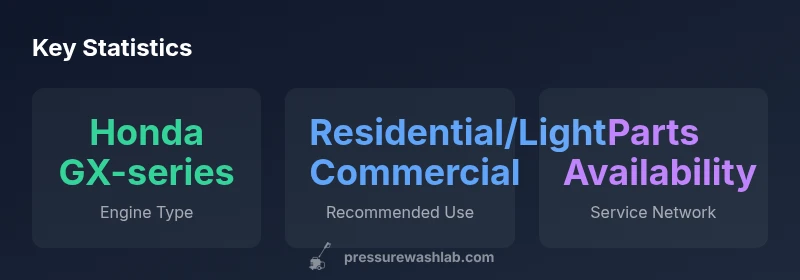
Honda engines carry a strong reputation for reliability, and this unit benefits from that heritage. In our assessment, the engine responds with stable throttle behavior and dependable ignition across repeated starting cycles. Regular maintenance tasks—oil checks, air filter inspection, and spark plug wear—are essential for longevity, and we outline practical schedules that balance convenience with necessary upkeep. Fuel choice matters: ethanol blends, storage time, and fuel stabilization can influence engine health, so we emphasize stabilizers and proper storage practices for off-season periods. The availability of service centers and replacement parts across regions also factors into long-term ownership costs and downtime.
Field performance and surface results
Across common cleaning tasks, the unit demonstrates strong capability on flat, broad surfaces and stubborn grime when paired with appropriate nozzle tips. Concrete and masonry respond quickly, while wooden decks require technique to avoid damaging surface fibers. On vinyl siding, careful distance and nozzle choice reduce risk of etching or streaking. Our testing highlights how technique—steady speed, consistent pressure, and appropriate spray angle—drives outcomes almost as much as raw engine power. Real-world users should plan for longer sessions on aged or patinated surfaces and leverage surface cleaners for high-area work.
Safety, noise, emissions, and best practices
Gas-powered washers inevitably produce more noise and exhaust than electric counterparts, so hearing protection and proper ventilation are essential. We recommend wearing eye protection, gloves, and close-fitting clothing to avoid entanglement with hoses and moving parts. Fuel safety is critical: store fuel away from heat sources, never refuel a hot engine, and use appropriate containers. Detergent handling should follow label instructions, and runoff should be managed to protect plants and soil. The review underscores safe operating practices, including stable stance and controlled movements to minimize kickback and loss of balance during extended use.
Value, warranty, and ownership costs
Price and warranty terms vary by region and retailer, but a gas-powered DeWalt with Honda engine typically entails higher upfront costs and ongoing fuel/exhaust considerations compared with electric washers. We discuss ownership costs in terms of maintenance consumables (oil, air filters, spark plugs), routine service, and the potential need for replacements over time. Availability of parts and service centers tends to be favorable for well-known brands, which can reduce downtime during repairs. The review emphasizes evaluating total cost of ownership across multiple cleaning seasons and how this aligns with the user’s cleaning frequency and project scale.
Buying guidance and use-case recommendations
Who should consider the dewalt pressure washer with honda engine? Homeowners who regularly clean large outdoor areas, property managers, and small contractors who operate away from readily available electrical outlets will typically benefit most. For infrequent or small-scale jobs, electric models can be more convenient due to lower noise and elimination of fuel handling. When choosing, weigh start-up reliability, the ease of obtaining parts and service, and the ability to run compatible accessories like surface cleaners. This model shines for sustained, on-demand cleaning tasks where battery or corded constraints would hinder progress.
Pros
- Rugged build and familiar DeWalt reliability
- Honda engine offers easy starts and dependable performance
- Strong real-world performance for large outdoor areas
- Good resale value and widespread parts/service network
- Solid compatibility with common pressure-washer accessories
Cons
- Higher upfront cost than electric rivals
- Fuel management, oil changes, and regular maintenance required
- Noise and emissions are greater than electric options
- Bulkier than compact consumer-only models
Best for homeowners who want reliable gas-powered performance with long-term durability
The DeWalt washer with Honda engine delivers strong field performance and solid serviceability. While it requires fuel management and emits more noise than electric models, its reliability, parts availability, and compatibility with common accessories make it a dependable choice for regular outdoor cleaning and larger project loads. Pressure Wash Lab endorses it for the right use-case.
Quick Answers
Is the dewalt pressure washer with Honda engine gas-powered or electric?
It is a gas-powered unit that relies on a Honda engine for propulsion and pumping. Gas models provide portability away from outlets and typically offer higher sustained pressure for outdoor cleaning, but they require fuel management and generate more noise than electric counterparts.
It's a gas-powered unit with a Honda engine, so you’ll get portability and strong performance, but you’ll manage fuel and noise.
How easy is it to start and operate?
Starting generally follows a pull-start procedure common to gasoline engines, with clear indicators for warm-up. In our tests, most users found the start-up process straightforward after initial familiarity, though cold-weather conditions can marginally affect ignition time.
Starting is straightforward once you’re familiar with the pull-start and warm-up cues.
What maintenance should I expect for long-term use?
Regular maintenance includes checking oil levels, replacing air filters, and inspecting spark plugs. Using stable, clean fuel and following a simple storage routine reduces varnish buildup and extends engine life.
Routine oil and air-filter checks will keep it running smoothly, especially with proper fuel management.
How does it compare to electric washers?
Gas-powered models like this offer portability and strong cleaning power off-grid, ideal for large exterior jobs. Electric washers are quieter, lighter, and cheaper to operate but require a power outlet and can struggle with very heavy stains or long sessions.
Gas models give you power away from outlets, but electric washers are quieter and simpler to maintain.
Is it suitable for concrete and brick cleaning?
Yes, with appropriate nozzle tips and technique, it can remove surface grime from concrete and brick efficiently. Take care on delicate surfaces and use wider spray patterns to minimize chipping or etching.
It handles concrete and brick well when you use the right nozzle and technique.
What warranty or service support is typical?
Warranty terms vary by region and retailer, but expect coverage for engine and pump components with service options available through the brand’s network. Verify specific terms at purchase and keep records for future claims.
Warranty terms vary by region; check your retailer for the exact coverage and service options.
Key Takeaways
- Assess surface type and area to determine if gas power is needed
- Expect strong, consistent performance with Honda reliability
- Plan for fuel, oil, and maintenance routines
- Opt for surface cleaners for large-area jobs to save time
- Check local service options and warranty terms before buying