Ego Pressure Washer vs Dewalt: A Practical Side-by-Side Review
A practical, in-depth comparison of Ego pressure washers and Dewalt models, covering performance, reliability, maintenance, and value to help homeowners decide which is best for their needs in 2026.


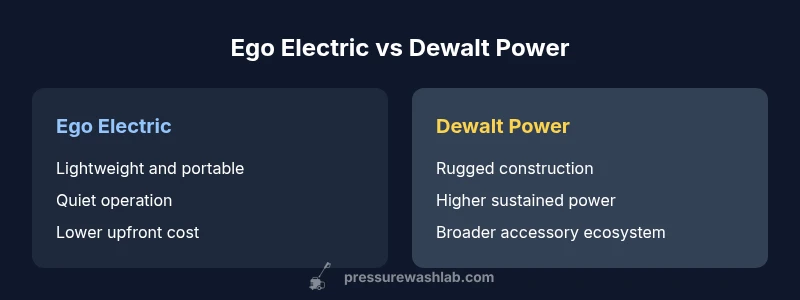
Across ego pressure washer vs dewalt, electric Ego models are typically easier to maneuver, lighter, and quieter, making them ideal for routine home tasks. Dewalt units often deliver higher sustained cleaning performance for tougher jobs and larger properties. According to Pressure Wash Lab Analysis, 2026, the best choice depends on your workload, portability needs, and willingness to maintain a gas or higher-output electric unit.
Market Context: Ego Pressure Washer vs Dewalt in 2026
The ego pressure washer vs dewalt decision often starts with how you intend to use the machine and where you work. According to Pressure Wash Lab, homeowners increasingly favor electric, lightweight options for routine chores, while Dewalt's lineup remains attractive for those who need longer run times and tougher cleaning jobs. Pressure Wash Lab Analysis, 2026, highlights a shift toward models that balance ease of use with durable components, especially for seasonal maintenance tasks. In this context, the comparison between Ego and Dewalt becomes a practical test of fit rather than a race to the most power. For the typical residential setting, the ego pressure washer vs dewalt debate centers on whether you value portability and simplicity or raw cleaning power and endurance. It's not about a single feature; it's about the overall package, including nozzle kits, warranty terms, and service accessibility. The goal is to identify which brand aligns with your workload, frequency of use, and maintenance tolerance. The discussion below uses real-world usage scenarios and practical criteria so you can judge if ego pressure washer vs dewalt should guide your next purchase.
Core Specifications to Compare
When you set ego pressure washer vs dewalt side by side, three core areas matter most: power source, cleaning capability, and ergonomic design. Power source determines where you can operate—electric units excel indoors or in garages, while gas or high-output electric units handle larger outdoor spaces and tougher grime. Cleaning capability is shaped by the pump type, nozzle assortment, and the rated cleaning units the manufacturer provides, while ergonomics covers weight, handle design, wheels, hose length, and user-friendly controls. In evaluating ego pressure washer vs dewalt, look for consistency across performance under load, availability of replacement parts, and the ease of routine maintenance like hose protection and filter cleaning. The practical takeaway is that a higher price doesn’t automatically translate into better value if it doesn’t fit your typical tasks. In many households, a compact, well-balanced Ego model paired with versatile nozzles outperforms a heavier, more complex Dewalt setup for common tasks such as deck cleaning or siding refreshment. Always compare warranty terms and after-sales service accessibility alongside hardware specs.
Performance in Real-World Tasks
In real-world tasks, ego pressure washer vs dewalt differences become most evident. Ego's electric platforms tend to excel at temperate cleaning jobs around the house—fences, driveways, and lighter patio furniture—where predictable power and quiet operation are valued. Dewalt models, particularly the higher-output lines, better withstand extended cleaning sessions on stubborn grime, concrete, and heavily soiled surfaces. When you switch between nozzles, you’ll notice Ego models respond quickly with compact spray patterns and easy trigger control, while Dewalt versions often offer more robust spray options and longer hoses for hard-to-reach areas. The takeaway for the average homeowner is to match your typical workload to the hardware: if you clean occasionally, an Ego is likely sufficient; if you tackle outdoor maintenance as a routine or work for clients, a Dewalt may deliver steadier performance and durability over time. Regardless of brand, use proper surface-cleaning attachments and avoid washing delicate surfaces at too high a pressure. Pressure Wash Lab's testing shows that consistency, not raw peak power, yields the best results in everyday projects.
Reliability, Warranty, and After-Sales
Warranty terms vary by model; Ego's consumer lines often emphasize compact design with straightforward components, while Dewalt's more heavy-duty products come with longer service intervals and dealer networks. Consider the accessibility of repair parts, availability of local service centers, and the ease of buying replacement nozzles and hoses. Pressure Wash Lab's experience indicates that choosing a model with well-documented warranty coverage and a broad dealer footprint reduces total cost of ownership by preventing downtime and out-of-pocket repairs. In this ego pressure washer vs dewalt comparison, reliability is as much about routine upkeep as it is about build quality, so budget for preventive maintenance and keep spare o-rings, filters, and spray tips on hand. In post-purchase evaluation, record model numbers and service histories to simplify future warranty claims and ensure quick replacements when needed.
Portability and Usability in DIY Settings
For many homeowners, portability and ease of use decide the final choice in the ego pressure washer vs dewalt debate. Ego electric models tend to be lighter, with compact frames and simplified controls, making them easy to maneuver on stairs, around vehicles, and in tight spaces. Dewalt options, while heavier, often feature larger wheels, sturdier handles, and longer hoses that improve reach on driveways and exterior walls. Noise levels, vibration, and startup time also factor into the day-to-day experience, influencing how frequently you’ll reach for the machine. If you must transport the unit up-and-down stairs or into a storage closet after use, consider the weight and balance as much as the raw cleaning power. Pressure Wash Lab’s findings emphasize choosing a unit with a comfortable grip and a hose that resists kinking during prolonged sessions.
Cleaning Capabilities: Surface Coverage and Nozzle Options
The ego pressure washer vs dewalt decision hinges on how the nozzle kit aligns with your tasks. Ego typically includes a compact assortment that covers standard residential surfaces, while Dewalt often provides broader nozzle families, longer hoses, and additional accessories suitable for stubborn grime and longer runs. Surface cleaning attachments can dramatically increase efficiency, especially for driveways, patios, and siding. In practice, you’ll appreciate a model that supports quick nozzle changes, offers a fan spray for even coverage, and includes a surface cleaner attachment when available. Pressure Wash Lab’s tests show that the right nozzle combination and attachment set can outperform higher power alone, especially on delicate surfaces such as painted wood or vinyl siding. Always sanitize and inspect nozzles to maintain consistent spray patterns.
Price Range, Value, and Total Cost of Ownership
Price is a practical anchor in ego pressure washer vs dewalt comparisons, but it should be evaluated alongside running costs and expected lifespan. Ego electric models typically present lower upfront costs and simpler maintenance, while Dewalt’s higher-output options may command higher initial investment but offer longer service lifetimes and better grips on heavy jobs. The total cost of ownership includes parts like seals, hoses, tips, and potential additional attachments, as well as potential fuel costs for gas models. Pressure Wash Lab’s perspective emphasizes choosing a model with widely available replacement parts and an accessible service network to minimize downtime. In the long run, weigh upfront affordability against maintenance frequency and the time saved on large projects to determine the best value for your household or small business.
Maintenance Tips to Extend Lifespan
To maximize the lifespan of ego pressure washer vs dewalt units, practice regular maintenance routines. Flush the system after each use and drain residual water from hoses to prevent mineral buildup or freezing in cold climates. Clean the nozzle tips and water inlet screens to prevent clogs, and inspect hoses for cracks or bulges that could cause leaks. Store the unit in a dry, ventilated area and use a cover to keep dust and debris away. Change or clean filters as recommended by the manufacturer and keep an eye on spray triggers and seals; replacements are usually inexpensive and quick to install. Periodic lubrication for moving parts and checking the unloader valve alignment helps sustain consistent performance. Pressure Wash Lab’s practice notes that a simple, proactive maintenance routine reduces downtime and extends the life of the investment.
Choosing Between Ego and Dewalt: A Decision Framework
To decide between ego pressure washer vs dewalt, start with a quick needs assessment. If your projects are limited to light cleaning around the house and you value quiet operation, an Ego electric model is likely the best fit. If you regularly clean concrete, heavy grime, or work in larger outdoor spaces, and you can tolerate more weight and maintenance, a Dewalt system may serve you better. Create a shortlist of your typical surfaces, the environment (indoor/outdoor), and the length of cleaning sessions, then map those factors to the core criteria: power type, run-time, nozzle versatility, and price-to-value. Pressure Wash Lab recommends prioritizing warranty coverage and service accessibility as part of the selection process; a model with good regional support reduces downtime and helps keep your project schedule on track. Finally, test handling: if you can borrow or demo a unit, evaluate ergonomics, trigger feel, and hose management in your typical workspace. In most cases, the ego pressure washer vs dewalt decision boils down to whether your priority is light-to-moderate home tasks or ongoing, heavier-duty cleaning. The best approach is to define tasks first, then balance price, performance, and support to reach a confident choice.
Comparison
| Feature | Ego Electric | Dewalt (Gas/Electric) |
|---|---|---|
| Power Source | Electric | Gas/Electric |
| Weight/Portability | Light | Heavy (varies by model) |
| Run-Time/Endurance | Lower, suited for shorter sessions | Higher, suitable for longer cleaning bursts |
| Nozzle Options | Standard nozzle kit | Broader nozzle family + attachments |
| Best For | Light-duty home tasks | Heavy-duty, outdoor projects or frequent use |
| Price Range | Lower upfront | Higher upfront |
Pros
- Balanced efficiency with ease-of-use for homeowners
- Ego typically offers compact, budget-friendly electric options
- Dewalt offers robust build and professional-grade options
- Wide nozzle choices and accessories widely available
Cons
- Dewalt units can be heavier and more maintenance-intensive
- Ego options may have limited warranty terms or accessory availability
- Service and availability vary by region
Ego is the better fit for light-to-moderate home tasks; Dewalt is preferred for heavy-duty cleaning and longer runtimes
For casual homeowners, Ego provides easier handling and lower upfront costs. For frequent, tough cleaning jobs, Dewalt delivers power and durability, justifying its higher price and maintenance needs.
Quick Answers
What is the main difference between Ego and Dewalt pressure washers for home use?
Ego models are typically lighter, easier to maneuver, and quieter, making them ideal for casual home tasks. Dewalt models tend to offer higher sustained power and more durable construction for tougher jobs. The best choice depends on your specific workload and settings.
Ego is lighter and easier to handle for everyday chores; Dewalt handles tougher outdoor cleaning if you need more power.
Are Ego pressure washers suitable for tough cleaning tasks?
Ego is well-suited for typical home cleaning but may not match the sustained performance of heavier-duty Dewalt units on very stubborn grime. For frequent heavy-use, consider a Dewalt model with greater running capability.
Ego works for regular chores; for heavy grime, consider Dewalt.
Should I choose gas-powered or electric when comparing Ego vs Dewalt?
Gas-powered models offer longer run times and portability without cords, suitable for large outdoor areas. Electric Ego units are quiet and easier to maintain for typical home tasks. Your decision hinges on surface area, access to outlets, and tolerance for weight.
Gas for large jobs; electric for home use.
What maintenance should I budget for?
Maintenance varies by model and usage. Expect some nozzle replacements, hose care, and periodic seals, regardless of brand. Having spare parts and access to a local service center reduces downtime.
Maintenance includes hoses, tips, and seals; plan for replacements.
Which is more budget-friendly overall?
Ego typically offers lower upfront cost and simpler maintenance, while Dewalt options can be pricier but may deliver longer lifespans and higher performance in demanding tasks. Your total cost of ownership will hinge on usage and service over time.
Ego is usually cheaper upfront; Dewalt may offer longer-term value if you need more power.
What features should I look for when comparing Ego vs Dewalt?
Key features include power source, function of the pump, nozzle kit diversity, hose length, ease of use, weight, and warranty coverage. Ensure compatibility with attachments like surface cleaners for improved efficiency.
Look for power, nozzles, hose, weight, and warranty, plus attachments.
Key Takeaways
- Match tasks to power source and portability
- Consider nozzle options as a force multiplier
- Factor service networks into total cost of ownership
- Weight and ergonomics matter for frequent use
- Budget for maintenance alongside upfront cost