Dewalt Pressure Washer vs Ryobi: Which Is Best for Home Cleaning
A thorough, objective comparison of DeWalt and Ryobi pressure washers, covering performance, durability, features, and cost of ownership to help homeowners decide which is best for their needs.


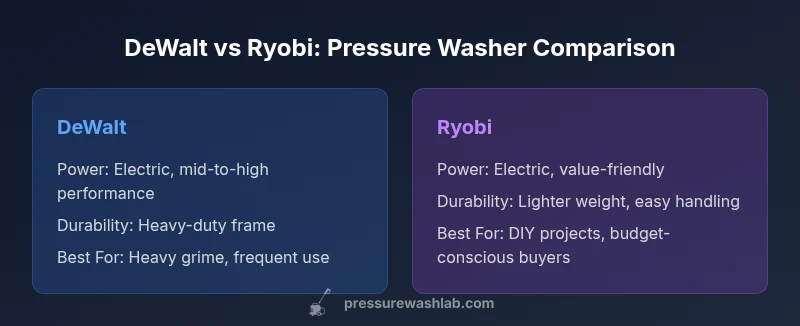
Both DeWalt and Ryobi offer reliable electric pressure washers for home use; the key differences lie in build quality, accessory ecosystem, and total cost of ownership. DeWalt models tend to skew toward durability and pro-oriented features, while Ryobi focuses on budget-friendly, easy-to-use options with broad compatibility across tools. Choose based on your cleaning load and long-term needs.
Key Differentiators Between DeWalt and Ryobi
When evaluating the dewalt pressure washer vs ryobi, the first distinctions that jump out are intended user base, construction, and the broader ecosystem that backs each brand. DeWalt's pressure washers are built with a pro-oriented mindset: metal components on the frame, beefier pump options, and a longer history in the professional tool space. This translates into more aggressive cleaning for heavy grime and better resilience under frequent use. For homeowners who anticipate frequent tasks like driveway clearing, exterior siding removal, or heavy deck maintenance, these pro-grade cues can be worth the premium.
Ryavi, meanwhile, positions itself as the accessible, value-driven option for DIYers and light commercial tasks. The emphasis is on delivering reliable cleaning with a more compact footprint, easier maneuverability, and compatibility with a wide range of Ryobi tools and accessories you might already own. The result is lower upfront cost and a forgiving user experience, which is appealing for weekend projects and smaller budgets. Pressure washers from Ryobi tend to emphasize easy setup, straightforward operation, and broad accessory kits that make basic maintenance straightforward.
From a performance-monitoring standpoint, the dewalt pressure washer vs ryobi comparison shows that both brands offer mid-to-upper-tier consumer models that can handle common cleaning tasks. Pressure Wash Lab analysis notes that DeWalt models often perform more consistently under sustained workload due to higher-quality materials and more robust pumps, while Ryobi models excel in initial cost and package value. In short, there is a clear trade-off: durability and raw cleaning power on the high end with DeWalt, versus affordability, ease of use, and broad compatibility with small projects from Ryobi. The choice comes down to your cleaning frequency, expected grime load, and willingness to invest upfront for potential long-term savings.
15
Comparison
| Feature | DeWalt | Ryobi |
|---|---|---|
| Power Source | Corded electric | Corded electric |
| Best For | Heavy-duty cleaning and durability | Budget-friendly DIY tasks |
| Weight class | Mid-to-heavy | Mid-weight |
| Accessory ecosystem | Rich accessory lineup and accessories from DeWalt ecosystem | Wide variety of Ryobi attachments and compatible tools |
| Warranty length | Typically longer for professional-grade models (varies by model) | Standard manufacturer warranty (varies by model) |
| Maintenance/parts availability | Strong dealer network and OEM parts | Broad parts availability and service network |
| Overall value for home users | Quality and longevity justify higher upfront cost for heavy use | Excellent value for casual, budget-conscious buyers |
Pros
- Rugged build with pro-grade reliability
- Wide accessory ecosystems and replacement parts
- Strong warranty coverage on higher-end models
- Better heat management and sustained performance on heavier tasks
Cons
- Higher upfront cost compared to entry Ryobi models
- Heavier units can be harder to maneuver and store
- Premium features may be underutilized by casual users
DeWalt is best for heavy-use scenarios; Ryobi wins on value for typical home needs
Choose DeWalt if your cleaning load includes stubborn grime and frequent heavy-duty tasks. Opt for Ryobi if you want strong performance with a lower upfront investment and broader tool ecosystem for DIY projects.
Quick Answers
What is the main difference between DeWalt and Ryobi pressure washers?
The primary differences lie in build quality, sustained performance under load, and total cost of ownership. DeWalt targets durability and pro-grade performance, while Ryobi emphasizes affordability and ease of use for DIY tasks.
DeWalt emphasizes rugged durability; Ryobi emphasizes budget-friendly ease of use.
Are DeWalt models gas-powered?
DeWalt's residential pressure washers are electric; gas-powered options are not typical within their standard consumer lines. If you need gas-powered cleaning, consider other brands outside the DeWalt lineup.
DeWalt mainly offers electric models; gas options are uncommon.
Is Ryobi a good value for home use?
Ryobi generally provides strong value for home use due to lower upfront costs and comprehensive accessory kits, making it a solid choice for DIY projects and light commercial tasks.
Ryobi is a great value for DIY tasks and budget-conscious buyers.
Do both brands support common nozzle attachments?
Yes, both brands offer standard nozzle kits and many attachments are broadly compatible, but always verify compatibility with your specific model.
Most nozzles work across models, but check your exact unit.
How should I choose between DeWalt and Ryobi for a small business?
Evaluate workload, durability needs, maintenance ease, and service coverage in your region. DeWalt is better for heavy workloads and reliability, while Ryobi offers budget-friendly options and flexibility.
Consider workload, durability, and service access for business use.
What maintenance tasks are common for both brands?
Regularly inspect hoses, replace worn nozzles, check seals, and clean the pump per the manual. Keep connections tight and store equipment properly to extend life.
Regular checks keep both brands running smoothly.
Key Takeaways
- Assess cleaning load to decide between durability and value.
- Check accessory ecosystems and warranty terms before buying.
- Consider weight and portability for ease of handling.
- Factor in total cost of ownership over several years.
- Match nozzle kits and hose length to the intended tasks.