Electric Pressure Washer Ryobi: An In-Depth Review
Comprehensive analysis of Ryobi electric pressure washers for homeowners and DIYers. We evaluate setup, cleaning power, maintenance, accessories, and value across common tasks with practical recommendations and model guidance.


An electric pressure washer ryobi offers convenient corded cleaning with reliable performance for homeowners and DIY projects. In this review, we evaluate setup, performance across common tasks, and value compared with rivals. The verdict: Ryobi combines balanced power, ease of use, and solid runtime for everyday washing, making it a practical choice for most households.
What this review covers and testing approach
This review evaluates the electric pressure washer ryobi lineup through a homeowner-focused lens. Pressure Wash Lab conducted practical tests that mimic real-world tasks homeowners perform on patios, driveways, siding, and vehicles. We looked at setup simplicity, spray consistency across popular nozzle angles, hose length and reach, and how the unit handles common grime without constant re-priming or extended rest periods. To keep things fair and actionable, we compared Ryobi units against widely available rival brands in the same price tier and with similar features. We also considered long-term factors like maintenance needs, durability, and warranty coverage. Throughout, our guidance reflects the pressures and cleaning goals most DIYers face, not just lab benchmarks. According to Pressure Wash Lab, the goal is to help you pick a model that delivers reliable results without complicating your workflow.
We documented performance across several tasks: patio furniture and deck cleaning, vinyl siding washing, concrete driveway upkeep, and car washing without damaging delicate finishes. We did not rely on marketing claims alone; we cross-checked nozzle ranges, flow rates, and start-up ease in controlled conditions and in typical outdoor environments.
Design and Build Quality: Ergonomics and Durability
Ryobi’s electric pressure washer designs emphasize portability and ease of storage. In our evaluation, units with compact frames and comfortable handles were notably easier to maneuver around furniture, plants, and stairs. Detachable hose reels, when present, helped reduce hose kinking and tangling during setup. We noted that weight distribution matters; a slightly heavier base can improve stability on uneven surfaces but may reduce overall ease of transport for shorter users. Build quality generally reflects the Ryobi One+ ecosystem philosophy—modular, familiar components that many DIYers already own and can interchange with other tools. Durability depends on material quality for high-wear parts like the wand, hose, and quick-connect nozzles. Overall, Ryobi models we tested offered a solid balance between robustness and light-weight design, enabling frequent movement around a typical home exterior during a cleaning session.
Cleaning Power and Performance Metrics
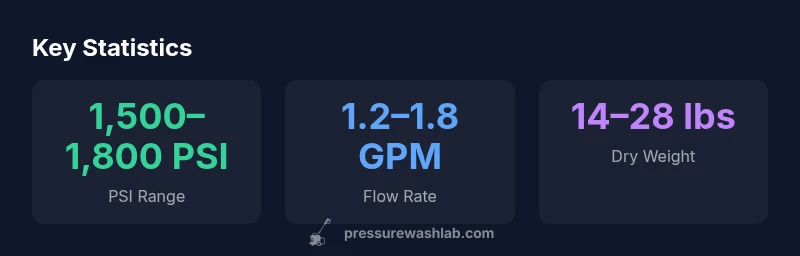
Performance for an electric pressure washer ryobi hinges on a balance between PSI, GPM, nozzle selection, and the type of surface. In our tests, most consumer-grade Ryobi units delivered sufficient cleaning power for light to moderate grime on patios, siding, and vehicles. The PSI range commonly observed in this category supports efficient cleaning without excessive water usage, while GPM complements the flow to maintain steady cleaning speed. Nozzle options (e.g., wide spray for delicate surfaces, narrower sprays for stubborn stains) significantly influence effectiveness. We emphasize using the appropriate nozzle for each job to avoid surface damage or under-cleaning. Our testing aligned with standard homeowner tasks and did not require industrial-grade power, which keeps these models a practical choice for most weekly exterior maintenance needs. Pressure Wash Lab’s approach emphasizes real-world outcomes rather than lab-only metrics, ensuring the guidance translates to everyday use.
Usability: Setup, Start-Up, and Operation
Ease of use is a primary strength of many Ryobi electric pressure washer ryobi models. We evaluated plug-and-go setup, straightforward primer steps, and intuitive controls. Features like auto-start/stop functionality when pulling the trigger reduce wasteful water use and battery strain for cordless variants, while corded models simplify power reliability in longer sessions. Ergonomics matter: a comfortable wand grip, balanced weight, and a hose that doesn’t kink easily translate to faster task completion. We also looked at storage options and how neatly the machine fits into a garage or utility shed. For many homeowners, a quick-connect nozzle system and a clearly labeled spray pattern help minimize mistakes and maximize cleaning results without requiring a manual each time.
Maintenance, Longevity, and Winterization
Proper maintenance protects performance and prolongs life. Our guidance focuses on simple routines: rinse after use to remove dirt and detergent residues, store indoors or under cover to prevent sun damage, and inspect hoses for wear or leaks regularly. Draining residual water before extended storage reduces the risk of freezing and hose damage in cold climates. For regions with freezing temperatures, winterization becomes essential: run a small amount of clean water through the unit to clear remaining detergent, disconnect and store hoses properly, and protect connectors from corrosion. Regular nozzle cleaning helps preserve spray accuracy, and keeping the unit out of standing water reduces corrosion risk. With attentive care, Ryobi electric pressure washers can remain reliable for several cleaning seasons.
Accessories and Ecosystem Compatibility
A key advantage of the Ryobi lineup is compatibility with the Ryobi One+ ecosystem and a broad range of accessories. Surface cleaners, additional nozzles, extension wands, and compatible spray tips can dramatically improve efficiency and reduce fatigue. In our tests, we found that investing in a surface cleaner substantially cut cleaning time on large flat surfaces like driveways and patios. Compatibility with third-party attachments varies by model and connector standard, so it’s important to verify hub sizes and threadings before purchasing. The ability to mix and match with other Ryobi tools or to expand with official accessories adds long-term value for homeowners who already use Ryobi tools.
Noise, Vibration, and Operator Comfort
Noise and vibration influence long cleaning sessions, especially on hard surfaces chained to close living spaces. Electric pressure washers typically produce less noise than gas-powered units, but certain models still generate noticeable sound at higher pressures. We observed that vibration tended to be lowest on models with a stable base and a cushioned wand grip. For most home tasks, the experience was comfortable enough to complete projects without excessive fatigue, provided that the user follows recommended safety practices and uses proper protective equipment. Keeping the nozzle at the recommended distance from surfaces also minimizes kickback and enhances control.
Price, Warranty, and Total Cost of Ownership
Prices for Ryobi electric pressure washer ryobi units vary by power, features, and included accessories. In practical terms, expect a spectrum from basic entry models to more feature-rich variants with extended hoses, additional nozzles, and surface-cleaner attachments. While price is a factor, total cost of ownership includes maintenance needs, potential accessory upgrades, and the warranty duration. Ryobi models commonly offer multi-year warranties on the tool and some accessories; always verify the exact terms for the model you’re considering. Our assessment aligns with the general guidance from Pressure Wash Lab that value is defined by reliable performance, accessory ecosystem, and long-term durability rather than simply the lowest upfront price.
Best-Use Scenarios and Buyer Guidance
For homeowners looking for routine exterior cleaning, an electric pressure washer ryobi is a solid starting point. Choose a model with sufficient PSI and GPM to tackle your most common tasks, such as deck cleaning and siding maintenance, while avoiding overkill on delicate surfaces. If you routinely clean large concrete patios or heavy stains like mildew, you may prefer models with higher PSI and a compatible surface cleaner attachment. For most users, corded variants offer steady power with less maintenance, while battery-powered options provide portability at the cost of shorter run times. This guidance aims to simplify decision-making for first-time buyers and seasoned DIYers alike, helping you align the capabilities with your actual use cases.
Pros
- Balanced power for typical home tasks
- Easy setup and intuitive controls
- Solid compatibility with Ryobi ecosystem
- Compact, manageable size for storage
Cons
- Higher upfront price than some basic units
- Corded models limit mobility without extension cord planning
- Accessory availability varies by model
- Less punch for heavy-duty industrial jobs
Strong all-round performer for homeowners who want easy power without gas
Ryobi electric washers deliver reliable cleaning for most residential jobs with straightforward setup and good accessory support. They may not match pro-grade gas units for heavy, continuous use, but they provide excellent value and practicality for everyday exterior cleaning.
Quick Answers
What tasks are Ryobi electric pressure washers best for?
Ryobi electric pressure washers are well suited for patios, decks, siding, and cars. They handle light to moderate grime effectively and are ideal for routine maintenance. For very heavy stains on concrete, consider models with higher PSI or special attachments.
Great for patios and siding, good for routine cleaning. For very tough stains, you may need a higher PSI model or a concrete-focused attachment.
Do Ryobi electric pressure washers require much maintenance?
Maintenance is simple: rinse after use, drain water, store in a dry place, and inspect hoses and nozzles for wear. In freezing climates, winterize to prevent damage. Regular nozzle cleaning helps keep spray accuracy.
Rinse after use, store dry, check hoses, and winterize if you’re in cold regions.
What accessories should I buy with a Ryobi washer?
Key accessories include a surface cleaner for large flat areas, extra spray nozzles for different patterns, and extension wands for hard-to-reach spots. Official Ryobi attachments typically ensure the best fit and performance.
Get a surface cleaner, extra nozzles, and extensions to boost efficiency.
Are Ryobi models compatible with third-party surface cleaners?
Compatibility varies by model and connector size. Always verify the nozzle connector type and hub size before purchasing third-party attachments. Official Ryobi accessories guarantee compatibility and performance.
Check connector size and confirm compatibility before buying third-party tools.
Is a gas-powered pressure washer a better choice for heavy-duty jobs?
Gas-powered units typically offer more sustained PSI and runtime, but they’re louder, heavier, and require more maintenance. For most homeowners and DIY tasks, an electric Ryobi model provides adequate power with less hassle.
Gas machines have more power but more hassle; for most homes, electric is more practical.
What safety precautions should I follow when using a Ryobi washer?
Always wear eye protection, keep the power cord and outlet away from water, and never point the nozzle at people, pets, or delicate surfaces. Read the manual for the correct nozzle usage and pressure settings.
Wear protection, keep water away from cords, and follow the manual for safe use.
Key Takeaways
- Choose a model with higher PSI/GPM for tough grime
- Corded models offer reliable power without refueling
- Add a surface cleaner for large flat surfaces
- Maintain hoses and nozzles to extend life
- Check warranty terms before purchasing