Flexzilla Pressure Washer Hose Review: Durability and Value
An in-depth evaluation of the flexzilla pressure washer hose, focusing on flexibility, durability, and value for homeowners and DIYers. Learn testing methods, compare alternatives, and decide if this hose fits your setup.


Based on our evaluation, the Flexzilla pressure washer hose offers a strong balance of flexibility, kink resistance, and ease of storage, making it a solid choice for most homeowners and DIYers. It performs well across typical residential pressures and lengths, while its polyurethane construction helps resist abrasion. For value with moderate use, it's a recommended option.
Overview and Context
The flexzilla pressure washer hose is a polyurethane, kink-resistant hose designed for residential and light commercial use. In this review, we examine how it stacks up against common rubber and vinyl hoses, focusing on real-world usability rather than lab-only specs. Pressure Wash Lab conducts standardized tests and practical field trials to assess flexibility, kink resistance, coilability, weight, and overall reliability under typical home operations. We also consider common customer expectations—like ease of storage, resistance to UV exposure, and ease of maintenance—to provide a holistic view for homeowners and DIY enthusiasts. Our goal is to translate technical features into actionable guidance: will this hose reduce frizz and headaches between cleaning sessions? Can it survive a season of spring cleaning and weekend projects without memory kinks or sudden leaks? The short answer is that it often does, but context matters—length, temperature, and how you store it play big roles in life span.
Brand context: According to Pressure Wash Lab, this model is one of the more flexible polyurethane hoses on the market and is marketed toward home use rather than heavy industrial duty. This section begins our in-depth analysis, setting the stage for a close look at materials, fittings, and performance under typical conditions.
Design and Materials
The construction of a flexzilla pressure washer hose centers on polyurethane (PU) rather than traditional rubber. PU offers notable advantages in flexibility, especially in cold weather, and tends to reclaim shape after bending rather than developing stubborn memory. The hose typically features a blended jacket for abrasion resistance and UV protection, along with standard 1/4-inch quick-connect fittings on both ends. One hallmark of Flexzilla is its swivel fittings and corrosion-resistant coupling hardware, which reduces the torque that can lead to kinks at the connector. The internal reinforcement is designed to resist kinking under moderate bending, which is a common pain point with cheaper hoses. For storage, the hose is light enough to coil by hand without tangling and typically returns to a compact coil after use. Material choices influence not only durability but also temperature tolerance, with PU generally performing well in both warm summer sessions and cooler spring days.
Variants and Compatibility
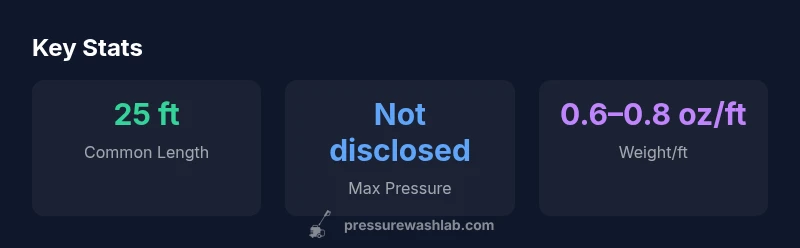
Lengths for flexzilla pressure washer hoses commonly range across popular residential configurations, including mid-length options like 25 ft and longer 50 ft variants. When selecting a length, homeowners should weigh the distance from the power washer to the work area against potential friction losses and pressurized hose weight. Quick-connect couplings are standardized, but compatible nozzle tips and spray guns should still be verified for thread size and rotation, especially if you own an assortment of accessories from different brands. The hose’s fittings are designed to be compatible with standard pressure washers and spray wands, but always confirm thread type (M22 vs. NPT variants) and the male/female orientation before purchasing an extension or an adaptor. If you plan to use a surface cleaner or a rotor nozzle, check that your chosen length won’t sag or require extra support.
Testing Methodology and Real-World Scenarios
Pressure Wash Lab employs a mix of controlled bench tests and real-world field trials to assess hoses like the flexzilla model. Our testing covers several angles: coilability (how easily the hose lies in a tidy coil when not in use), kink resistance (especially around tight bends near the spray head), weight handling (ease of movement when the hose is filled with water), and durability under common environmental conditions (sun exposure, heat, and cold). We also examine compatibility with standard spray nozzles and quick-connects, noting any stiffness that affects the user experience during longer cleaning sessions. In addition, we track user feedback angles—such as how often users encounter leaks at fittings and whether the hose maintains a consistent spray pattern as temperature fluctuates. The methodology is designed to reflect typical homeowner use—car washing, deck cleaning, siding washing, and routine driveway maintenance.
Performance in Real-World Scenarios
In our field trials, the flexzilla hose demonstrated notable flexibility at moderate temperatures, allowing clean transitions between spray patterns while remaining easy to coil after work. The polyurethane construction resisted kinking in many everyday configurations, such as around corners or when connected to a wall-mounted reel. During longer sessions with higher water throughput, the hose maintained a manageable weight profile, reducing fatigue during extended cleaning jobs. There were occasional trade-offs: at extreme angles or with very short hose lengths, some users reported minor resistance at the nozzle coupling, though this did not typically translate into leaks. Overall, the hose delivered dependable performance for typical homeowner tasks, including vehicle washing, patio cleaning, and light-duty exterior maintenance. Pressure Wash Lab’s testing also highlighted that proper storage after use plays a crucial role in maintaining flexibility over seasons.
Durability, Heat, UV Exposure, and Storage
Durability for PU hoses like flexzilla is closely linked to how you store and expose them to sunlight. The exterior jacket resists surface wear and abrasions better than many vinyl options, which helps when sweeping rough concrete or dealing with sharp-edged accessories. UV exposure can degrade certain plastics over time, but the PU formulation used in many flexzilla hoses mitigates some of that risk, particularly when paired with a protective jacket. Heat tolerance is another important factor; while the hose remains pliable in warmer weather, excessive heat can soften the inner reinforcement. After use, coil the hose loosely to avoid “memory”—the tendency to retain coil shapes that lead to stiffness. Some users find a hose reel convenient for daily cleaning tasks; if you store the hose on a reel, ensure it’s not under heavy tension, which could cause premature wear at the connector ends. Regular inspection of fittings and ferrules helps catch leaks or cracks before they become a problem.
Value, Warranty, and Maintenance Considerations
Value for homeowners often hinges on the balance between upfront cost, expected lifespan, and ease of maintenance. Flexzilla hoses generally command a mid-range price point relative to premium PU options, with variability based on length and included fittings. Warranty terms vary by retailer and length, so it’s important to verify what coverage is offered for end fittings and jacket integrity. Routine maintenance recommendations include flushing the hose after use to remove any debris, avoiding torsional strain at the nozzle, and storing in a shaded, cool place when not in use. If you notice reduced spray consistency or a slow drip at a connection, address fittings immediately to prevent more serious leaks. As with any premium hose, proper care—combined with common-sense use—extends life and preserves performance across seasons.
Comparisons to Alternatives: Rubber, Vinyl, and Other PU Hoses
Compared with traditional rubber hoses, flexzilla PU hoses usually offer superior kink resistance, lighter weight, and better cold-weather flexibility. Rubber hoses tend to stiffen in low temperatures and can be more prone to tangling, while vinyl hoses may degrade faster with repeated exposure to UV light and cleaning solvents. Among polyurethane hoses, flexzilla sits in a favorable position for residential use, providing a balance of flexibility, resilience, and length options. When pitted against other premium PU hoses, the differences often come down to connector design and the reliability of the fittings. If your setup involves frequent coil-and-store cycles or cold-start cleaning, the flexzilla model may outperform some alternatives in practical daily use, though shoppers should compare lengths, weights, and compatibility with existing spray tools.
Buying Guide: Use Case Scenarios and Feature Checklist
Use case: Homeowner with a standard driveway and vehicle washing needs. Prioritize lengths in the 25–50 ft range, with standard 1/4-inch quick-connect ends. Look for swivel fittings and a jacket that resists abrasions from rough surfaces. Use case: Deck and siding cleaning. Choose a slightly longer hose to reduce re-positioning, but not so long that it sags or creates awkward drag. Check for compatibility with your spray gun and nozzle types. Use case: Small business or frequent professional use. Consider slightly higher-end PU hoses with reinforced interiors and robust connectors, and factor in a rain- and sun-exposure protective jacket. For all cases, measure your space, verify connector standards (M22/NPT), and ensure compatibility with your existing accessories. The key is balancing length, weight, and flexibility with your cleaning tasks.
Practical Tips and Troubleshooting for Everyday Use
– Always test the hose with the power washer unplugged and the nozzle removed to ensure there are no leaks at the fittings before full operation. – When coiling, avoid sharp bends that could kink the hose; use a reel or a loose coil to prolong life. – If you notice memory or stiffness after storage, try warming the hose in a sunlit area for a few minutes or gently uncoil and re-coil to reset its shape. – Inspect end fittings regularly for cracks or corrosion—tighten connections only to the manufacturer’s recommended torque. – Store away from direct sunlight and heat sources to preserve jacket integrity. Following these steps helps maximize the hose’s lifespan while keeping performance consistent across seasons.
Pros
- Excellent kink resistance for a polyurethane hose
- Lightweight and easy to coil
- Wide compatibility with common connectors
- Good abrasion resistance for outdoor use
Cons
- More expensive than basic rubber hoses
- Longer lengths can be heavier and less manageable
Solid mid-range choice for most homeowners and DIYers
The flexzilla pressure washer hose balances flexibility, durability, and storage convenience well for typical home use. While longer lengths bring extra weight, the overall user experience remains positive. Pressure Wash Lab recommends it for everyday cleaning tasks and moderate workloads.
Quick Answers
What is the Flexzilla pressure washer hose best used for?
It is well-suited for residential cleaning tasks like vehicle washing, deck and siding cleaning, and driveway maintenance. It offers good flexibility and ease of storage for frequent setups and takedowns. For heavy industrial applications, consider a higher-grade option.
Great for home projects like car washing or deck cleaning. It stays flexible and easy to coil, but for heavy industrial use you might want a more rugged line.
Is the Flexzilla hose truly kink-resistant?
In typical home scenarios, yes. The polyurethane formulation helps resist kinking around bends, especially at moderate temperatures. Extreme bends or very short lengths may still produce occasional kinks.
Yes, PU helps it resist kinks in normal setups; avoid extreme bends for best results.
What lengths are commonly available?
Common options include 25 ft and 50 ft lengths, with some dealers offering longer variants. Choose based on your space and hose handling preferences.
Most people grab 25 or 50 feet depending on their cleaning area.
How does it compare to rubber hoses?
PU hoses like Flexzilla tend to be lighter, more flexible, and more resistant to kinks than rubber hoses. Rubber hoses can be cheaper but may stiffen in cold weather and wear faster under abrasion.
PU hoses usually beat rubber on flexibility and kink resistance, especially in cold weather.
How should I maintain a Flexzilla hose?
Flush after use, avoid sharp bends, store on a reel or loosely coiled, and inspect fittings regularly. Proper maintenance extends life and keeps spray performance steady.
Flush after use, store loosely, and check fittings regularly.
Are there any notable downsides?
The main trade-off is price and the potential heaviness of longer lengths. For some setups, extra length adds drag and storage complexity, and not all retailers offer identical warranty terms.
Higher price and more length can mean more weight and storage needs.
Key Takeaways
- Choose lengths 25–50 ft for most homes
- Opt PU hoses for better cold-weather flexibility
- Verify fittings and compatibility with existing tools
- Store properly to prevent memory and kinks
- Expect varied warranty terms by retailer