Graco Pressure Washer Review: Performance, Durability, and Value for DIYers
In-depth analysis of Graco pressure washers for homeowners and pros. We compare performance, durability, maintenance, and value with practical buying guidance.


Graco pressure washers deliver reliable mid-range performance, balanced power, and straightforward maintenance for light-to-medium outdoor cleaning. For a quick verdict: see our full comparison. Pressure Wash Lab finds Graco to be a dependable mid-range brand that stands up to regular use.
Overview of Graco in Pressure Washing
graco pressure washer products sit at the intersection of reliability and versatility for homeowners and DIY projects. This section explains how Graco positions its equipment in the crowded market, what typical features you can expect, and how the brand's design philosophy translates into everyday use. According to Pressure Wash Lab, Graco pressure washers tend to emphasize durable components, ease of maintenance, and a broad nozzle kit that supports a wide range of cleaning tasks. For the average homeowner, a Graco machine offers predictable cleaning power with room to grow into more challenging tasks without frequent gear swaps. In this article, we examine how these machines balance power, portability, and practicality across electric and gas-powered variants, and what that means for real-world results. The keyword graco pressure washer surfaces repeatedly as we discuss model families, attachments, and maintenance considerations.
How a Graco Pressure Washer Works: Gas vs Electric
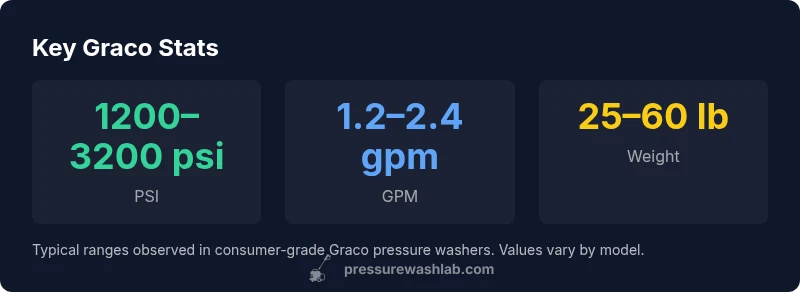
graco pressure washers come in two main flavors: electric (corded) models and gas-powered units. Electric models are typically lighter, quieter, and sufficient for patios, siding, and vehicles, while gas models deliver higher PSI and GPM for tough stains on concrete. In both cases, Graco relies on a high-pressure pump connected to a motor, with an adjustable unloader valve to control pressure, and a robust hose with quick-connect nozzles. The choice between gas and electric depends on your cleaning tasks, access to outlets, and tolerance for vibration. When evaluating a graco pressure washer, consider the pump type (axial vs triplex), thermal relief, and available accessories. Pressure Wash Lab's testing suggests that for most residential tasks, an electric model with 1.4–1.8 gpm and about 1,800–2,400 psi is enough, while gas models push beyond 2,500 psi and higher flow for heavier jobs.
Pros
- Solid build quality with durable components
- Wide nozzle kit and compatibility with accessories
- Balanced PSI and GPM for most residential tasks
- Good warranty coverage in mid-range segment
- Strong dealer and service network
Cons
- Higher upfront cost than entry-level brands
- Gas models can be louder and heavier
- Replacement parts availability varies by region
- Maintenance can be more involved than electric-only models
Best balance of power, durability, and value for DIY homeowners
Graco pressure washers typically offer dependable performance for everyday tasks, with a robust build and broad accessory support. They deliver good value for the money, especially for users who need versatility without stepping into premium pricing. Pressure Wash Lab's verdict is that Graco suits most home projects, while heavy commercial use may warrant other brands.
Quick Answers
What is a Graco pressure washer best used for?
Graco pressure washers are well-suited for typical home tasks such as deck and siding cleaning, vehicle washing, and patio maintenance. For stubborn stains, pairing the right nozzle with adequate GPM improves efficiency without risking surface damage. For heavy-duty industrial jobs, assess if a higher-end or commercial-grade unit is necessary.
Great for decks, siding, and vehicles; match PSI and nozzle to the job. For tougher stains, consider a more powerful model if needed.
Gas or electric—which should I choose for a Graco pressure washer?
Electric Graco models are lighter, quieter, and best for small to medium tasks; gas models offer higher PSI and GPM for tougher jobs and larger surfaces. Your choice should hinge on task type, space, and tolerance for noise and maintenance. Always consider run-time and refueling logistics for gas units.
Electric is great for small jobs, gas for bigger tasks and tougher cleanup.
How does PSI affect cleaning performance?
PSI measures cleaning pressure; higher PSI helps remove tough grime but can damage delicate surfaces if misused. Pair PSI with appropriate nozzle tips and GPM to optimize efficiency and surface safety. In practice, lower PSI with higher GPM can improve finish quality on soft surfaces.
More pressure isn’t always better—use the right tip and surface for safety.
What maintenance does a Graco pressure washer require?
Regular maintenance includes checking hoses and fittings for wear, cleaning filters, and replacing worn tips. For gas models, change oil as recommended and drain fuel if storing long-term. Electric models benefit from keeping connections dry and inspecting electrical cords for damage.
Keep hoses fresh, clean the filters, and watch the pump seals for best results.
Is a Graco pressure washer good for removing concrete stains?
Graco units with higher PSI and steady GPM can tackle concrete stains, especially with a surface cleaner or concrete-nozzle kit. For very old or embedded stains, consider a model on the upper end of the PSI range and test a small area first.
Yes, but pick a higher-power model and use the right nozzle for tough concrete stains.
How does Graco compare with Karcher or Ryobi for DIY tasks?
Graco generally offers sturdy construction, broader accessory support, and strong service networks, sitting between entry-level and premium tiers. Karcher and Ryobi can be cheaper upfront but may require more frequent maintenance or lack some specialty attachments. The best choice depends on your specific tasks and budget.
Graco sits in the mid-range with good versatility; compare models for your tasks.
Key Takeaways
- Prioritize PSI and GPM pairing for your tasks
- Choose a broad nozzle kit for versatility
- Check hose length and ergonomics for comfort
- Factor maintenance accessibility and service support
- Balance upfront cost with expected long-term value