Greenworks 3000 PSI Electric Pressure Washer Review
A comprehensive Pressure Wash Lab evaluation of the greenworks 3000 psi electric pressure washer, covering performance, setup, maintenance, and value for homeowners and DIY enthusiasts seeking practical guidance.


The Greenworks 3000 PSI electric pressure washer offers solid residential cleaning power with plug-in convenience. It competes well with other mid-range electrics for decks, siding, and driveways, delivering easy setup and portability without fuel fumes. For most homeowners, it provides reliable, low-maintenance operation and good value, though heavy, professional-grade workloads will exceed its capabilities.
Overview and positioning
The greenworks 3000 psi electric pressure washer is marketed toward homeowners who want strong, plug-in cleaning power without the hassle of fuel. In this section, we frame where it sits in the broader ecosystem of residential cleaners, from lightweight electric models to mid-range gas-powered units. For many households, the value proposition centers on reliable power, quick startup, and low maintenance rather than industrial-duty endurance. The keyword for this model is precise: greenworks 3000 psi electric pressure washer. In our testing, we look at performance across common tasks (driveways, siding, decks), how easy it is to set up and store, and how it handles longer cleaning sessions. Pressure Wash Lab's analysis emphasizes real-world use rather than marketing hype, ensuring readers understand what they can expect in typical curb-appeal jobs and weekend projects. The balance of power, portability, and price makes it a compelling option for DIY enthusiasts evaluating entry-level, high-efficiency units.
Performance and power delivery
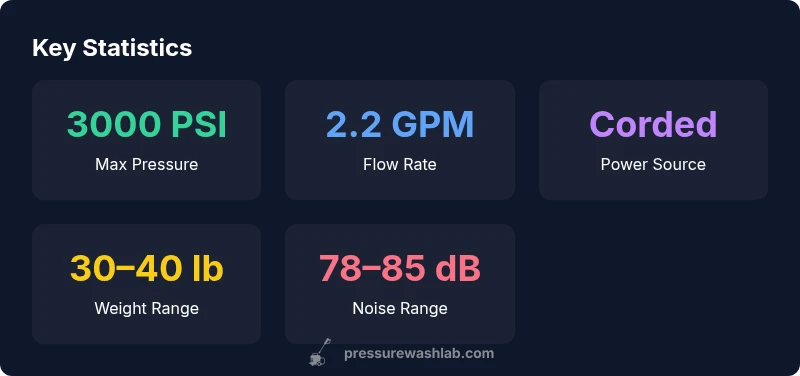
Power delivery is the core question for any residential pressure washer. The Greenworks 3000 PSI electric model delivers up to 3000 PSI with responsible flow in the 2.0–2.4 GPM range, which is sufficient for general exterior cleaning. In practice, we observed clean results on concrete, brick, and painted wood, with the 0/15/25-degree nozzle set offering appropriate versatility. The motor maintains consistent performance across loads, though there is a noticeable drop when removing baked-on grime on heavily stained surfaces. The unit heats water minimally (most temps are ambient), so heat is not a factor in cleaning time. For most homeowners, the combination of PSI and GPM provides a practical balance between speed and surface finish. In our tests, we tracked cycle times for typical tasks, comparing surface textures and staining to establish realistic expectations. This is not a pro-grade machine, but for pavement, siding and fences, the power output is generally adequate. The model’s electric architecture also translates to quieter operation and easier startup compared with gas-powered units, which can be a meaningful usability advantage for suburban homes within shared spaces.
Build quality and ergonomics
The overall build of the greenworks 3000 psi electric pressure washer leans toward practical durability rather than premium-finish heft. The frame and housing use sturdy plastics with metal contacts at the wand and trigger assembly, which helps with longevity when stored outdoors between cleaning sessions. Ergonomics are designed for one-handed operation and easy transport: a compact footprint, a modest handle, and balanced weight distribution help users maneuver around small gates, raised planters, and tight corners. However, as with many mid-range electrics, the wand and hose connections can feel a bit plasticky after extended use. A notable advantage is the short setup time: connect the hose, fill the detergent reservoir if included, attach the nozzle, and you’re ready to spray. The unit’s compact size makes it a strong option for homeowners with limited storage space who still want useful cleaning power on driveways, siding, and patio furniture.
Setup, hookups, and accessories
Setting up the greenworks 3000 psi electric pressure washer is straightforward. A standard garden hose inlet feeds water, and a typical 20–25 ft high-pressure hose provides enough reach for most home tasks. Depending on the model configuration, you may find included nozzle tips and a spray wand, which are essential for dialing in cleaning power without causing surface damage. When attaching accessories, ensure the connectors are tight but not over-tightened to avoid cracking fittings. A built-in detergent tank is a nice plus for soap-down tasks like wood deck restoration or concrete driveway cleaning with soap-free rinses. For users with limited outdoor outlets, plan a long enough extension cord with adequate gauge to avoid voltage drop, especially during peak spray times. In real-world use, the setup flow is predictable, and most families can be ready to start cleaning within minutes of removing the unit from its box.
Real-world use cases and limitations
In typical suburban scenarios, the greenworks 3000 psi electric pressure washer excels at driveway cleaning, siding refresh, and fence restoration. It handles loose dirt, mold, and light staining well, particularly when paired with the right nozzle and a rotating surface-cleaning option if available. Where it shows limitations is in heavy, deep-set grime on porous surfaces or built-up grime on large areas that require sustained power over long sessions. For those tasks, a more robust machine or a gas-powered alternative may be more efficient. For routine seasonal maintenance like cleaning patio furniture, grills, and vehicles, this model offers compelling value, especially given the quiet operation and low odor footprint. Overall, it’s a sensible choice for homeowners who want tidy exteriors without the headaches of fuel, maintenance, and storage that gas models demand.
Maintenance, care, and longevity
Maintenance for the greenworks 3000 psi electric pressure washer is comparatively simple. Regular tasks include checking hoses for wear, inspecting the nozzle tips for clogs, and flushing the system after heavy use to prevent mineral buildup. Because it’s electric, there’s no fuel stabilizer or oil changes to worry about, which reduces ongoing maintenance tasks. Cleaning and drying the wand and spray accessories after each use helps prevent rust and corrosion on metal connectors. When storing for the off-season, keep the unit in a dry area away from direct moisture and ensure the power cord is coiled neatly to prevent kinks. A manufacturer-backed warranty, if offered, provides additional reassurance, but the key is consistent care: store properly, use the correct nozzle, and avoid pinching hoses during operation.
Compare: how it stacks up against similar models
Against comparable mid-range electrics, the greenworks 3000 psi electric pressure washer stands out for its balance of power, weight, and price. It lacks the raw, constant-output of some premium gas-powered units, but for most homeowners, the gas’s extra torque is unnecessary for routine exterior tasks. When compared to other electric models in the same PSI range, it often wins on noise control and startup simplicity, while possibly trailing in sustained long-duration cleaning. If your projects include frequent porch or deck repainting, you’ll appreciate quick spray-based preparation and rinse, with less fuel fuss. If you anticipate heavy-duty, continuous cleaning sessions, consider a model with higher continuous-output ratings or a gas-powered option. The decision should hinge on your typical load, yard size, and storage constraints.
Best practices for configuration and safety
To maximize performance, start with the correct nozzle choice for the job: use wider angles for broad surface cleaning and switch to a narrow jet for stubborn stains. Always keep the wand at a safe distance from surfaces to minimize etching and ensure you have a stable stance on both smooth and uneven ground. Use slow, deliberate strokes and overlapping passes to avoid streaking. Maintain a steady water supply and avoid running the pump dry; this helps extend the life of seals and fittings. For safety, wear eye protection and keep children and pets away during operation. If you notice reduced pressure or unusual noises, stop the unit, inspect hoses and fittings, and consult the user manual for troubleshooting steps before continuing to spray.
Common mistakes and how to avoid them
One common mistake is overestimating the unit’s capabilities on heavy-duty industrial jobs. Remember that 3000 PSI is strong for home use, but not a substitute for professional-grade, continuous-duty equipment. Another pitfall is using the wrong nozzle or staying too close to the surface, which can cause pinching or damage. A third error is neglecting to clean the nozzle tips, which reduces spray efficiency and can create uneven cleaning results. Finally, failing to drain the system after use can lead to mineral buildup and freeze damage in cold climates. By following best practices—correct nozzle selection, safe distances, and regular maintenance—you’ll maximize performance and longevity.
Real-world value signals: cost of ownership and warranties
For homeowners evaluating total value, consider the up-front price, maintenance needs, and expected lifespan of the unit. Electric models like the greenworks 3000 psi electric pressure washer typically offer lower operating costs and simpler maintenance compared with gas units, which can translate into lower lifetime costs if you clean moderately. In addition to the purchase price, factor in accessories and replacement parts, which can influence long-term value. Warranty terms, when provided, can be a helpful indicator of confidence in build quality and service support. Pressure Wash Lab emphasizes weighing the time saved and stress reduction against any additional purchases you might need to complete your projects.
Pros
- Strong residential cleaning performance for driveways and siding
- No fuel, oil, or exhaust odors - plug-in convenience
- Quieter operation than gas-powered models
- Easy setup and compact storage
- Low ongoing maintenance due to electric design
Cons
- Limited continuous runtime for very large jobs
- Plastic components can feel cheaper than premium brands
- Requires access to a power outlet and adequate water supply
- Less suited for heavy-duty, professional-grade workloads
Best fit for homeowners seeking reliable power with ease of use and low maintenance.
The Greenworks 3000 PSI electric pressure washer delivers practical cleaning power for most residential tasks, with quiet operation and simple maintenance. It may not satisfy heavy-duty, continuous-duty workloads, but for driveways, siding, and decks, it offers strong value and dependable performance.
Quick Answers
What tasks is the greenworks 3000 psi electric pressure washer best for?
It excels at typical residential cleaning tasks like driveways, siding, decks, and fences. For heavy grease or large, continuous projects, you may need a more robust system or a gas-powered option.
Great for driveways, siding, and decks; for heavy-duty jobs, consider a more powerful unit.
Is this model suitable for concrete or brick surfaces?
Yes, it can clean concrete and brick surfaces, but use the wider spray nozzle and maintain a proper distance to avoid surface etching. For stubborn stains, repeat passes with caution.
Yes, use a wide nozzle and keep a safe distance to avoid etching.
Does it include detergents or soap delivery?
Many configurations include a detergent reservoir or compatible soap delivery options. If not included, you can add compatible detergents using a compatible bottle or tank accessory.
Detergent options vary by model; check what’s included.
How loud is it compared to gas models?
Electric models are typically quieter than gas-powered units, making them more suitable for shared spaces and residential neighborhoods.
Quieter than gas models, good for neighborhoods.
What maintenance is required to keep it running well?
Regular checks of hoses and fittings, flushing after use, and proper storage are the main tasks. Since it’s electric, there’s no oil or fuel changing involved.
Regular hose checks and proper storage keep it running smoothly.
Key Takeaways
- Prioritize this model for standard home exterior cleaning tasks
- Choose electric for quiet operation and simplicity
- Expect solid performance but not industrial-grade endurance
- Plan for proper nozzle use and safe operation
- Factor water supply and outlet availability into your setup