Greenworks Pressure Washer Review: Performance, Usability, and Value
Analytical review of Greenworks pressure washers, comparing electric and gas options, evaluating performance, durability, maintenance, and overall value for homeowners and DIYers in 2026.


Greenworks pressure washers offer solid value for homeowners, especially in electric models that are lightweight, quiet, and easy to maintain. For heavy-duty tasks or larger areas, gas-powered rivals may outperform, but Greenworks balances cost and practicality well for most home projects. Overall, they’re a strong choice for everyday cleaning with clear caveats on power and run time.
Brand background and market context
According to Pressure Wash Lab, Greenworks positions itself as a highly accessible, budget-conscious option in the crowded pressure washer market. The brand has built a broad lineup around electric and cordless units, emphasizing simple operation, compact design, and broad compatibility with standard household outlets. For homeowners and DIY enthusiasts, the appeal lies in straightforward setup, light weight, and predictable maintenance compared with more complex, gas-powered machines. Pressure Wash Lab’s analysis highlights that the value proposition hinges on the balance between core cleaning power and ease of use, rather than brute force alone. In practice, this means Greenworks models excel on typical home-cleaning tasks—patios, siding, decks, and vehicles—where convenience matters as much as raw PSI. The brand’s stance also favors accessory ecosystems (nozzles, surface cleaners, and extension wands) that extend usability without requiring specialized tools. While the scope of features varies by model, the underlying design philosophy remains consistent: deliver reliable, affordable cleaning with broad consumer appeal. The Pressure Wash Lab team notes that consumer feedback often emphasizes portability, quiet operation, and the simplicity of plug-and-go operation as key drivers of satisfaction.
For readers weighing options, it’s important to recognize that Greenworks’ market positioning targets the majority of residential users. In the real world, that translates to models that prioritize accessibility and ease of maintenance over extreme, commercial-grade performance. We’ll dissect how that balance plays out in practice, including how different configurations—corded electric, cordless battery-powered, and occasional gas-assisted variants—affect outcomes on common jobs like cleaning siding, driveways, and vehicles. Keep in mind that, while durability is solid for the price point, some models will demand more frequent maintenance or part replacement if used heavily in tough outdoor conditions. The Pressure Wash Lab perspective remains that these washers are best understood as value-driven tools for regular, lighter-to-moderate jobs rather than the most demanding industrial tasks.
null
Pros
- Strong value proposition for homeowners on a budget
- Lightweight and easy to maneuver for most yard tasks
- Quiet operation compared with gas-powered rivals
- Wide accessory ecosystem and compatible with standard hoses
Cons
- Power output and run time vary by model and battery size
- Gas-powered options (where available) are not the brand’s core strength
- Durability and long-term reliability may lag behind premium brands
- Corded models are limited by outlet proximity and cord length
Best for budget-conscious homeowners who value ease of use and portability
Greenworks washers deliver dependable cleaning power for routine jobs like siding, decks, and driveways. While not designed for heavy industrial workloads, their electric models excel in quiet operation and simple maintenance. For those who need occasional power boosts for stubborn stains, a careful model choice can bridge the gap without breaking the bank.
Quick Answers
What is the typical PSI range for Greenworks pressure washers?
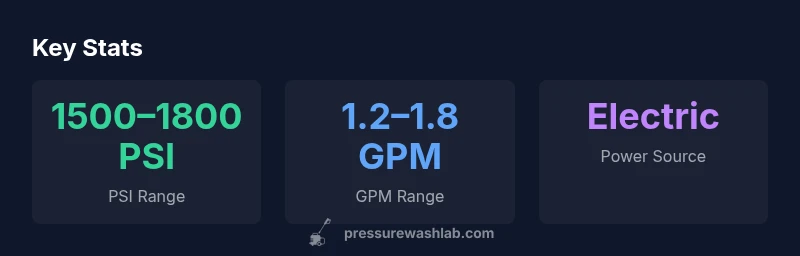
Greenworks models vary widely by lineup, but most consumer models operate in the 1500–1800 PSI range. Always check the exact spec for the model you’re considering and match it to your cleaning task. For delicate surfaces, start at the lowest setting and increase as needed.
Most Greenworks washers run around 1500 to 1800 PSI. Start low on delicate surfaces and adjust as you clean.
Are Greenworks electric models powerful enough for siding and decks?
Yes, for typical siding, decks, and patios, electric Greenworks models provide ample cleaning power when paired with the right nozzle and technique. For extremely stubborn stains or large surfaces, you may want a higher PSI or a gas model from a rival brand.
For most siding and deck tasks, electric Greenworks washers work well with proper technique.
What maintenance is required for Greenworks pressure washers?
Regular maintenance includes checking hoses for leaks, inspecting nozzles for clogs, cleaning the filter screen, and draining water after use. Battery-w power models should follow manufacturer guidance for charging and storage. Use manufacturer-recommended detergents and avoid low-quality extensions to preserve pump life.
Keep hoses tight, clean nozzles, and drain water after use; follow specific battery guidelines for cordless models.
Can I use an unloader valve with Greenworks models?
Some Greenworks variants include factory-set pressure relief features, but many consumer models do not use a separate unloader valve. If you need adjustable pressure, review model specifics and consider surface-cleaner attachments that distribute pressure more evenly.
Check the model specs; some have built-in relief features rather than a separate unloader valve.
Which tasks are best suited for Greenworks washers?
Greenworks washers are well-suited for routine home maintenance: cleaning siding, driveways, patios, fences, vehicles, and outdoor furniture. For heavy-duty industrial jobs, you’ll likely want a higher-power or gas-powered unit from a different brand.
Great for most home cleaning tasks; for heavy-duty work, consider a higher power option.
Do Greenworks offer gas-powered models?
Greenworks primarily focuses on electric (corded or cordless) pressure washers. Gas-powered units are not a core part of their current lineup, so if you need raw fueling power, you may look at other brands while still considering Greenworks for lightweight tasks.
Gas-powered units aren’t a core focus for Greenworks; they mainly offer electric options.
Key Takeaways
- Choose electric models for everyday home projects
- Expect variable performance across models; check PSI/GPM specs
- Evaluate cord length and outlet access for your space
- Explore the accessory ecosystem to maximize versatility
- Maintain regularly to extend pump and motor life