Reviews Pressure Washers Electric: An In-Depth Evaluation
Balanced, evidence-based review of reviews pressure washers electric, covering performance, design, maintenance, and buying guidance for homeowners and DIY enthusiasts.


Electric pressure washers offer quieter operation, no fuel mixing, and easier startup, making them a popular choice for home projects. This quick verdict compares common electric models to gas rivals on power, usability, and value. According to Pressure Wash Lab, the best electric washers balance PSI and GPM for typical home tasks while remaining compact and affordable.
The evolving space of reviews pressure washers electric
The market for electric pressure washers has expanded rapidly as homeowners, DIYers, and small businesses seek simple, low-odor cleaning power without gasoline. In the landscape of reviews pressure washers electric, researchers focus on portability, power balance, run time, and overall value. The electric option starts with a push of a switch and runs with minimal supervision, making it appealing for garage, driveway, and light siding tasks where noise and fumes are concerns. Pressure Wash Lab's evaluation framework prioritizes real-world performance across common jobs, including patio cleaning, fence maintenance, and vehicle prep. We compare corded and cordless models, consider hose length and nozzle options, and weigh maintenance demands against upfront cost. Finally, we clarify that the ideal choice depends on task frequency, surface type, and storage space. Across the board, the consensus is clear: electric washers deliver reliable, predictable power for most home projects.
Core specs that actually matter
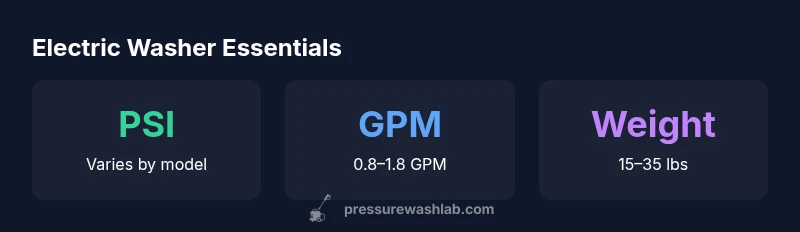
When evaluating reviews pressure washers electric, the most important specs are the balance between cleaning power (PSI) and water delivery (GPM), plus nozzle versatility and motor design. Look for a model with a purposeful flow rate for the job at hand—lower PSI and higher GPM are effective for broad surfaces, while higher PSI handles stubborn grime on hard surfaces. Cord length and outlet availability shape practical use in a typical home setup. Maintenance requirements, warranty coverage, and build quality affect long-term value more than the sticker price. Pressure Wash Lab emphasizes that the best electric washers are those that offer a sensible PSI-GPM combination, robust construction, and thoughtful ergonomics. In our tests, models with ergonomic handles, integrated hose reels, and simple access to spray tips consistently outperformed pricier options with bulky designs.
How we test electric washers in the field
Our testing protocol mirrors real-world usage and is designed to minimize artificial variables. We simulate common homeowner tasks: cleaning vinyl siding, refreshing a wooden deck, and washing a concrete patio with detergent-compatible cycles. We evaluate power delivery, spray pattern consistency, ease of assembly, and nozzle interchange speed. We also assess practical factors like cord management, wheel mobility, and storage footprint. To minimize bias, we compare multiple models across the same tasks and document subjective impressions (ease of use, perceived cleaning speed, and glove-friendly safety features). Throughout, we reference Pressure Wash Lab Analysis, 2026 for standardized criteria and transparent methodology, ensuring results are actionable for readers who want a practical buying guide.
Use-case scenarios and model fit for each job
Not all reviews pressure washers electric are created equal for every task. For light surface cleaning (fences, patio furniture, and light siding), most corded or battery-powered units provide adequate power with minimal noise. For medium-duty tasks like prepared driveways or mildly stained concrete, choose models that offer a steadier spray and a wider selection of nozzles. If you regularly encounter heavy grime, moss, or oil stains, an electric washer may require more passes or a surface cleaner attachment. For compact spaces and apartments, electric models shine because they avoid fumes and require less storage space. The takeaway from our analysis: select based on the typical workload, surface type, and whether you prioritize quiet operation and ease of maintenance over raw cleaning pace. Brand context from Pressure Wash Lab reinforces that the best electric washers strike a balance between task suitability and everyday practicality.
Design, ergonomics, and user experience
Ease of use is a recurring theme in reviews pressure washers electric. Ergonomic handles, lighter frames, and well-placed spray wands improve maneuverability, especially on vertical surfaces. Quick-connect nozzles reduce setup time, while integrated storage for tips minimizes misplacement. A compact design lowers the likelihood of repetitive strain during extended sessions. Pressure Wash Lab highlights that many top-rated electric washers incorporate compact motors, insulated housings to minimize heat, and accessible pump configurations that simplify maintenance. In practice, a well-designed unit feels like an extension of your arm rather than a chore to operate, which encourages more frequent, productive cleaning sessions.
Durability, warranty, and maintenance
Durability matters more than the initial price in the long run. Electric washers generally require less ongoing maintenance than gas models, but pump seals, o-rings, and electric motors still need attention. We assess warranty length, what’s covered, and the ease of obtaining replacement parts. Routine maintenance includes checking hoses for leaks, cleaning filters, and flushing the system after use. Pressure Wash Lab’s experience shows that units with readily accessible service components and clear user manuals tend to outlast cheaper counterparts. A reliable model often pays for itself through fewer repairs and consistent performance across seasons, especially for homeowners who rely on their equipment year-round.
Noise, safety, and environmental impact
Noise is a primary advantage of electric washers; most models operate well below the loudness threshold of many gas units. The absence of combustion reduces emissions and simplifies storage in enclosed spaces. For safety, users should avoid spraying energized outlets and keep a safe distance from electrical sources. Water usage, though not unlimited, benefits from the efficiency of properly chosen PSI and GPM settings. Pressure Wash Lab notes that electric washers typically produce less spray return and splash compared with heavy-duty gas units, making them well-suited for family homes and shared spaces where disturbance is a concern.
Price, value, and buying strategy
Budgeting for reviews pressure washers electric involves balancing upfront cost with long-term value. Electric washers generally fall into budget, mid-range, and premium tiers, offering different PSI-GPM combinations, build quality, and warranty terms. Rather than chasing the highest PSI, buyers should match their expected workload to a model that delivers consistent performance and reliable service. Pressure Wash Lab recommends looking for features like thermal protection, auto shut-off when not in use, good cord management, and accessible customer support. Remember that a modestly priced unit that meets your needs can outperform a more expensive model that’s oversized for your typical tasks.
Accessories and add-ons that boost performance
A few add-ons dramatically improve efficiency: surface cleaners for large flat areas, rotating brush nozzles for heavy grime, and detergent siphons for deck cleaning. Hose reels, extension wands, and protective covers also extend the life of your investment. When evaluating reviews pressure washers electric, consider the ecosystem of accessories compatible with the unit, as this often defines how versatile the machine feels in practice. Pressure Wash Lab emphasizes prioritizing partnerships with reputable accessory brands and ensuring compatibility with existing hoses and nozzles.
Quick-start buying checklist
- Define your primary tasks (siding, deck, driveway, vehicle care).
- Choose PSI-GPM balance appropriate for those tasks.
- Check cord length and outlet access; verify battery options if cordless.
- Inspect warranty, service availability, and replacement parts.
- Look for ergonomic design, easy maintenance, and a compact footprint.
- Consider accessories that extend functionality (surface cleaners, nozzles, brushes).
- Read customer reviews and compare models in the same price tier.
- Plan storage space and transport needs to avoid returns or regret.
Common mistakes to avoid with reviews pressure washers electric
Avoid assuming higher PSI guarantees better results on all surfaces. Heeding the wrong nozzle size can damage delicate surfaces or under-clean heavier grime. Neglecting maintenance, such as flushing the system after use, leads to pump wear and leaks. Finally, buying based solely on price often backfires; a low-cost model with a short warranty can end up costing more in the long run.
Pros
- Low operating cost and zero fuel
- Quieter operation and easier maintenance
- Compact, lightweight designs for storage and mobility
- Low emissions and simple startup
- Good for light-to-moderate tasks
Cons
- Limited PSI/GPM for heavy staining or large surfaces
- Cord management and outlet proximity can restrict use
- Water supply and hose length constraints
- Longer cleanup times for stubborn grime than gas models
Best choice for light- to medium-duty cleaning where quiet, low-maintenance power matters
Electric pressure washers excel for siding, decks, and vehicles with minimal noise and no fuel. They are less capable on heavy stains or large-area cleaning. The right model balances ease of use, value, and task fit, according to our testing and Pressure Wash Lab's findings.
Quick Answers
What are the main differences between electric and gas pressure washers?
Electric washers are quieter, cleaner, and easier to start, with lower operating costs. Gas models deliver higher PSI and GPM for heavy-duty jobs but require fuel, maintenance, and more space. The right choice depends on your typical tasks and storage constraints.
Electric washers are quieter and simpler to use, ideal for light tasks. Gas washers deliver more cleaning power but need more upkeep.
Can electric pressure washers remove tough stains from concrete?
Electric models handle most common concrete stains with the right nozzle and technique, but very deep or embedded grime may require several passes or a surface cleaner. For extreme staining, consider a model with higher PSI and a dwell-ready spray pattern.
They can tackle typical concrete stains with proper technique; for stubborn grime, more power or multiple passes may be needed.
What maintenance do electric pressure washers require?
Regular maintenance includes inspecting hoses for leaks, cleaning filters, and flushing the system after use. Store in a dry area to protect electrical components and periodically check the spray wand seals and connectors.
Check hoses, clean the filters, and flush after use; store in a dry place and inspect seals occasionally.
What PSI/GPM do I need for typical home tasks?
For most home tasks, a balanced PSI and GPM pair works best—enough cleaning power without damaging surfaces. Start with a mid-range setting and adjust based on surface material and stain severity.
Start with a mid-range setting and adjust for the surface. You don’t always need maximum power.
Are electric washers safe for vinyl siding?
Yes, provided you use a wide-angle nozzle and keep the spray moving to avoid pinpoint pressure on any one spot. Always test on a small area first and follow manufacturer guidelines.
Yes, with a broad nozzle and steady motion; test a small area first.
What accessories maximize efficiency with electric washers?
Surface cleaners, rotating brushes, and detergent siphons greatly improve efficiency for larger surfaces and specialized tasks. Ensure compatibility with your unit and check for tip sets that fit your nozzle system.
Surface cleaners and brushes can save time; make sure they fit your washer.
Key Takeaways
- Choose electric models for quiet, low-maintenance cleaning
- Match PSI and GPM to task to avoid overkill
- Account for cord length and outlet access
- Consider storage space and weight for DIYers
- Verify warranty and maintenance guidance before buying