Electric vs Gas Pressure Washers: A Comprehensive Comparison
Compare electric and gas pressure washers to understand power, cost, maintenance, and best-use scenarios. This practical guide helps homeowners and pros choose the right tool for their projects.


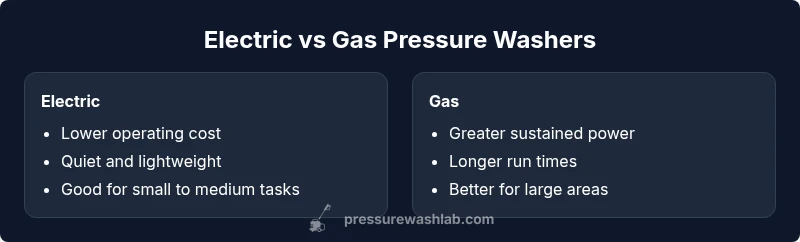
Electric pressure washers are lighter, quieter, and cheaper to run, making them a solid choice for light-to-moderate outdoor cleaning. Gas models deliver more consistent power for large areas and stubborn grime, ideal for heavy-duty jobs. For most homeowners, electric meets daily needs; for large driveways or frequent tough cleaning, a gas washer offers real value. This comparison helps you pick the right tool.
Core Differences Between Electric and Gas Pressure Washers
Choosing between electric and gas pressure washers begins with understanding the core design and intended use. Electric units run off household power and are generally lighter, quieter, and simpler to operate. Gas-powered models rely on internal combustion engines, delivering more peak power and longer continuous operation, which is useful for larger surfaces or frequent heavy cleaning. According to Pressure Wash Lab, the biggest decision is whether you prioritize mobility and quiet operation or raw cleaning power. Additionally, take stock of your typical environments: enclosed garages, apartment buildings, or rural properties each present different constraints. The trade-offs go beyond raw horsepower: weight, ergonomics, fuel logistics, and maintenance requirements all influence the total cost of ownership. For most homeowners who clean siding, driveways, fences, and vehicles a few times per season, an electric washer often checks the boxes for performance, convenience, and safety. Smaller electric models are commonly sufficient for routine maintenance at a single-stall home or a mid-sized driveway, while dedicated detail projects or frequent use may justify a gas unit. The key is matching your expected duties to the machine’s power band and runtime.
Power Delivery, Performance, and Use Scenarios
Power delivery is the defining difference in most buyers' minds. Electric pressure washers get their energy from a wall outlet, which means they're typically adequate for light to moderate cleaning tasks and small to medium surfaces. Gas models burn fuel and use an internal combustion engine, which delivers more aggressive cleaning capability on demand. For outdoor tasks like cleaning a freestanding fence, peeling concrete, or restoring a weathered deck, a gas unit often completes the job more quickly and with fewer passes. In practice, the choice depends on the surface, the level of soil, and the time you can spare. The best approach is to map your most frequent projects and compare the required cleaning intensity to the machine's effective range. Additionally, consider nozzle types and accessories that influence performance; even a modest electric unit can outperform a powerful gas unit on a particular task if you use the right nozzle and spray technique. Overall, electric machines shine in controlled environments, while gas engines excel in open spaces and stubborn grime.
Cost of Ownership, Energy Use, and Efficiency
Upfront costs, ongoing running costs, and maintenance obligations shape the total cost of ownership. Electric pressure washers generally come with lower upfront prices and simpler maintenance because they have fewer moving parts and no fuel system to manage. They draw electricity, which can be inexpensive depending on your rate and local utility programs, and you won't deal with storage of gasoline or the risks of fumes. Gas-powered units usually cost more at purchase and require ongoing fuel purchases, oil changes, spark plugs, carburetor maintenance, and fuel handling. You also need to manage exhaust and storage considerations for a gas engine. Pressure Wash Lab analysis shows that for typical home use, electric models offer the best balance of cost and convenience, while gas machines pay off primarily when you regularly tackle large, tougher jobs or run the unit for long periods. When evaluating cost, include extension cords or hoses, maintenance intervals, and warranty terms, as those factors can swing value significantly over the machine's life.
Durability, Components, and Longevity
Gas engines and high-flow pumps are built for durability and extended duty cycles; electric units emphasize compact design and electrical subsystem reliability. In practice, the best choice depends on your environment and storage. Look for a robust pump (triplex if possible) and a reliable motor or engine. Gaskets, seals, and hoses wear with use, and frequent outdoor exposure increases deterioration. Long-term reliability hinges on a solid warranty and accessible service, especially for gas units with carburetors and fuel systems. Electric machines tend to have simpler maintenance, such as replacing a motor, pump seals, or a pressure relief valve every few years. The key is to inspect the unit prior to purchase, confirm the availability of parts, and verify the manufacturer's recommended maintenance schedule. A well-maintained unit—regardless of power source—will outlast a cheap, neglected model and maintain consistent cleaning results across seasons.
Noise, Vibration, and User Comfort
User experience matters more than raw numbers when you plan to clean on weekends. Electric washers generally operate with less noise and less vibration, which improves comfort and reduces fatigue during extended sessions. Gas units produce more engine noise and can vibrate more, especially with high-output pumps. If you work at home near neighbors or in a small yard, the difference is noticeable and may influence where you store and how you schedule work. Ergonomics matter: consider handle design, weight distribution, and the availability of accessories such as surface cleaners. In practice, an electric unit with a lightweight frame and a good wand will feel easier to maneuver than a heavy-duty gas model, though some high-end gas models can be designed to minimize vibration. Safety features, like automatic shutoff when not in use and easy-to-access release valves, should be on every model you consider.
Setup, Portability, and Storage Considerations
Setup speed and storage convenience affect day-to-day usability. Electric washers typically require only a water source, an outlet, a hose, and a gun with nozzle tips. You can usually set up quickly and begin cleaning within minutes. Gas models may require fueling, drainage considerations for the fuel tank, and more space for hose reels and extra components. They are often heavier, which can affect transport and storage in a garage or shed. If you have limited storage or need a compact solution for a second home, an electric unit with compact design and integrated hose reel might be the better choice. Consider cord management and the length and thickness of high-pressure hoses, which influence how far you can reach without supplemental hoses. Also, check whether the unit includes built-in start assist or recoil mechanisms that save effort when starting a gas engine.
Safety and Best Practices
Safety should guide every purchase and workflow. Electric washers pose fewer fumes and lower risk of fuel spills, but you still must avoid directing high-pressure water at people, pets, or delicate surfaces. Gas-powered units require careful handling of gasoline, exhaust, and hot engine components; they should be operated in well-ventilated spaces and never indoors unless the unit is designed for it. Use the proper nozzle for each job, start with the lowest pressure, and increase gradually to avoid surface damage. Inspect hoses and connections for leaks and wear, replace worn parts promptly, and secure the unit during operation to limit movement. Finally, follow the manufacturer maintenance schedule—oil changes, filter replacements, and air cleaner service are common tasks that prevent performance decline and hazards.
Choosing by Use Case: Light Cleaning vs Heavy Cleaning
To decide between electric and gas, start from your typical projects and environment. For light to moderate tasks such as cleaning vehicles, fences, or small decks in a residential setting, an electric washer provides plenty of capability with less noise and lower ongoing costs. For frequent heavy cleaning—large driveways, pressure cleaning around commercial properties, or tackling stubborn stains—gas is often worth the investment due to higher sustained power and longer run times. If you have a mix of tasks, you might opt for a dual-use approach: use electric for quick, everyday tasks and keep a gas unit ready for the big jobs. Also, consider accessories like surface cleaners and turbo nozzles; a well-chosen nozzle can compensate for some power gaps and enhance efficiency for either power source.
Investment, Warranty, and Brand Considerations
Check the warranty terms and the availability of service centers in your region. Gas-powered machines typically require more hands-on maintenance, but some buyers appreciate the longer service life when properly cared for. Electric models often come with robust warranties for the pump and motor and are easier to service for homeowners with basic tools. The best practice is to compare a few models from recognized brands and read independent reviews that verify real-world performance. When budgeting, incorporate extended hose provisions, nozzle sets, and a surface cleaner if you want to maximize value. Finally, weigh the total cost of ownership over 3–5 years, including fuel or electricity costs, maintenance parts, and potential depreciation. Pressure Wash Lab's perspective is that value emerges when you balance power, adaptability, and resilience across your typical tasks.
Real-World Buying Tips and Common Mistakes
Common mistakes include buying a unit with more power than you need, neglecting to budget for maintenance, and underestimating the importance of nozzle kits and surface cleaners. Another error is failing to consider extension cords, water supply capacity, and the distance between the electrical outlet and cleaning site. Make a short shopping list that includes the intended tasks, required reach, hose length, available outlets, and storage space. Read warranty terms and decide how much service you expect to perform yourself. Check for positive user feedback on reliability and parts availability. A prudent approach is to test the unit's critical components in-store—pump performance, trigger release, and recoil when starting the engine (for gas).
How to Maximize Value from Your Purchase
Maximize value with mindful maintenance and smart usage. For electric washers, use high-quality extensions and weatherproof storage, and keep hoses organized to reduce wear. For gas washers, invest in good fuel stabilizer, air filters, and regular carburetor cleaning to prevent fuel-related issues. Keep an eye on pump seals and o-rings as seasons pass. When it comes to accessories, a surface cleaner and a rotating nozzle can dramatically improve efficiency and surface finish. Finally, schedule regular inspections with a local service technician if available to finish the job with confidence.
Comparison
| Feature | Electric pressure washer | Gas pressure washer |
|---|---|---|
| Power delivery and performance | Lower peak power, suitable for light to moderate tasks | Higher sustained power for large areas and stubborn grime |
| Best-use scenarios | Residential, small surfaces, quiet environments | Large driveways, heavy-duty cleaning, open spaces |
| Portability and weight | Lighter, easier to maneuver | Heavier, more robust frame and wheels |
| Runtime and operation | Limited by electrical outlet and cords | Long run times without refueling |
| Maintenance | Simpler, fewer moving parts | Fuel system, exhaust, and more complex maintenance |
| Running costs | Lower electricity cost, minimal fuel handling | Ongoing fuel costs and maintenance |
| Best for | Light-to-medium household jobs | Heavy-duty or frequent use |
Pros
- Lower upfront cost and simpler maintenance
- Quieter operation and lighter, easier to maneuver
- No fuel storage or exhaust in enclosed spaces
- Plug-and-play with standard outlets and minimal setup
- Compact designs fit smaller spaces
Cons
- Limited power for very heavy-duty tasks
- Restricted by cord length and outlet location
- Shorter run times without additional equipment
- Gas units require fuel storage, handling, and more maintenance
Electric washers are the default choice for most homes; gas units win when you need raw power for large areas.
For typical residential use, electric pressure washers offer adequate power with lower ongoing costs. Gas models excel for big jobs and frequent heavy cleaning when you need sustained performance.
Quick Answers
Can electric pressure washers match the strength of gas models for heavy-duty cleaning?
Electric models can handle many residential tasks, but gas units typically provide higher sustained power for heavy-duty cleaning. For the occasional tough job, an electric unit with the right nozzle can perform well, but persistently stubborn grime may require a gas model.
Electric washers handle most home tasks, but for heavy-duty cleaning you may want a gas unit. Use the right nozzle to maximize effectiveness.
Are electric washers easier to maintain than gas-powered ones?
Yes, electric washers generally have fewer moving parts and no fuel system, which reduces maintenance tasks. Gas models require regular fuel system care, oil changes, and more frequent inspections for carburetors and exhaust components.
Electric models are usually easier to maintain because they have fewer parts and no fuel system.
Does electricity availability limit electric washers?
Electric washers depend on a suitable outlet and cord length. If you have to reach far from power sources, you may need longer cords or a generator, which adds nuisance and cost. Gas washers aren’t limited by outlets.
Electric washers work wherever you have a power outlet, but access to a long outlet cord matters.
Are electric washers quieter than gas models?
Generally, yes. Electric units run with less engine noise and vibration, which makes them preferable for shared spaces or noise-sensitive environments. Gas units are louder due to the engine and exhaust.
Electric washers are usually quieter than gas units.
What should I consider when choosing between electric and gas?
Evaluate your typical jobs, space, storage options, and willingness to stock fuel. Check warranty coverage and parts availability. Accessories like surface cleaners can also shift the value balance between power sources.
Think about job size, space, storage, and maintenance when selecting.
Do warranties differ significantly between electric and gas washers?
Warranties vary by brand, but electric pumps and motors often have strong coverage for longer periods due to simpler designs. Gas units may have longer engine coverage but require service for fuel-related parts. Always read the warranty terms before buying.
Warranties vary; read the terms to understand coverage for pump, motor, and fuel components.
Key Takeaways
- Assess tasks first to choose the power source
- Electric for quiet, lightweight, everyday cleaning
- Gas for large areas and stubborn grime
- Factor storage, setup, and accessories into your decision
- Evaluate total cost of ownership over several years
- Prioritize warranty and parts availability