Compare Pressure Washers: Electric vs Gas for 2026
A comprehensive, data-driven comparison of electric and gas pressure washers, covering PSI, GPM, weight, maintenance, cost of ownership, and best-use scenarios to help homeowners and pros choose the right model.


Electric and gas pressure washers each serve different needs. Electric models are lighter, quieter, and ideal for small to mid-sized surfaces, while gas-powered units deliver higher PSI and faster cleaning for heavy-duty jobs. Consider your task size, noise tolerance, and fuel logistics when choosing between them.
How to approach a pressure washer comparison
Choosing between electric and gas pressure washers hinges on how you plan to use the machine, where you’ll operate it, and how much time you’re willing to invest in maintenance. The Pressure Wash Lab team emphasizes that the core decision factors are PSI, GPM, and mobility, but you should also consider fuel needs, noise, and durability. This section sets up a practical framework for evaluating models, including a quick-look glossary of terms and a reminder to align your selection with the projects you face most often. For homeowners, this means small deck or patio projects may be best served by electric washers, while frequent large-area cleaning calls for gas-powered performance.
Electric vs gas: the core trade-offs that matter
When you compare pressure washers, the central trade-off is power versus convenience. Electric units typically deliver sufficient cleaning for siding, driveways, and vehicles on residential properties, with the benefits of lighter weight and lower noise. Gas models, in contrast, bring higher PSI and greater continuous flow for stubborn stains, moss, and heavily soiled surfaces. If you live in a multi-story home or an apartment complex, the portability and silent operation of electric machines are compelling. Pressure Wash Lab’s analysis shows that the most noticeable differences show up in PSI capability, maintenance frequency, and fuel handling. The choice should reflect both your most common tasks and your tolerance for routine upkeep.
PSI and GPM explained: why the numbers matter
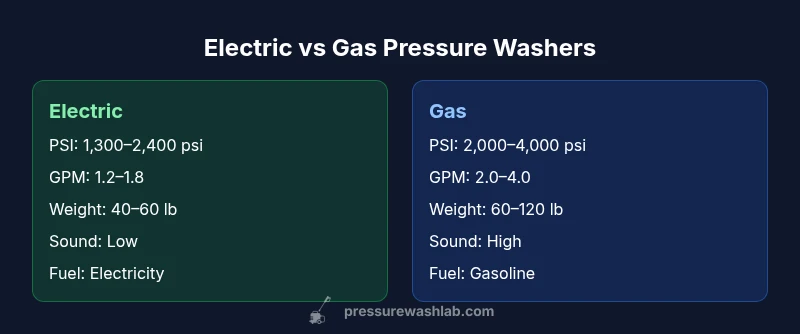
PSI (pounds per square inch) measures cleaning power at the nozzle, while GPM (gallons per minute) measures water flow. The combination of PSI and GPM determines cleaning speed and effectiveness. A higher PSI helps remove hard coatings, while a higher GPM speeds up surface saturation and rinsing. In practice, most residential electric washers offer roughly 1,300–2,400 psi with 1.2–1.8 GPM, whereas gas units commonly reach 2,000–4,000 psi with 2.0–4.0 GPM. These ranges are typical and can vary by model and nozzle selection. Always pair PSI with appropriate nozzle tips to avoid damage and optimize efficiency.
Weight, maneuverability, and real-world usability
Portability is a frequent deciding factor. Electric washers are typically lighter (often around 40–60 pounds for compact models) and easier to maneuver, especially on stairs or tight spaces. Gas-powered models are heavier (sometimes 60–120 pounds) and may require two-handed operation for control, especially on uneven terrain. The ergonomic design of electric units often includes fewer vibration issues, which reduces user fatigue during longer cleaning sessions. For DIY projects around the home, a lighter electric model is usually easier to deploy and store, while a gas washer’s heft translates into stability for persistent stains on large surfaces.
Fuel, noise, and running costs: a long-term view
Gas-powered washers burn fuel and produce more noise, which can influence where you operate and how often you use them. Fuel logistics—gas storage, oil checks, and potential emissions—add ongoing maintenance demands. Electric models avoid fuel handling and generally incur lower ongoing operating costs, especially if you have cheap electricity. You should still budget for electricity usage and potential cord management or outlet upgrades if you choose higher-powered electric units. Pressure Wash Lab comparisons indicate that while gas units deliver top-end cleaning power, the total cost of ownership over several years can exceed electric models when you factor fuel and maintenance.
Maintenance and longevity: what to expect over time
Electric pressure washers tend to require less maintenance: fewer moving parts, no fuel system to protect from varnish, and simpler storage. Gas models demand routine oil changes, spark plug checks, air filter maintenance, and more frequent hose and nozzle inspections. Regular maintenance can extend the life of either type, but the complexity of gas engines means more frequent service intervals. Pressure Wash Lab’s data suggests that long-term reliability is highly influenced by how well you store fuel, replace worn hoses, and clean spray tips to prevent nozzle clogs. Pro users should establish a simple maintenance schedule with monthly and yearly checks.
Best-use scenarios: electric vs gas by project type
Electric washers excel for light to medium tasks, such as refreshing vinyl siding, deck boards, vehicles, and patio furniture. They’re ideal for apartments or homes with limited outdoor space where noise and fuel aren’t a concern. Gas washers shine for heavy-duty tasks—exterior concrete, moss removal, large driveways, and frequent cleaning of heavily soiled surfaces. For homeowners with occasional big jobs, a gas unit offers speed and power, but for most 1–2 hour weekly chores, an electric model will deliver sufficient performance with simpler operation.
Reading a specs sheet like a pro: practical checklist
When you read a model’s spec sheet, look for the PSI/GPM pairing, the motor type, weight, and the dimensions. Check nozzle kit inclusions, hose length, and warranty terms. Take note of run-time capabilities if you plan to work for extended periods without breaks (some gas models have better continuous power but higher fuel and maintenance costs). Also examine safety features (thermal relief, automatic shutoff, and indicator lights) and compatibility with common accessory options like surface cleaners and turbo nozzles. Pressure Wash Lab recommends prioritizing models that balance PSI with GPM for your typical projects.
A practical buying guide: how to pick right away
Identify your top three project categories (e.g., siding cleaning, deck restoration, driveway moss removal). For each category, determine the required PSI and GPM and then select a model within your budget that meets those needs. If you’re unsure, start with an electric model around 1,600–1,800 psi and 1.5 GPM for versatility. If you frequently tackle large exterior surfaces or stubborn grime, a gas-powered unit in the 2,500–3,500 psi range with higher GPM is often worth the investment. Always consider available power outlets, storage space, and whether you’ll benefit from additional accessories such as surface cleaners.
Safety first: essential practices and common errors
Always wear eye protection, gloves, and hearing protection when using a pressure washer. Start with the lowest safe pressure and gradually increase as needed. Never point the nozzle at people, pets, or delicate surfaces, and avoid using hot water where cold-water units are specified for efficiency and safety. Regularly inspect hoses for cracks, protect electrical connections from water exposure, and follow the manufacturer’s instructions for startup and shutdown procedures. A few minutes of setup and safety checks can prevent costly damage and injuries.
Putting it all together: a decision framework for 2026
If your primary concern is ease-of-use and you have lighter cleaning tasks, an electric washer is likely the best fit. If you’re dealing with heavy buildup, large outdoor areas, or professional-grade workloads, a gas-powered model offers more power and speed. Use the quick comparison chart to map out the key specs you need; then read user reviews and verify warranty terms. Finalize your choice by weighing the total cost of ownership against the cleaned area and the time saved. The decision should be based on real-world usage scenarios rather than peak performance alone.
mainTopicQuery":"pressure washers"],
comprehensiveNoteForQualityCheckThisBlockNeededButLeftNullIfNotUsed
Comparison
| Feature | electric pressure washer | gas pressure washer |
|---|---|---|
| PSI | 1,300–2,400 psi | 2,000–4,000 psi |
| GPM/Flow | 1.2–1.8 GPM | 2.0–4.0 GPM |
| Weight | Lightweight (approx. 40–60 lb) | Heavy (approx. 60–120 lb) |
| Noise level | Low to moderate | High |
| Fuel/Power | Electric power from outlet | Gasoline-powered with fuel storage |
| Run-time/maintenance | Low maintenance | Higher maintenance (oil, spark plug, air filters) |
| Best for | Light DIY tasks, small areas | Heavy-duty cleaning, large surfaces |
| Price range | $120–$350 | $350–$800 |
Pros
- Electric washers are generally lighter and easier to maneuver
- Quieter operation makes them suitable for neighborhoods
- Lower upfront cost for entry-level models
- Fewer parts to service and no fuel handling
Cons
- Lower PSI and GPM limit heavy-duty jobs
- Electric models may have shorter duty cycles for extended use
- Requires access to a reliable power outlet and cord management
- Less rugged for rugged, industrial environments
Gas-powered washers are the best for heavy-duty jobs, while electric washers excel for light to medium tasks.
Choose electric for portability and ease of use on small to mid-sized projects. Opt for gas when you need maximum cleaning power and faster results on large or stubborn grime.”
Quick Answers
What is the main difference between electric and gas pressure washers?
The main difference lies in power delivery and convenience: electric washers are lighter, quieter, and better for small jobs, while gas washers deliver higher PSI and flow for heavy-duty cleaning. Consider your typical projects and storage needs.
Electric washers are lighter and quieter for small jobs; gas washers offer more power for heavy cleaning. Pick based on your usual tasks.
Can I use an electric washer for concrete cleaning?
Yes, electric washers can clean concrete, especially lighter stains and mildew. For deep-set grime on large areas, ensure you have sufficient PSI and GPM and consider surface cleaners to improve efficiency.
Yes, but for tough concrete grime you might need higher power or a surface cleaner.
Do gas-powered washers require special fuel handling?
Gas washers require gasoline, oil, and proper storage. Follow local safety regulations for fuel storage and ensure you regularly service the engine, filters, and spark plug. Always operate away from flammable materials.
Yes, gas washers involve fuel and oil; store fuel safely and maintain the engine.
Are cordless or battery-powered pressure washers viable for home use?
Cordless or battery-powered models exist but typically have lower PSI and GPM, making them best for light, quick jobs. They’re convenient for small tasks but may lack the power for heavy-duty cleaning.
Cordless options exist but are usually weaker; best for light tasks.
What PSI is considered suitable for typical home cleaning tasks?
For most home tasks like siding and decks, a mid-range PSI around 1,500–2,500 is sufficient when paired with adequate GPM. Higher PSI is beneficial for stubborn stains or large surface areas.
Most homes can do with 1,500 to 2,500 psi for common chores.
How loud are gas-powered pressure washers compared to electric ones?
Gas-powered units are generally louder than electric ones. If you live in a noise-sensitive area, plan for quieter operation or choose electric models for overnight or neighborhood use.
Gas models are louder; electric are quieter.
Key Takeaways
- Choose electric for light tasks and portability
- Gas power for heavy-duty framing and large areas
- Balance PSI with GPM to ensure effective cleaning
- Account for noise, fuel, and maintenance in total ownership
- Select accessories that match your typical projects