Gas Pressure Washer vs Electric: A Practical Comparison
A data-driven comparison of gas-powered vs electric pressure washers, covering power, performance, maintenance, and use-case guidance from Pressure Wash Lab.


Gas pressure washer vs electric: for heavy-duty jobs, gas-powered models deliver higher power and faster cleaning, especially on large surfaces. Electric models excel in quiet operation, portability, and lower upfront costs for light- to medium-duty work. The choice hinges on job size, run-time needs, and total cost of ownership. Pressure Wash Lab weighs power against practicality to guide the best match.
Overview: Gas vs Electric Pressure Washers
In the debate of gas pressure washer vs electric, the core decision centers on power needs, job scale, and how you value noise, maintenance, and cost of ownership. According to Pressure Wash Lab, the right choice aligns with your typical cleaning scenarios: larger, stubborn grime that requires sustained throughput points you toward gas, while suburban and indoor-friendly cleaning benefits from electric models. Both types share core components like a pump, nozzle set, and trigger gun, but their mechanics influence daily use, fuel considerations, and long-term upkeep. Understanding these differences early helps homeowners and DIY enthusiasts select a machine that fits their garage or workspace without overspending. The keyword gas pressure washer vs electric should be kept in mind as you compare the core attributes in the sections that follow.
The gas pressure washer vs electric decision is not about which is universally better; it’s about which tool matches your routine. Electric washers provide simplicity, lower emissions, and compact forms suitable for apartments and garages. Gas washers offer raw performance, better duty cycles for frequent heavy cleaning, and the flexibility to work off-grid. Pressure Wash Lab’s approach emphasizes measuring job needs against power curves, runtime, and the total cost of ownership over several seasons. By the end, you’ll have a clear path to the model that keeps your surfaces clean with the least hassle.
Because consumer options vary widely, it’s essential to frame your choice around the most critical factors: power, mobility, maintenance, and budget cycles. This section lays the groundwork for a detailed, apples-to-apples comparison that follows, ensuring you don’t overpay for features you won’t use or skimp on power you actually need. Gas vs electric is a spectrum, not a binary verdict, and the right answer sits at the intersection of your workload and your tolerance for maintenance.
Comparison
| Feature | gas-powered pressure washer | electric-powered pressure washer |
|---|---|---|
| Power source | gas engine | cordless/corded electric motor |
| PSI range | 2800-4200 psi | 1450-1800 psi |
| GPM range | 2.0-4.0 gpm | 1.2-2.5 gpm |
| Weight (dry) | 30-90 lb | 20-60 lb |
| Run-time and use | Fuel-dependent, long downstream operation with breaks | Unlimited while plugged in, limited by power cord length |
| Maintenance | Oil changes, spark plug checks, fuel handling | Brush/ motor maintenance with occasional repairs |
| Best for | Heavy-duty, off-grid or large areas | Light- to medium-duty, urban settings, noise-sensitive neighborhoods |
Pros
- Higher cleaning power for big jobs and long sessions
- Better duty cycle for sustained cleaning applications
- Off-grid capability eliminates power restrictions on-site
- More nozzle options and accessory compatibility for tough surfaces
Cons
- Higher upfront and operating costs due to fuel and maintenance
- Heavier units with more vibration and storage space needs
- Gas emissions and louder operation can disrupt neighbors
- Electric models can be limited by cord length and outlet availability
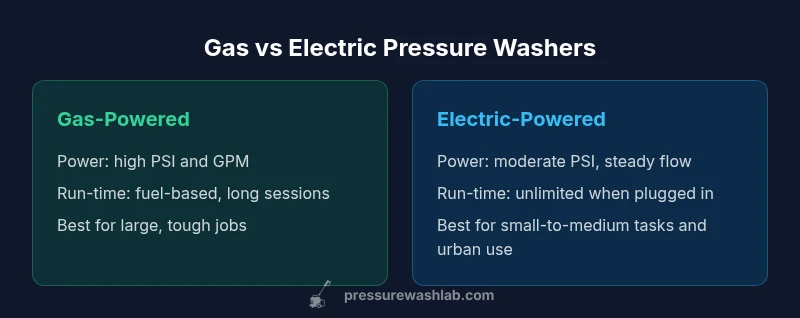
Gas-powered models excel for heavy, ongoing workloads; electric washers shine for light to medium tasks in urban settings.
If your jobs are large and frequent, gas offers speed and endurance. If you clean small areas, live in a noise-restricted environment, or want plug-and-go practicality, electric is more compelling.
Quick Answers
What is the primary difference between gas-powered and electric pressure washers?
Gas-powered units deliver higher PSI and GPM, making them better for heavy-duty jobs and large areas. Electric washers are lighter, quieter, and simpler to operate, ideal for small to medium tasks near power sources. The choice depends on workload, noise tolerance, and access to outlets or fuel.
Gas units are stronger for big jobs, while electric units are quieter and simpler for small tasks.
Is an electric pressure washer enough for tough cleaning tasks?
For stubborn grime on exterior siding, driveways, or large surfaces, electric models may struggle compared with gas. They are great for routine maintenance, patio furniture, and light scrubbing where power access is available.
Electric is good for light to moderate tasks; for heavy grime, consider gas.
Can I use the same nozzle tips on both gas and electric washers?
Most standard nozzle tips are cross-compatible, but check fitment with your model because some high-pressure tips require specific holders. Always start with a wider spray and test on a inconspicuous area.
Yes, but verify nozzle compatibility for your model.
What about noise and emissions when choosing between gas and electric?
Gas washers are louder and emit exhaust, while electric units run quietly and produce no on-site emissions. If you work near neighbors or in enclosed spaces, electric is typically preferred.
Electric is quieter and cleaner; gas is louder and emits exhaust.
What is a practical starting budget for a gas vs electric washer?
Gas models generally carry a higher upfront cost and ongoing fuel/maintenance expenses, while electric units are cheaper to buy and run, especially for light-duty work. Consider total cost of ownership over several seasons when deciding.
Gas costs more upfront and to operate; electric is cheaper upfront and easier to maintain.
Key Takeaways
- Prioritize power-to-weight ratio for your typical job size
- Count on higher maintenance with gas, lower with electric
- Electric is best for quiet, indoor or apartment use
- Gas wins for off-grid durability and heavy cleaning efficiency