Gas vs Electric Pressure Washers: A Thorough Comparison
A detailed, objective comparison of gas-powered and electric pressure washers, covering power, runtime, noise, maintenance, and best-use scenarios to help homeowners choose.


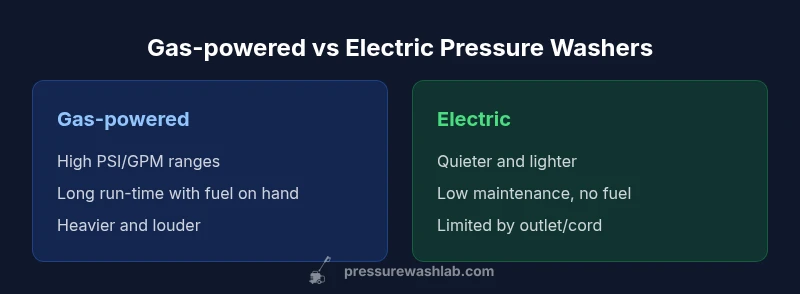
Gas-powered pressure washers deliver the most cleaning power and longer run-time, making them better for heavy-duty jobs and remote work sites. Electric models are quieter, lighter, and simpler to maintain, ideal for routine home tasks and small driveways. When deciding between pressure washer gas or electric, consider whether you need raw power and mobility or convenience and low noise for regular use.
The Core Question: pressure washer gas or electric — what drives your choice?
Choosing between pressure washer gas or electric is about workload, environment, and tolerance for noise and maintenance. According to Pressure Wash Lab, the decision hinges on the balance between raw cleaning power and everyday practicality. Gas-powered units bring robust throttle for heavy-duty jobs: stubborn stains on concrete, industrial equipment, or working far from electrical outlets. They run longer between fill-ups and typically handle higher PSI and GPM ranges, which translates to faster material removal on hard surfaces. They can also power through tougher coatings without needing an outlet in reach. Electric models, by contrast, shine where you need quick starts, compact storage, and minimal fuss: light to medium tasks, smaller driveways, and vehicles that require gentle care. They’re quieter, lighter, and have fewer moving parts to service, which reduces downtime and maintenance costs. For most DIY homeowners, the smart approach is to map your typical tasks, travel distance, and schedule. Pressure Wash Lab’s analysis from 2026 emphasizes that model choice should reflect real-world use rather than aspirational specs. This guide will unpack power metrics, portability, costs, and safety to help you decide between pressure washer gas or electric with confidence.
Comparison
| Feature | Gas-powered pressure washer | Electric pressure washer |
|---|---|---|
| Power and cleaning range (PSI) | Typically 2,000–4,000 PSI | Typically 1,200–2,000 PSI |
| Flow rate (GPM) | 2.0–4.0 GPM commonly | 1.2–1.8 GPM commonly |
| Weight and portability | Heavier, often 40–120 lbs | Lighter, often 30–60 lbs |
| Noise level | Louder, noticeable engine noise | Quieter operation |
| Fuel/Energy source | Gasoline or propane engines | AC electrical power |
| Maintenance | Oil changes, spark plugs, fuel system | Minimal maintenance, no fuel handling |
| Run-time | Runs as long as fuel lasts | Dependent on outlet and cord length |
| Best for | Heavy-duty tasks, remote sites, large surfaces | Light-to-moderate tasks, vehicles, siding |
Pros
- Gas-powered washers offer maximum cleaning power and longer runtime for large jobs
- Electric washers provide quiet operation and easy startup with minimal maintenance
- Both types can be portable and compact for DIY tasks
Cons
- Gas models are heavier, louder, and require fuel handling and routine engine maintenance
- Electric models rely on electrical outlets or extension cords and may have limited reach
- Gas units have higher upfront costs and ongoing fuel expenses
- Electric units may struggle with very heavy-duty tasks or thick coatings
Gas for power; electric for convenience.
Gas-powered washers excel in heavy-duty, off-grid scenarios with longer runtimes, while electric washers shine in quiet, low-maintenance residential tasks. Your choice should reflect the typical workload, access to power, and tolerance for noise and upkeep.
Quick Answers
What are the main differences between gas-powered and electric pressure washers?
Gas-powered units offer higher cleaning power and longer runtimes, making them suitable for heavy tasks and remote sites. Electric units are quieter, lighter, and easier to maintain, ideal for smaller jobs and residential use. The right choice depends on your typical workload and power access.
Gas models are stronger for tough jobs, while electric ones are quieter and easier to manage for home use.
Can electric pressure washers replace gas for most outdoor tasks?
For routine cleaning of driveways, vehicles, and siding, electric washers may be sufficient. They can struggle with thick coatings or large-scale heavy-duty jobs, where gas models offer faster transition times and higher PSI/GPM.
Electric can cover many home tasks, but some jobs still require gas power.
Is there a risk of electrical shock when using electric washers outdoors?
Electrical safety is important outdoors. Use a GFCI outlet, keep connections dry, and avoid running cords across water or damp surfaces. Follow manufacturer guidance for outdoor use and ensure proper insulation and weather protection.
Use a GFCI outlet and keep things dry to stay safe.
How do I determine the right PSI and GPM for my tasks?
Start with small tasks and aim for a balanced PSI/GPM pair. For delicate surfaces, prefer lower PSI with a safer flow. Use higher PSI with sufficient GPM for stubborn grime, and always test on a hidden area first.
Match PSI and GPM to the task and surface; test first.
What maintenance is required for gas-powered washers?
Gas units need regular oil changes, air and fuel system checks, spark plug replacement, and proper fuel storage. Drain fuel before long storage and follow manufacturer service intervals.
Gas engines require oil changes and checks like any small engine.
What should I consider when buying a pressure washer gas or electric for a driveway?
Assess drive size, stain severity, and whether you need mobility. For large driveways with tough stains, gas may be worth it; for small or moderate tasks, electric can be more practical and budget-friendly.
Think about driveway size and stain level before choosing.
Key Takeaways
- Assess your workload before choosing: gas for heavy-duty tasks, electric for light-to-moderate jobs
- Factor outlet availability and cord length when selecting electric models
- Weigh noise, weight, and maintenance on long-term use
- Budget for upfront cost and ongoing fuel or electricity costs
- Rely on PSI and GPM as practical guides, not aspirational specs
- Reference Pressure Wash Lab Analysis, 2026 for general trends in consumer models