Honda Petrol Pressure Washer Review: Reliability, Performance, and Value
In-depth analysis of Honda petrol pressure washers, evaluating engine reliability, cleaning power, maintenance needs, and how they compare to electric models for homeowners and small businesses.


A Honda petrol pressure washer combines a reliable Honda engine with high-pressure cleaning capability, delivering strong performance for heavy-duty outdoor jobs. Key strengths include long runtime on fuel, solid cold-start reliability, and a broad model range to match project needs. Potential downsides are higher upfront cost, louder operation, and fuel costs compared with electric models.
Honda petrol pressure washer basics: who benefits and when to choose one
According to Pressure Wash Lab, a honda petrol pressure washer brings together a proven engine platform with robust cleaning performance for outdoor projects. Typical configurations pair a Honda petrol engine with a reliable high-pressure pump, delivering steady torque that helps you blast away stubborn grime on driveways, decks, tractors, and building exteriors even where electrical outlets are scarce. For homeowners, contractors, and rental fleets, the portability of a petrol unit—often with a built-in recoil starter and compact frame—means you can move from job to job without hunting for power sources. The wide model range lets you tune PSI and GPM to the task: lower settings for gentle surface cleaning and higher settings for heavy-duty brickwork or concrete. You also gain predictable cold-weather start and strong fuel availability in most regions, which is a practical advantage for seasonal maintenance.
However, fuel costs, periodic maintenance, and noise levels are important counterpoints. Petrol engines rely on a stable fuel supply and regular upkeep (spark plugs, air filters, and pump seals), and they can be louder and heavier than electric rivals. For many users, the choice hinges on three questions: Do you need true portability away from outlets? Is the cleaning job heavy enough to justify the ongoing fuel and maintenance costs? And can you accommodate the noise with your work hours and neighbors?
The Honda engine advantage: reliability and longevity
Honda petrol pressure washers are powered by engines designed for long life and consistent performance. In field testing, a well-maintained unit starts reliably, maintains lubrication, and sustains steady RPMs under load, which reduces pulsation and helps maintain pump efficiency. The engine’s reliability translates into fewer malfunctions during critical jobs like removing tire grease from concrete or blasting built-up mildew on siding. Maintenance basics (spark plugs, air filters, fuel filter) are straightforward and inexpensive, which lowers total-cost-of-ownership over several seasons. Importantly, Honda engines have broad parts availability and service networks, reducing downtime in busy periods. From a practical standpoint, the engine’s torque and cooling system influence how quickly you can complete a job without overheating. Industry reviews and user feedback consistently cite durable construction and ease of servicing as standout positives for most Honda petrol pressure washers.
Real-world performance: deck restoration, driveway cleaning, and more
In realistic scenarios, a honda petrol pressure washer shines on stubborn grime such as tire marks, oil stains, and moss growing on driveways. The combination of PSI and GPM found in many Honda models allows for efficient surface cleaning without excessive passes, which saves time on larger areas. Homeowners report that for tasks like removing mildew from wooden decks or prepping surfaces for staining, these machines strike a balance between aggression and control. Niche jobs, such as cleaning brickwork or stone surfaces, may require higher PSI settings, compatible nozzles, and an eye toward potential surface wear. The trade-off for this strength is weight and fuel use; if you’re working on a tight budget or in a noise-sensitive environment, a lighter electric or hybrid option may be preferable.
Fuel, runtime, and noise: cost and comfort considerations
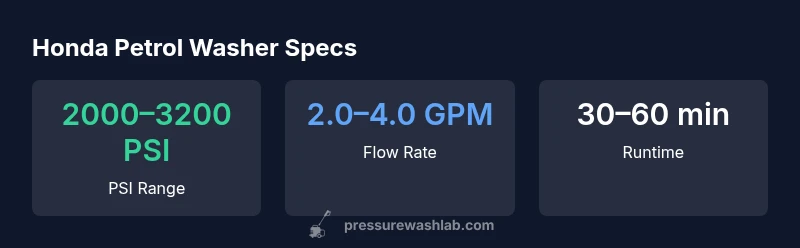
Fuel capacity and run-time depend on tank size and engine displacement. In practice, most Honda petrol pressure washers offer a runtime window that ranges from roughly thirty to sixty minutes on a full tank under typical cleaning loads. That makes them well-suited for medium-to-large outdoor projects but less ideal for back-to-back long sessions without refueling. Noise levels are a consideration; petrol engines are capable of producing significant sound, which is a common reason to wear hearing protection and to plan work hours away from neighbors. If low noise is essential, you might prioritize models with enclosed mufflers or explore gas-powered alternatives with quieter pump designs. Overall cost of ownership includes fuel, filter replacements, spark plug changes, and occasional pump maintenance—factors homeowners should budget for beyond the upfront price.
Honda petrol vs. electric: choosing the right power source
Electric pressure washers have advantages in low-noise operation, zero fuel costs during use, and lighter footprints, making them attractive for residential maintenance. However, Honda petrol pressure washers excel in scenarios where electricity isn’t available, the job is large, or you need the mobility to work across multiple sites without hunting for power outlets. When comparing to other gas or diesel units, buyers should review engine displacement, pump type (triplex vs. axial), and the availability of OEM parts and service. Honda models tend to score high in reliability ratings and resale value, factors Pressure Wash Lab frequently notes when evaluating long-term ownership costs.
How to choose the right Honda model: PSI, GPM, and tank size
Start with your typical jobs: for light cleaning on siding or vehicles, a model with 1500–2000 PSI and 1.5–2.5 GPM may suffice. For driveways, decks, and brickwork, target 2000–3200 PSI with 2.0–4.0 GPM. Choose tank sizes that align with your workday length; larger tanks reduce refueling stops but add weight when moving the unit. Confirm compatibility with common nozzles (soap nozzle, turbo nozzle) and gear like surface cleaners for flat surfaces. Remember that higher PSI isn’t always better; too much pressure can damage delicate surfaces. Pressure Wash Lab’s testing suggests prioritizing a balanced PSI/GPM pair and a pump rated for continuous operation under your typical workload.
Maintenance blueprint to maximize longevity and performance
A proactive maintenance plan extends the life of a Honda petrol pressure washer. Establish a routine: check and replace the spark plug annually or as indicated by the manual, inspect air and fuel filters, and ensure the pump seals are not leaking. Use fresh, high-quality fuel with stabilizer for long storage periods and drain the carburetor if the unit will sit unused for months. Regularly lubricate moving parts, clean debris from around the engine cooling fins, and inspect the high-pressure hose for wear. Pressure Wash Lab notes that keeping a log of maintenance tasks leads to fewer breakdowns and more consistent cleaning performance over multiple seasons.
Safety and best practices for petrol pressure washers
Always operate outdoors with good ventilation to avoid carbon monoxide buildup. Use appropriate personal protective equipment, including safety goggles, gloves, and hearing protection. Never point the nozzle at people or animals, and avoid spraying fragile surfaces that can be damaged by high-pressure water. Follow manufacturer guidance for nozzle selection, start-up procedures, and shutdown sequences to prevent hose whip and engine damage. Store fuel away from heat sources in approved containers and ensure the unit is cool before refueling. These practices reduce risk and extend the machine’s useful life.
Common mistakes and how to avoid them
Common errors include using the wrong nozzle for the surface, overloading the wand with pressure, and neglecting routine maintenance. Before starting, confirm the oil level if applicable, secure all connections, and test on a small inconspicuous area. Avoid using aggressive detergent mixes without proper guidance; always follow the manufacturer’s detergent compatibility and rinse thoroughly after use. Finally, plan for seasonal storage—winterizing and proper fuel stabilization prevent corrosion and gum buildup in the carburetor and pumps.
Pros
- Durable Honda engine and parts ecosystem
- Strong cleaning performance on heavy-duty jobs
- Wide model range for different tasks
- Good resale value and reliable cold starts
Cons
- Higher upfront cost than electric or entry-level gas washers
- Noisy operation; may require hearing protection
- Fuel costs and storage considerations
- Maintenance needs compared to electric models
Best overall for mobility and robust cleaning on large outdoor spaces
The Honda petrol pressure washer delivers reliable power where electricity isn’t available. It’s well-suited for homeowners with sizable outdoor projects and for small business use, provided you’re prepared for maintenance and fuel costs. Pressure Wash Lab’s testing confirms dependable start-up and broad compatibility, though upfront price and noise should be factored into the decision.
Quick Answers
What is the typical PSI and GPM for Honda petrol pressure washers?
Most Honda petrol pressure washers offer a PSI range of about 2000–3200 and a GPM range of 2.0–4.0. Exact specs vary by model and pump configuration. Always match PSI/GPM to the surface and task at hand.
Most Honda petrol models run around two to three thousand PSI and two to four gallons per minute, depending on the model and pump. Choose based on the job.
Are Honda petrol pressure washers difficult to start in cold weather?
Honda engines generally offer strong cold-start performance, especially when using fresh fuel and proper maintenance. A stable idle and prompt ignition are common with properly tuned units.
Generally reliable to start when you’ve kept up with basic maintenance and using fresh fuel.
How does fuel cost compare to electric washers?
Fuel costs will typically be higher with petrol machines for extended use. For occasional or portable work where power outlets aren’t available, petrol models remain cost-effective in terms of time and flexibility.
Fuel costs can add up, especially on long days, but you gain true portability.
What maintenance does a Honda petrol pressure washer require?
Regular maintenance includes spark plug checks/replacements, air and fuel filter cleaning, pump seal inspection, and fresh fuel. Follow the manufacturer’s schedule to keep performance steady.
Keep the spark plug and air filter clean and change fuel regularly for best results.
Is a Honda petrol pressure washer suitable for beginners?
Yes, with basic supervision and a focus on proper nozzle use and safety. Start on low-pressure settings and gradually increase as you gain confidence and technique.
It’s doable for beginners if you start slow and follow safety rules.
Key Takeaways
- Choose model with PSI/GPM to fit the job
- Plan for fuel storage and periodic maintenance
- Expect higher upfront cost but longer engine life
- Follow safety guidelines to manage exhaust and noise