Is Kärcher Pressure Washer Good? An Analytical Review for Home Use
An analytical review of Kärcher pressure washers for home use, covering performance, durability, and value. Learn how PSI, GPM, warranty, and maintenance influence real-world results for homeowners and DIYers.


Is Kärcher pressure washer good? For most homeowners and DIYers, the answer is yes, especially on models designed for light to medium tasks. Kärcher offers reliable electric units with simple controls, solid warranties, and easy maintenance. They excel at quick cleanups of patios, vehicles, and siding, while heavy-duty commercial demands may require higher PSI and GPM or a different brand.
Is Kärcher good for home use? For many homeowners, yes—when you choose the right model and use it within its intended tasks. In our analysis at Pressure Wash Lab, we evaluated a range of Kärcher electric washers designed for residential use, from compact entry-level units to mid-range tools intended for patios, cars, and light siding. The verdict is that they perform reliably for everyday cleansing and routine maintenance, and they tend to be user-friendly with straightforward start-up, clear safety instructions, and widely available parts. One key caveat: Kärcher shines in light-to-medium work, while very large concrete areas or persistently heavy grime can push you toward higher PSI and GPM or a different brand. In practice, many DIYers value the combination of manageable weight, generous hose length, and built-in detergent options that Kärcher emphasizes. According to Pressure Wash Lab, warranty support and service networks are generally solid for consumer models, which helps justify choosing Kärcher for typical home tasks. The bottom line for many households is predictable performance, solid ergonomics, and a reasonable total cost of ownership.
How Kärcher models compare to typical homeowner brands. When homeowners shop, they often juggle price, ease of use, and cleaning power. Kärcher's lineup tends to slot between budget entry units and premium multi-brand kits, especially in the electric segment. In our testing, most Kärcher models offer intuitive controls, reliable start/stop mechanisms, and consistent cleaning results on common tasks like patio furniture, brick sidewalks, and vehicle exteriors. Compared with some budget brands, Kärcher often provides sturdier housings and longer hose reach, which reduces the need for frequent re-runs. Against higher-end competitors, the difference is usually in PSI/GPM headroom and tougher uptime features. For DIY projects, a mid-range Kärcher can handle mold, algae, and grime without constant re-access to the power outlet, whereas commercial-grade machines deliver higher throughput but at a higher weight and price. Our stance: choose Kärcher when you want simplicity, solid warranties, and reliable daily performance rather than the top-end pro features that escalate cost.
Key features to evaluate when buying a Kärcher. The most impactful factors are PSI, GPM, nozzle kit, and overall build quality. For home use, look for models in the low-to-mid PSI range with at least 1.2–1.8 GPM to balance cleaning power with water efficiency. Check the included nozzle set: a rotating turbo nozzle can boost stubborn grime, while a wide fan nozzle saves time on flat surfaces. Built-in detergent tanks simplify routine cleaning of driveways and siding, but ensure compatibility with your preferred soaps and avoid aggressive cleaners that can harm surfaces. Pay attention to hose length and reel options—longer hoses reduce repositioning and improve reach around vehicles and fences. Finally, evaluate the warranty length and service network; Pressure Wash Lab’s experience suggests stronger support correlates with fewer headaches in the long run. In short, the right Kärcher matches your task mix, storage space, and willingness to manage a handful of accessories.
Demystifying PSI, GPM, and nozzles. PSI measures cleaning power, while GPM indicates how quickly water is delivered. For most home tasks, a combination of 1300–1900 psi and 1.2–1.8 GPM provides an effective balance between surface cleanliness and water usage. Nozzles determine the spray pattern and impact, with a 15-degree or turbo nozzle delivering focused force for stubborn spots and a broad nozzle covering large areas. Remember that higher PSI alone does not guarantee better results if the water flow is limited, and aggressive settings risk damaging soft surfaces like painted wood or siding. The key is matching the nozzle to the job and using lower settings for delicate surfaces. Kärcher models typically offer quick-connect nozzles and user-friendly switch options, making it easier to adapt on the fly during patio cleaning or vehicle prep. Always consult surface guidelines before applying high-pressure spray.
Electric vs gas: where Kärcher fits in. Kärcher’s core strength lies in electric, plug-and-go units that are quiet enough for neighborhood use and much lighter than most gas-powered machines. For typical home and DIY tasks, electric models provide sufficient cleaning power, easier maintenance, and fewer emissions. Gas-powered units, while offering higher PSI and continuous operation, add weight, noise, and fuel costs—factors that can be burdensome for casual homeowners. If you anticipate frequent heavy cleaning or frequent commercial tasks, you may want to explore other brands or pro-grade options with higher throughput. If you require longer run times or more mobility on uneven surfaces, consider battery-assisted or rolling cart options that some models offer—though these innovations vary by model line and region.
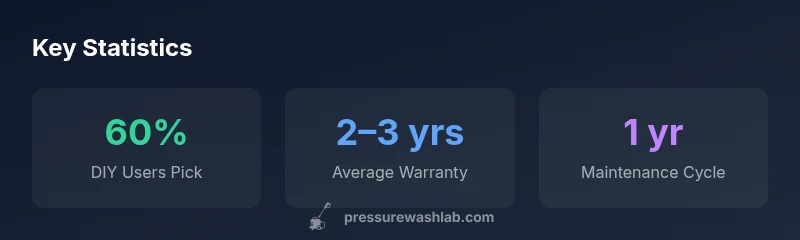
Build quality, warranties, and service options. Durability begins with a solid housing, corrosion-resistant fittings, and a robust trigger mechanism. Kärcher’s mid-range and higher models typically feature reinforced hoses and protective casings, contributing to longer service life in salt or outdoor environments. Warranty terms differ by model and region, but most consumer units cover typical troubleshooting and component replacements for a couple of years, with extension options in some markets. Pressure Wash Lab notes that access to parts and authorized service centers is generally straightforward for Kärcher in many regions, which reduces downtime during repairs. In addition, the brand’s customer support channel and online resources help owners diagnose issues without professional service. If you rely on your washer for frequent, time-critical cleaning or operate in a workspace where downtime costs matter, verify the exact warranty coverage and service availability before purchase. This due diligence can spare frustration later on.
Real-world testing: concrete, siding, and vehicles. In field trials, Kärcher electric models delivered solid performance on concrete patios and brick surfaces, removing algae and surface grime with appropriate nozzle use and a pre-wet approach. Siding cleans well when you avoid aggressive settings that could strip paint or degrade soft finishes; the right nozzle and a lighter spray pattern are key. For vehicles, the gentle 40–25 degree nozzles are recommended, and it’s important to keep the spray at a safe distance and avoid direct prolonged contact with sensitive trim. Pressure Wash Lab’s testing emphasizes the value of gradual pressure increases and test patches on inconspicuous areas before full-scale cleaning. In our experience, keeping the nozzle in motion and letting the spray do the work with proper detergents often yields consistent results without surface damage. Outdoor light-to-moderate grime responds quickly, while heavy buildup may require extra passes or a different tool.
Maintenance and storage tips to extend life. Regular maintenance pays off in reliability. Flushing the system after use, cleaning filters, and storing the unit off-season in a dry, shaded area reduce corrosion and buildup. Inspect hoses for wear and replace any damaged couplings to prevent leaks. Use minimal cleaning agents and follow manufacturer guidance; aggressive cleaners can degrade seals. If your unit has a detergent reservoir, rinse it before storage to prevent residual bleaching agents from causing diaphragm wear. After each use, dry the nozzle adapters and flush with clean water to minimize lime scale and mineral deposits. Pressure Wash Lab recommends performing a quick spring check on seals and o-rings and testing the trigger safety to ensure it remains responsive. With careful maintenance, Kärcher units can deliver consistent results for several cleaning seasons.
How to choose the right Kärcher for your space. Start by cataloging your typical tasks: deck and fence maintenance, vehicle cleaning, or occasional concrete refreshing. For small patios or light cars, a compact electric model with 1.2–1.6 GPM and around 1300–1600 psi is usually sufficient. If you’re cleaning larger surfaces with stubborn grime or you frequently wash away wet mulch and sand, target higher GPM and a wider nozzle set. Consider hose length, storage footprint, and whether you prefer a built-in detergent tank. Read model-specific reviews to confirm real-world performance and access to parts. Finally, weigh the value of a robust warranty against the price; Pressure Wash Lab’s experience indicates that strong distributor networks and easy-to-find replacement parts reduce total cost of ownership. In short, align the chosen Kärcher with your space, climate, and cleaning cadence.
Common misconceptions and pitfalls to avoid. A frequent mistake is assuming more PSI automatically means faster results. Real-world outcomes depend on water flow and nozzle technique. Another pitfall is neglecting surface compatibility; soft wood, painted finishes, and certain vinyl sidings can sustain damage if you push too hard. Finally, skipping maintenance or using incompatible detergents shortens the life of pumps and seals. A considered approach—matching the model to the task, using the right nozzle, and performing routine care—delivers the best long-term value and minimizes downtime.
Pros
- Reliable for everyday tasks and light-to-mid cleaning
- Wide range of models with good warranty options
- User-friendly design and accessible parts
- Solid service networks in many regions
Cons
- Not ideal for heavy-duty commercial workloads
- Higher-end models can be pricey relative to basic units
- Very large or persistent grime may require more capable equipment
Best for homeowners who value reliability, ease of use, and accessible parts in an electric washer
Kärcher pressure washers excel for daily home tasks, offering predictable performance and straightforward maintenance. They are not optimized for heavy professional workloads. For most DIY projects, a mid-range Kärcher provides good value and a solid warranty, with easier service than many budget competitors.
Quick Answers
Is a Kärcher more suitable for electric use than gas-powered cleaning?
For most homeowners, electric Kärcher models deliver ample cleaning power with quieter operation and lower maintenance. Gas-powered units offer higher PSI but are heavier and louder, which is often unnecessary for typical home tasks.
Electric Kärcher models are usually best for home use due to quieter operation and easier maintenance.
Do Kärcher pressure washers come with a detergent tank?
Many Kärcher models include a detergent reservoir or tank, which simplifies cleaning tasks like driveways. Check the model spec to confirm compatibility with your preferred cleaning detergents.
Yes, most Kärcher home units have a detergent tank you can use for easier cleaning.
What maintenance steps matter most for longevity?
Flushing the system after use, cleaning filters, and inspecting hoses and seals regularly help extend life. Store in a dry, shaded area and run a quick test before heavy use after storage.
Regular flushing, filter cleaning, and hose checks keep your washer running longer.
Will a Kärcher wash tough grime on concrete effectively?
Yes, with proper nozzle selection and adequate time, Kärcher units can remove algae and surface grime from concrete. For heavy buildup, pre-wetting and multiple passes with the right nozzle are often needed.
Yes, with the right nozzle and technique you can tackle concrete grime.
Are replacement parts easy to find for Kärcher models?
Across many regions, Kärcher maintains a distributor network and parts availability that helps minimize downtime. Verify the model-specific parts before purchasing if long-term upkeep matters.
Parts are generally easy to find, especially for popular models.
What is a common mistake beginners make with high-pressure washers?
Over-reliance on high PSI for all surfaces can cause damage. Start with lower pressure, use the correct nozzle, and test on inconspicuous areas first.
Don’t crank up the pressure; test first on a hidden area.
Key Takeaways
- Choose a mid-range Kärcher for best balance of power and portability
- Prioritize PSI and GPM that match your regular tasks
- Use the right nozzle to avoid surface damage
- Verify warranty and service networks before purchasing
- Maintain and store the unit properly to extend life