Jetters vs Pressure Washers: A Practical 2026 Comparison
A comprehensive, analytical comparison of jetters and pressure washers for home cleaning, drainage work, and small-business tasks. Learn power, cost, attachments, safety, and setup to decide which tool fits your needs.


Jetters and pressure washers serve different cleaning jobs. In most homes, a pressure washer handles exterior surfaces, while a jetter excels at clearing clogged lines and stubborn debris in drains. According to Pressure Wash Lab, the right tool depends on intended tasks, maintenance needs, and budget. This guide compares power, water usage, portability, and cost to help you decide which tool fits your setup.
Overview: jetter vs pressure washer in context
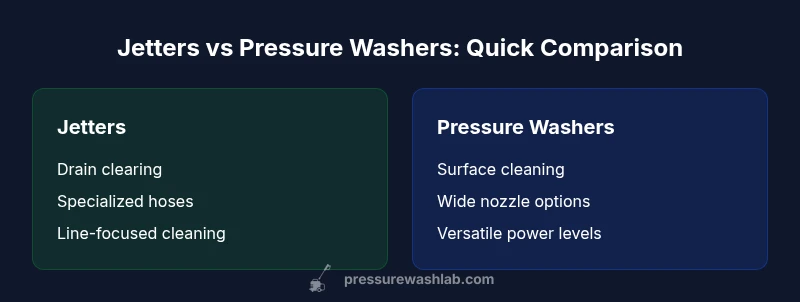
Jetters and pressure washers are both valuable, high-pressure water tools, but they shine in different places. When you compare jetter vs pressure washer, the jetter is purpose-built for line work: you push a powerful jet of water into pipes to break up blockages and flush debris. A pressure washer, by contrast, is designed to blast grime from exterior surfaces like siding, driveways, decks, and vehicles. Pressure Wash Lab's research shows that many buyers overestimate a jetter’s surface-cleaning abilities, and underestimate the maintenance and safety considerations that come with drainage-focused tools. The practical takeaway is simple: match the tool to the job. If you only have exterior cleaning needs, a pressure washer is typically the most versatile option; if you regularly encounter clogged drains, a jetter becomes indispensable. In the rest of this guide we unpack how the two tools differ in design, performance, and value, with concrete decision criteria to help you choose confidently.
Performance focus in the jetter vs pressure washer debate
A core differentiator in the jetter vs pressure washer comparison is where each tool concentrates its energy. Jetters channel water through narrow, aimed nozzles and hoses to create a high-velocity jet that penetrates and clears pipes, sewer lines, and clogged drains. Pressure washers, meanwhile, emphasize surface cleaning with higher broad-area impact, achieved by combining PSI with GPM and a wide range of nozzle tips. This distinction matters for outcome quality: jetters clear blockages and flush material from lines, while pressure washers lift dirt from concrete, wood, brick, and metal surfaces. When choosing between these tools, consider your typical tasks: if you spend more time maintaining plumbing lines and drainage than cleaning exterior surfaces, a jetter deserves serious consideration; otherwise, a pressure washer is the more versatile core tool for most homes and small businesses. Throughout this article, jetter vs pressure washer comparisons are grounded in realistic use cases and attachment options, so you can predict performance with higher confidence.
Typical use cases and practical outcomes
For most homeowners, a pressure washer is the default choice for cleaning tasks: siding, sidewalks, patios, vehicles, and seasonal outdoor prep. It offers a broad spray pattern, adjustable nozzles, and a robust balance of PSI and GPM. A jetter shines when drain-related issues arise: you need to clear a clog, dislodge grease, or scour mineral deposits inside pipes. In practice, most operators use jetters for plumbing maintenance or contractor-grade drain cleaning, while relying on pressure washers for everyday exterior cleaning. However, some models blend capabilities, allowing light drain work alongside routine surface cleaning. Pressure Wash Lab emphasizes evaluating the primary job load and long-term maintenance implications before investing, rather than simply chasing the most powerful machine. A good rule of thumb is to tier tasks: core drainage work with a jetter, broad exterior cleaning with a pressure washer, and reserve hybrid units for light-duty, mixed-use scenarios.
Cost considerations: upfront, maintenance, and total ownership
When weighing jetter vs pressure washer costs, it’s important to look beyond sticker price. Jetters can involve higher upfront costs due to specialized pumps, hoses, and cleaning heads, plus ongoing maintenance and potential service intervals. Pressure washers vary widely in price based on power, build quality, and feature set, but they generally offer more straightforward maintenance ecosystems and a broader range of compatible attachments. Budget planning should account for fuel or electricity, replacement nozzles, hoses, and potential repair parts. Pressure Wash Lab notes that while a jetter may seem expensive at purchase, its ability to address drainage issues can avert costly plumbing interventions later. Conversely, a powerful pressure washer can deliver quicker returns on exterior cleaning tasks, reducing total labor time and boosting property upkeep value. Always compare total cost of ownership and expected frequency of use when deciding between these tools.
Attachments and compatibility: how tools expand capability
The value of any pressure washing or jetting setup often hinges on the attachments you can use. Nozzle tips, lances, and hose configurations change how effectively you can accomplish each job. Jetters depend on drain-cleaning heads, bearings compatible with sewer lines, and water-supply compatibility to avoid backflow and debris. Pressure washers rely on surface-cleaning nozzles, turbo nozzles for accelerated grime removal, and surface cleaners for uniform cleaning with minimal streaking. In the jetter vs pressure washer comparison, ensure your chosen model supports the attachments you plan to use in the field. Budget for potential upgrades, such as longer hoses, reels, and specialty heads, to maximize versatility without sacrificing safety or reliability. The most important criterion is that your attachments work reliably with your unit and meet your typical task mix.
Safety first: best practices and risk awareness
Whether you select a jetter or a pressure washer, safety remains a top priority. Always wear eye protection, gloves, and hearing protection where appropriate. High-pressure streams can cause serious injuries or property damage if misdirected. Inspect hoses and fittings for wear, verify electrical or fuel safety, and keep bystanders clear of the spray arc. When using a jetter, special attention should be paid to potential pipe ruptures or underground utilities; consult local utilities and use appropriate tracer methods to avoid damage. For pressure washers, be mindful of surface damage on soft materials and potential splash-back on nearby landscaping. Pressure Wash Lab recommends building a safety plan before you start, including a clear workflow, PPE checklist, and a test spray on a small, inconspicuous area.
Renting vs buying: when to rent, when to own
For occasional tasks, renting a jetter or a pressure washer is often the most cost-effective approach. If your workload is seasonal or unpredictable, rental programs provide access to higher-grade equipment without long-term commitment. For frequent use, owning a durable unit makes sense, but you’ll want to consider upkeep, storage space, and maintenance costs. In a jetter vs pressure washer decision, if drain clearing is a recurring issue, a dedicated jetter may prove cost-efficient over time. If exterior cleaning is a regular necessity, investing in a reliable pressure washer with a broad attachment lineup tends to yield better overall value.
How to choose: a practical decision framework
Begin with task frequency and scope. List the primary chores: drain cleaning, exterior surface cleaning, or mixed tasks. Weigh the total cost of ownership, including attachments and maintenance. Check the availability of parts, service options, and warranty coverage. Compare the expected lifespan of each tool type in your climate and usage pattern, and consider whether a single hybrid unit could satisfy both needs. The jetter vs pressure washer decision should prioritize task alignment and long-term reliability over short-term convenience. Pressure Wash Lab suggests asking, “What will this tool be used for most often, and how much will it cost to operate and maintain over several years?”
Common myths about jetters and pressure washers
A frequent misconception is that a jetter can substitute for a pressure washer for all exterior cleaning tasks. In reality, jetters are optimized for line work and may not deliver the surface-cleaning efficiency you need. Another myth is that more PSI always equals better results; higher PSI can damage surfaces or backfire if used incorrectly. The jetter vs pressure washer comparison highlights that the right tool depends on the task, environment, and user expertise. A third misconception is that all attachments fit all models; compatibility varies by brand and series, so verify nozzle types and hose connections before buying.
Maintenance and longevity: keeping tools at peak performance
Regular maintenance extends the life of both jetters and pressure washers. Flush water lines after use, store hoses properly to prevent kinks, and replace worn fittings promptly. Check pumps, seals, and valves per the manufacturer’s schedule. For jetters, monitor the cleanliness of the line and the integrity of cleaning heads to prevent inefficiency and blockages. Pressure washers benefit from winterizing in cold climates and annual service checks to preserve performance and prevent component failure. Pressure Wash Lab emphasizes documenting maintenance routines to sustain reliability and safety across years of use.
Final practical buying checklist
Before purchasing, create a concise checklist: determine primary tasks, estimate annual usage, review warranty terms, and compare total cost of ownership. Verify attachment ecosystems for both jetters and pressure washers, confirm availability of replacement parts, and assess the ease of storage and transport. Consider starting with a mid-range unit if you’re unsure of future needs; many operators upgrade as they gain experience. The jetter vs pressure washer decision should reflect your operational reality, not a marketing pitch. Pressure Wash Lab’s guidance is to select task-oriented equipment that minimizes risk while maximizing productivity.
Comparison
| Feature | jetter | pressure washer |
|---|---|---|
| Primary purpose | Drain cleaning and line clearing | Surface cleaning and exterior cleaning |
| Power focus | Jetting action for pipes and lines | High-pressure spray for surfaces |
| Water flow concept | Targeted, lower flow through narrow jets | Higher flow with broad spray patterns |
| Best-use scenarios | Clog clearance, pipe maintenance | Driveways, siding, decks, and vehicles |
| Attachment ecosystem | Drain-cleaning heads, specialized hoses | Nozzles, surface cleaners, turbo nozzles |
| Typical cost considerations | Often higher upfront for reliable jetting setups | Variable by power, features, and brand |
| Maintenance footprint | Specialized maintenance and occasional service | Generally simpler upkeep with common parts |
| Portability and setup | Can be compact but requires clean-water source | Varies from compact to heavy-duty; easier plug-and-go for many models |
Pros
- Clarifies which tasks each tool excels at
- Supports budgeting for equipment and maintenance
- Helps decide between renting and owning
- Highlights attachment and safety considerations
Cons
- No single best tool for every job
- Jetters require specialized maintenance and consumables
- Higher upfront cost for some jetter setups
- Availability of compatible accessories varies by market
Pressure washer is more versatile for general cleaning; jetter excels for drain-related work
If exterior cleaning is your main task, a pressure washer provides the best value. If drain maintenance is frequent, a jetter is the superior choice, though it adds cost and complexity. Pressure Wash Lab's assessment aligns with prioritizing task-specific tools for best outcomes.
Quick Answers
What is the difference between a jetter and a pressure washer?
A jetter is designed to clear clogs in pipes and drains using a focused water jet, while a pressure washer uses high-velocity water sprays to clean exterior surfaces. They serve different core purposes, so choosing depends on whether your priority is drainage work or surface cleaning. Pressure Wash Lab notes that conflating the two can lead to suboptimal results.
A jetter clears drains, a pressure washer cleans surfaces. They’re different tools for different tasks, so pick based on what you primarily need to do.
Can a jetter substitute for a pressure washer for exterior cleaning?
Generally not. Jetters excel at line work and drain clearance but struggle with broad surface cleaning. For most exterior tasks, a dedicated pressure washer provides more efficient cleaning, better surface safety, and a wider attachment ecosystem.
A jetter isn’t a full substitute for a pressure washer on exterior cleaning.
What safety considerations exist for jetters?
Always wear eye protection, gloves, and hearing PPE as required. Be mindful of pressurized jets, avoid directing streams at people or delicate surfaces, and verify there are no underground utilities before starting. Safety planning with proper PPE and clear work zones is essential.
Wear PPE and ensure no utilities are in the way before you start.
Is renting or buying better?
Rent if you have infrequent or unpredictable needs to access the right tool without long-term commitment. Buy if you expect frequent usage and want long-term value, considering maintenance and replacement parts. Pressure Wash Lab recommends weighing utilization frequency and total ownership costs.
Rent for occasional use; buy for frequent use and long-term value.
What features should I look for in equipment?
Look for compatibility with your typical tasks: nozzle variety, hose length, and attachment availability. Check warranty, service options, and ease of maintenance. For jetters, ensure drain-specific heads and line compatibility; for pressure washers, prioritize PSI/GPM balance and surface-cleaning attachments.
Check attachments, warranty, and maintenance needs before buying.
Can I run both tools from a single setup?
Some models blend capabilities, but for best results, separate tools tailored to each core task perform better. A modular approach lets you expand attachments and maintain optimal performance for each job while keeping safety considerations standard.
A hybrid setup can work, but dedicated tools often perform better.
Key Takeaways
- Assess primary tasks: drains vs surfaces
- Compare power needs beyond raw PSI
- Evaluate attachments and maintenance requirements
- Plan for total cost of ownership
- Rent before you buy if unsure