Pressure Washer vs Jet Washer: Which Is Best?
An objective, detailed comparison of pressure washers and jet washers, covering power, safety, costs, and best-use scenarios for homeowners and DIY enthusiasts.


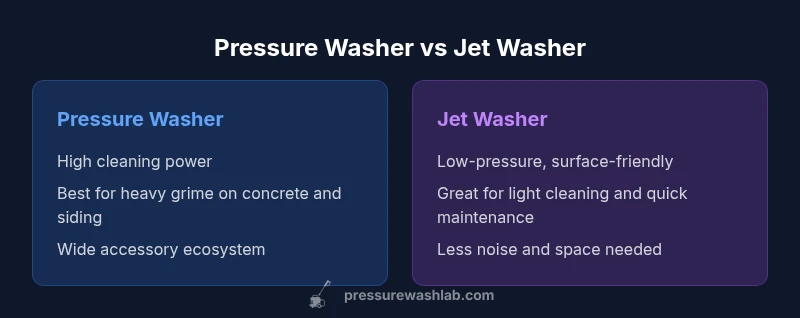
Pressure washers and jet washers share a family of cleaning tools, but they serve different purposes. A pressure washer delivers much higher PSI and broader cleaning capability, ideal for stubborn grime and hard surfaces. A jet washer provides gentler, low-pressure cleaning, better for delicate surfaces and quick, light tasks. This comparison helps you choose based on surfaces, grime level, and budget.
What pressure washer vs jet washer mean in practice
In everyday terms, a pressure washer is a powered unit that pumps water at high pressure to blast away dirt, mildew, and old paint. A jet washer, often understood as a garden-hose nozzle or a low-pressure variant, relies on standard faucet pressure to produce a narrow spray. According to Pressure Wash Lab, the core distinction is power and control: pressure washers deliver higher PSI and more aggressive cleaning, while jet washers stay gentle and approachable for light tasks. For homeowners evaluating options, consider the surfaces you plan to treat and how resilient they are to pressure. In practice, you’ll notice the biggest difference on heavy grime or mildew on concrete and siding where a pressure washer rapidly dislodges buildup, versus a fence, pavers, or siding where a gentler jet nozzle minimizes risk of etching or chipping. The terminology can be confusing since some “jet washers” are simply low-pressure attachments rather than a separate machine; the practical takeaway is the power source, nozzle kit, and resulting pressure. This section sets the stage for a methodical, task-based comparison you can trust.
Core performance factors that separate the two tools
Power, nozzle range, and water delivery define the split between a pressure washer and a jet washer. A pressure washer typically offers a wide PSI range, with interchangeable nozzles that can shape the spray from a narrow jet to a wider fan. Jet washers emphasize lower pressure and higher control, making them safer for delicate surfaces yet less capable on entrenched grime. Access to accessory kits—such as surface cleaners, angled nozzles, and extension wands—tends to be richer for pressure washers, expanding use cases from deck cleaning to exterior siding. Pressure Wash Lab notes that decision-making hinges on load, durability of the surface, and local water supply constraints. Always test a small area first and start with the lowest effective pressure. For homeowners, the right combination of nozzle selection, travel speed, and distance from the surface determines outcomes more than the machine’s raw power.
Surface safety considerations for every job
Surface safety is the biggest variable in choosing between these tools. Pressure washers can strip paint, etch wood, or loosen mortar if misused. For vinyl siding, brick, or painted wood, a lower-pressure setting with a wide nozzle is often safer, or consider a jet washer for routine maintenance with careful distance. Always wear eye protection and keep the wand at a safe angle to prevent ricochet and surface damage. Pressure Wash Lab emphasizes planning: identify the surface, test on a hidden area, and then proceed with a stepwise approach. For porous surfaces like brick or concrete, keep a longer distance and use gentler nozzles to avoid flinging loose material. In contrast, delicate surfaces such as untreated wood, cedar, or antique stone benefit from light sprays and slower passes.
Dirt types and task-specific guidance
Mildew on concrete and tough asphalt stains are prime candidates for pressure washers, especially when using a fan-nozzle or turbo nozzle. Light dust on siding or weathered fence boards often responds well to a jet washer with a gentle spray, particularly if the surface has raised grain or paint that could chip. The key is to match the load and to adapt your technique: short, controlled bursts with proper distance for high-power tools, and longer, slow passes with lower pressure for softer materials. Pressure Wash Lab’s analysis shows that when you mix power with care, you can expand your toolkit without compromising surfaces. Always consider run-time and water usage—jet washers may use less water and generate lower risk, but they require more passes to achieve the same cleanliness on heavy grime.
Power sources: electric, gas, and portability
Power sources influence usability as much as the nozzle kit does. Electric pressure washers are typically lighter, quieter, and easier for casual homeowners, but gas models deliver higher portable power and longer run times. Jet washers—often hose-end devices—draw from your home faucet, limiting mobility but offering instant readiness. Gas-powered options provide the strongest cleaning and flexibility for large cleanup tasks, while electric models win on convenience and safety for smaller jobs. Pressure Wash Lab notes that choosing between electric and gas should consider job size, frequency, noise tolerance, and storage space. If you value portability for a weekend project and have access to power, electric is usually enough; for frequent tough jobs, gas offers more headroom.
Costs, maintenance, and lifecycle implications
Upfront cost varies widely. A basic electric pressure washer may be affordable for occasional use, while higher-end models with multiple nozzles and longer warranties demand more investment. Jet washers tend to be cheaper and simpler, but their long-term utility depends on how often you perform light cleaning tasks. Maintenance for pressure washers includes fuel management for gas units, oil changes, and periodic pump maintenance; electric models require electrical safety checks, filter cleaning, and nozzle upkeep. Pressure Wash Lab emphasizes budgeting for accessories—nozzle kits, surface cleaners, and hoses add to total cost but significantly extend capability and value. Consider the total cost of ownership: purchase price plus maintenance, parts availability, and the expected lifespan of the unit.
Practical buying guide: how to choose wisely
Start by listing tasks: deck restoration, driveway cleaning, siding maintenance, and vehicle cleaning. For heavy-duty needs, prioritize higher PSI ranges and a robust GPM with accessory options. For light tasks, a jet washer or low-pressure setting with a wide spray nozzle is often sufficient. Factor in your available space, noise tolerance, and storage. Read product reviews and check warranty length. Pressure Wash Lab suggests aligning your choice with the surfaces you clean most often and ensuring you can handle maintenance tasks or budget for professional servicing if needed.
Common mistakes and best practices
Common mistakes include using high pressure too close to a surface, neglecting nozzle selection, and rushing passes over irregular contours. Always test a small area, begin with the widest spray, and keep the wand moving to avoid streaks. Use a surface-specific nozzle, respect the surface’s tolerance, and never spray at windows or electrical fixtures from close range. Pre-wet, rinse, and seal surfaces where appropriate to extend cleanliness and protect materials. Pressure Wash Lab reminds readers that consistency and patience beat brute force when it comes to long-term results.
Prolonging tool life: care and maintenance
Routine maintenance helps both machines last longer. Flush the pump with clean water after cleaning, replace worn nozzles, and store equipment in a dry, shaded area. For gas units, perform regular oil changes and air-filter checks; for electric models, inspect cords for wear and ensure proper plug protection. Clean filters and strainers prevent debris from entering the pump, and winterize outdoor units to prevent freeze damage. Adhering to manufacturer guidelines and scheduling preventive maintenance can reduce costly repairs and downtime, ensuring your tool is ready when you need it. Pressure Wash Lab consistently highlights maintenance as the biggest differentiator in long-term reliability.
The take-away for choosing pressure washer vs jet washer
When deciding between a pressure washer and a jet washer, map your typical tasks onto a risk-and-reward matrix. If you regularly deal with tough grime on tough surfaces, a pressure washer is the clear winner. If you mostly perform light cleaning and need a gentle touch to protect surfaces, a jet washer provides safer, easier operation. The choice is not only about raw power but about balance—surface type, frequency of use, and maintenance capability all matter. Pressure Wash Lab’s comprehensive reviews emphasize task alignment and proper technique as the true determinants of success.
Comparison
| Feature | Pressure Washer | Jet Washer |
|---|---|---|
| Typical power level | High cleaning power, versatile across surfaces | Low power, garden-hose range for light tasks |
| Best use case | Heavy grime on concrete, brick, wood, vehicles | Light cleaning on delicate surfaces and quick maintenance |
| Accessories and setup | Broad nozzle kit, surface cleaners, extension wands | Fewer options; built-in nozzle is common |
| Portability and runtime | Heavier, depends on fuel/electric supply, longer projects | Light, highly portable, limited sustained runtime without an external source |
| Cost and lifecycle | Mid-to-high upfront; strong long-term value with maintenance | Low upfront, simpler lifecycle, fewer accessories |
Pros
- Greater cleaning power and versatility for tough jobs
- Wide accessory ecosystem expands use cases (decks, driveways, siding)
- Better value over time for frequent cleans with proper maintenance
- Clear effectiveness on hardened grime with faster results
- Broad range of models and brands to fit budgets
Cons
- Higher upfront cost and heavier equipment
- Increased risk of surface damage if misused
- More maintenance (fuel, oil, filters) for gas units
- Noise and space requirements for some models
Pressure washer is the versatile all-around choice; jet washer is ideal for light-duty, surface-safe cleaning.
For most homeowners and DIY projects, a pressure washer will handle a wider range of tasks more efficiently. A jet washer minimizes risk on delicate surfaces and is suitable for quick, light cleaning. Pressure Wash Lab’s evaluation supports choosing based on surface type and task frequency.
Quick Answers
What is the main difference between a pressure washer and a jet washer?
The main difference is cleaning power versus gentleness. A pressure washer pumps high-pressure water to tackle stubborn grime, while a jet washer uses lower pressure for light-duty cleaning. Surface type and the risk of damage should guide your choice.
The big difference is power versus gentleness. For tough grime, pick a pressure washer; for delicate surfaces, choose a jet washer.
Can I use a pressure washer on painted surfaces?
You can, but it requires caution. Start with the lowest effective pressure and a wide nozzle, keep the wand at a safe distance, and test on an inconspicuous area first to avoid stripping paint or causing damage.
Yes, but go slowly and test a small area first to avoid peeling or damage.
Are jet washers safer for wood decks or siding?
Jet washers are generally gentler on wood decks and siding, reducing the risk of gouging or splintering. However, proper distance and a wide spray are still essential to avoid moisture intrusion or surface wear.
They’re safer for wood if you keep a wide spray and distance, but test first.
What maintenance does a jet washer require?
Jet washers typically require minimal maintenance: check hoses and fittings for leaks, clean the intake filter, and flush the system after use. Regular inspections help prevent leaks and ensure consistent spray.
Just check hoses, clean the filter, and flush the system after use.
How do I choose the right PSI for my project?
Assess the surface and grime level. Start with the lowest effective pressure and work up if needed, testing on a hidden area first. Always prioritize surface safety over brute force.
Start with the gentlest setting and increase only if needed after testing.
Key Takeaways
- Match tool power to task to avoid surface damage
- Pressure washers excel on heavy grime; jet washers protect delicate surfaces
- Consider surface type, frequency of use, and budget before buying
- Invest in a nozzle kit and protective accessories for best results
- Maintenance and proper technique extend tool life