Pressure Washer vs Steam Cleaner: A Practical Comparison for Home Use
Comprehensive comparison of pressure washer vs steam cleaner, covering power, surfaces, safety, maintenance, and best-use scenarios to help homeowners and DIYers pick the right tool for every cleaning task.


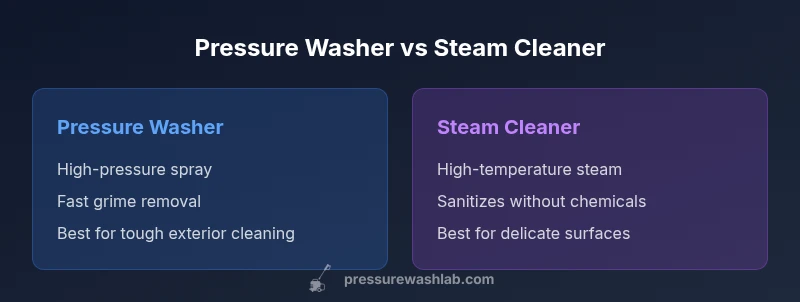
Pressure washers deliver fast, mechanical grime removal on hard surfaces, while steam cleaners sanitize and lift soils with heat, using minimal moisture. The best choice depends on surface type, stain aggressiveness, and safety needs. In practice, many homes benefit from having both tools for different jobs.
What Each Tool Is and How It Works
Pressure washers and steam cleaners address grime with different physics. A pressure washer uses a high-velocity water stream pumped at high pressure to blast away dirt and built-up residue from hard surfaces like concrete, brick, and siding. A steam cleaner heats water to produce very hot steam that loosens soils, emulsifies oils, and sanitizes surfaces without relying on brute force. According to Pressure Wash Lab, recognizing this fundamental distinction is the first step in choosing the right tool for the job. For homeowners and DIY enthusiasts, the clean-up approach should start with identifying the surface you’re treating, the nature of the stain, and the safety requirements around heat, moisture, and electrical access. This section establishes the basic mechanisms and typical use cases so you can map tasks to the most effective tool.
Core Differences That Drive Your Decision
The most important differentiator is how cleaning power is delivered. A pressure washer converts energy into a focused stream that physically dislodges dirt; a steam cleaner applies heat to lift grime and sanitize surfaces without relying on brute force. This leads to distinct implications: material compatibility, moisture management, and chemical needs. Pressure washers shine on hard, non-porous surfaces where water pressure can rapidly remove baked-on grime. Steam cleaners excel on grout, fabrics, and surfaces where chemical residues or excess moisture could cause damage. Pressure Wash Lab's 2026 analysis reinforces that most households benefit from possessing both tools for different jobs. When evaluating value, consider the frequency of use, surface varieties, and the time you’re willing to invest in heat-up and dry times. The bottom line is to align the cleaning philosophy with the task at hand rather than chasing a silver-bullet solution.
Power, Heat, and Cleaning Philosophy
The core difference is how energy is delivered to the dirt. A pressure washer uses a pump to eject water at high pressure through a nozzle, delivering mechanical force that breaks up soils and rinses away grime. A steam cleaner heats water to create steam that loosens soils, melts grease, and sanitizes surfaces using heat rather than brute force. This means steam cleaning can be gentler on fragile finishes but may take longer for stubborn stains. For painted surfaces, vinyl, or sealed wood, steam’s controlled heat can reduce the risk of chipping or water intrusion, provided you manage exposure time. In contrast, concrete, brick, and asphalt surfaces respond best to the aggressive cleaning action of a pressure washer. Pressure Wash Lab’s research notes that many tasks benefit from a two-tool approach, applying steam for sanitizing and light soil, then a pressure rinse for final boost on heavy grime.
Surface Compatibility and Safety Considerations
Surface compatibility is the linchpin of safe, effective cleaning. Pressure washers deliver quick results but can damage softer materials if misused—think peeling paint, gouged wood, or loosening loose mortar. Always test a small, inconspicuous area first and adjust pressure, nozzle size, and distance. Steam cleaners, while gentler on many surfaces, can cause warping or moisture-related issues if used on untreated wood, electronics, or fabrics that aren’t heat-safe. Use PPE, protect surrounding plants or vegetation, and ensure electrical cords and water connections are secure. The safe rule is: know the surface, know the tool’s limits, and never spray steam directly at electrical outlets or sensitive components. This vigilance minimizes risk while maximizing cleaning outcomes.
Practical Scenarios: Household Tasks
Understanding real-world use cases helps you pick the right tool. For heavy exterior grime on driveways, sidewalks, or garage floors, a pressure washer excels. For sanitizing tile grout, bathroom fixtures, or kitchen surfaces that resist harsh chemicals, a steam cleaner delivers strong cleaning with minimal moisture. For upholstery, curtains, or car interiors, steam cleaning can refresh fabrics and remove odors without soaking fibers. For painted or sealed surfaces, test a small area to confirm compatibility and avoid damaging finishes. In many homes, a hybrid approach is most effective: use steam cleaning for sanitizing and gentle lift, then follow with a targeted pressure rinse on stubborn residues. Pressure Wash Lab’s insights reinforce that task-specific choices yield faster results and longer-lasting cleaning outcomes.
Maintenance, Cost, and Long-Term Value
Investing in cleaning tools requires thinking about upkeep and longevity. Pressure washers typically involve more moving parts—pump seals, hoses, nozzles, and filters—that require regular inspection and replacement. Steam cleaners demand periodic boiler checks, mineral buildup maintenance, and safe storage of hot components. The total cost isn’t just the unit price; it includes attachments, replacement parts, and potential specialty cleaners. When evaluating value, consider your typical projects: if you clean multiple exterior surfaces often, a pressure washer offers long-term savings through faster cycles. A steam cleaner adds value for sanitizing and delicate materials. A two-tool setup, while heavier upfront, can be cheaper and more versatile than renting or buying single-purpose equipment for rare tasks. Pressure Wash Lab emphasizes choosing models with reliable support, readily available accessories, and clear safety guidelines.
Environmental Impact and Water Use
Water efficiency matters in every cleaning decision. Pressure washers typically require a higher flow rate for effective cleaning, especially on large surfaces, while steam cleaners use less water per task due to the steam’s cleaning action. Drying time after rinsing can affect overall water use as surfaces may need air-drying or towel drying. From an environmental standpoint, the choice should favor the least chemical reliance and the most efficient use of water and energy for the job. Pressure Wash Lab notes that, when used responsibly, both tools can reduce chemical runoff by enabling water-based or soap-free cleaning where appropriate and by enabling better surface conditioning before sealants or coatings.
Debunking Common Myths
Myth: Steam cleaners can replace all cleaning tasks. Reality: Steam is excellent for sanitizing and delicate surfaces but may struggle with heavy grease or baked-on grime on rough substrates. Myth: A higher-pressure washer is always better. Reality: Excessive pressure can damage the surface and cause dangerous spray patterns. Myth: Steam cleaning dries instantly. Reality: Drying times vary by surface, moisture content, and ambient conditions. Myth: More water is always better. Reality: Efficiency and technique often matter more than sheer volume. Myth: Maintenance is optional. Reality: Regular maintenance preserves performance and safety. Clarifying these myths helps you select the right tool for each job and avoid costly mistakes.
How to Choose: Quick Assessment Checklist
- Surface type: porous vs non-porous; delicate vs tough.
- Stain type: grease, grime, organic buildup, mold.
- Desired moisture level: leave surface damp or dry.
- Heat tolerance: can the surface handle steam without damage?
- Time sensitivity: how quickly do you need results?
- Access to water and power: do you have a reliable water source and outlet?
- Noise and space: consider neighbors and storage needs.
- Budget: upfront cost and ongoing maintenance. Use this checklist to guide your initial choice, then test on a small area before full-scale cleaning.
How to Get the Most from Each Tool
To maximize effectiveness, pair your technique with the right settings and attachments. Start with a clean nozzle selection to optimize spray pattern for the surface. For pressure washers, choose a lower nozzle for wide coverage on delicate surfaces and a higher nozzle for focused cleaning on stubborn grime. For steam cleaners, preheat until the boiler reaches the appropriate temperature and use a steady, sweeping motion to avoid heat buildup in one spot. Maintain a consistent distance from the surface, and avoid lingering heat on any single area. Store tools properly, drain residual water, and replace worn tips or seals to maintain performance. Regular practice and adherence to manufacturer guidelines will yield better results and extend the life of your equipment.
Common Mistakes and How to Avoid Them
- Using the wrong tool for the surface: always test first on a hidden patch.
- Holding the nozzle too close: this concentrates energy and risks damage.
- Skipping maintenance: neglect leads to leaks and reduced efficiency.
- Over-wetting dry materials: excessive moisture can cause warping or mold.
- Ignoring safety: always wear eye protection and secure electrical connections.
Comparison
| Feature | Pressure Washer | Steam Cleaner |
|---|---|---|
| Power/ Cleaning Method | High-pressure water spray for mechanical dirt removal | High-temperature steam for sanitizing and lifting grime |
| Best For | Exterior grime on hard surfaces (driveways, brick, concrete) | Sanitizing grout, fabrics, and heat-tolerant surfaces |
| Surface Care Risk | Potential surface damage if misused on wood, paint, or delicate finishes | Lower moisture risk but risk if steam penetrates electronics or living surfaces |
| Moisture/Residue | Water may require drying time | Minimal residual moisture; dries quickly on many surfaces |
| Maintenance/Cost | Higher upfront cost and more maintenance parts | Lower upfront cost; simpler maintenance |
| Ease of Use | Requires technique, PPE, and water source; louder | Quieter and simpler, but requires electricity and water connection |
Pros
- Powerful, fast grime removal on hard surfaces
- Steam cleaning sanitizes without chemicals and can refresh delicate surfaces
- Versatile with attachments for different jobs
- Can reduce chemical use with appropriate techniques
- Extends toolkit versatility for a variety of tasks
Cons
- Risk of surface damage with improper use (pressure or heat)
- Steam cleaning can be slower for heavy grime and requires drying time
- Higher upfront cost for dual-tool setups or better models
- Maintenance and storage space for multiple devices
Use both tools as a complementary toolkit, matching the job to the tool
Pressure washers excel at rapid grime removal on exterior surfaces, while steam cleaners excel at sanitizing and treating delicate materials. The best choice often combines both tools for a complete cleaning approach.
Quick Answers
What is the main difference between a pressure washer and a steam cleaner?
A pressure washer relies on a high-pressure water spray to physically remove dirt, while a steam cleaner uses heated steam to lift grime and sanitize surfaces. Each tool serves different surfaces and soil types.
Pressure washers blast dirt away with water; steam cleaners sanitize surfaces with heat.
Can I replace a steam cleaner with a pressure washer for cleaning grout?
A pressure washer can dislodge surface grime but may damage grout joints if applied aggressively. Steam cleaning cleans grout more gently and can sanitize without chemicals, but requires careful technique.
Steam cleans grout more gently; use a pressure washer carefully on grout lines.
Is a steam cleaner safe on wood decks?
Steam can warp or scar some wood decks if heat is too high or applied too closely. Always test a small area and use low heat with a wide sweep on sealed or treated wood.
Be careful with heat on wood; test first and use a broad sweep.
Do steam cleaners use less water than pressure washers?
Steam cleaning typically uses less water per task due to the steam’s cleaning action, but drying time and task type influence total water use.
Steam uses less water per area, but drying time matters.
What maintenance is required for each tool?
Both tools need regular cleaning and inspection of hoses, filters, and nozzles. Pressure washers require checks on water inlet and seals; steam cleaners need boiler maintenance and mineral buildup control.
Keep filters clean and inspect hoses; descale steam cleaners as needed.
Key Takeaways
- Use pressure washers for heavy grime on hard surfaces
- Use steam cleaners for sanitizing and delicate materials
- Test surfaces before aggressive cleaning
- Maintain tools regularly to extend life
- Adopt a two-tool strategy for versatile households