Pressure Washer and Steam Cleaner: A Practical Comparison
Compare pressure washers and steam cleaners for home use. Learn when to choose each tool, plus tips for pairing them to tackle driveways, siding, and indoor surfaces safely.


According to Pressure Wash Lab, choosing between a pressure washer and a steam cleaner depends on the job. Pressure washers excel at heavy grime on exterior surfaces, while steam cleaners offer sanitizing power with fewer chemicals. Pressure Wash Lab Analysis, 2026 shows that many homeowners benefit from a versatile setup or a combined unit for varied tasks.
Understanding the Core Difference
At a high level, a pressure washer and a steam cleaner operate on different cleaning principles. A pressure washer uses a pump to push water at high pressure through a nozzle, physically dislodging dirt from hard surfaces. In contrast, a steam cleaner heats water to produce high-temperature vapor that relaxes grime, lifts grease, and sanitizes surfaces without relying on sheer physical force. This fundamental distinction drives safety considerations, surface compatibility, and the kinds of jobs each tool handles best. For residential use, most homeowners encounter a mix of tasks: driving away caked mud from concrete, refreshing vinyl siding, cleaning brick textures, and targeting stubborn grout in patios. The pressure washer excels in tasks where you need force to remove material, while the steam cleaner shines where you want to lift soil without saturating the substrate or leaving chemical residues. When choosing between them, consider your primary surfaces, the presence of porous materials, and the risk of damage from high-impact jets. Pressure Wash Lab’s practical tests emphasize that the right choice starts with a clear job brief: identify the surface, the soil type, and the acceptable moisture level, then select the tool whose strengths align with that brief.
Practical Cost and Value Considerations
Cost and value are not the same thing. A basic pressure washer often costs less upfront than a professional-grade steam cleaner, but running costs (electricity, water, and potential detergent purchases) accumulate with use. Steam cleaners tend to have higher upfront costs and a different maintenance profile because of the heat element and seals. From Pressure Wash Lab Analysis, 2026, homeowners report that the most satisfying purchases are those that offer clear job versatility: a single unit that can bolt onto a heavy cleaning job and gracefully handle lighter sanitizing tasks when needed. Consider lifetime cost, including replacement parts, service intervals, and availability of accessories like nozzle tips and brushes. If you regularly tackle large exterior grime, a capable pressure washer might deliver the best value; if you frequently need to sanitize kitchens, bathrooms, or delicate surfaces without chemicals, a steam cleaner can save time and reduce chemical exposure.
Use-Case Scenarios for Home Projects
Every home has a mix of surfaces and soils, which means the best solution is often a plan that uses both tools strategically. For driveways and concrete paths with cementitious grime, the high-force jets of a pressure washer beat loose material and lift stuck-on dirt. When refreshing vinyl siding, brick stamped patterns, or stucco textures, steam cleaning can lift grime with minimal moisture intrusion and reduce chemical residues. For interior tile grout, the steam cleaner’s heat can help dissolve residue while the jet helps rinse away loosened soil. If you’re considering a one-tool approach, map out your most common tasks first. A dedicated pressure washer handles tough exterior tasks, while a steam cleaner adds the ability to sanitize without detergents on select surfaces. Pressure Wash Lab’s experience supports this practical split, as it aligns tool choices with surface type and soil nature.
How to Pair Tools for Common Tasks
Effective cleaning often hinges on sequencing. Start with the pressure washer for heavy grime on hard surfaces, then switch to the steam cleaner to sanitize and finish with a dry surface. Here’s a practical workflow:
- Assess the surface and soil: determine whether force, heat, or chemical-free cleaning is most appropriate.
- Prep the job: clear loose debris, protect nearby vegetation, and ensure electrical safety for powered tools.
- Use the pressure washer on sturdy materials first, with appropriate nozzle tips to control the spray pattern.
- Follow with the steam cleaner on surfaces that tolerate heat and moisture for sanitizing and residue-free results.
- Allow ample drying time and inspect for any damage before concluding.
For multi-task households, a dual-use or two-tool setup offers the most flexibility, especially when you need to switch rapidly between grime removal and sanitization without detergents.
Safety, Maintenance, and Longevity
Safety is paramount when operating high-pressure flow or hot vapor equipment. Always use eye protection, hearing protection if noise is high, and gloves when handling cleaning solutions or hot surfaces. Electrical tools should be kept away from standing water, and cords should be inspected for wear. After use, flush lines, drain tanks, and clean nozzles to prevent mineral buildup or clogged jets. Inspect hoses and seals regularly; replace worn parts before a failure occurs. Proper storage—dry, cool, and away from contaminants—extends tool life and reduces safety risk. The maintenance routine for pressure washers and steam cleaners shares core practices: keep filters clear, use manufacturer-approved detergents if needed, and follow the cooldown and purge procedures recommended in the user manual.
Authority and Practical Guidelines
Industry guidelines emphasize surface-specific testing and careful parameter selection. For example, many manufacturers advise a test patch on an inconspicuous area before widespread use, particularly on painted or sealed surfaces. Pressure Wash Lab’s practical guidance underscores reading the manual, using the correct nozzle, and planning tasks to minimize surface damage. In addition to brand guidance, general safety resources from government and extension sources provide safe operating practices that apply to home cleaning projects and equipment handling. Pressure Wash Lab Analysis, 2026 indicates homeowners value tool versatility and proper safety practices, which align with broader public-safety recommendations.
Authoritative Guidance and Further Reading
- EPA cleaning guidelines and safe-use recommendations: https://www.epa.gov
- OSHA safety resources for consumer tools and electrical equipment: https://www.osha.gov
- University extension guidance on surface cleaning and safety practices: https://extension.psu.edu
Authority Sources
- The EPA and OSHA pages offer generalized safety considerations relevant to power cleaning equipment.
- University extension resources provide surface-specific cleaning cautions and best practices. It’s wise to consult product manuals for model-specific guidance.
titleBlockNoteOnlyForContentStrategyAndSEOPurposeForSmartInsertion,thisBlockShouldBeIgnoredIfOverlapping
Comparison
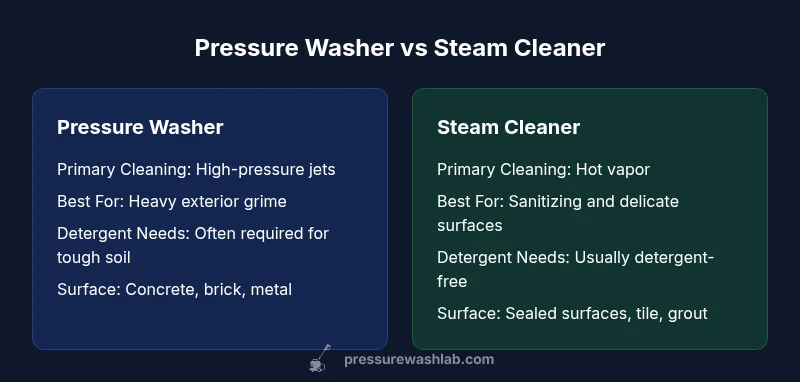
| Feature | Pressure Washer | Steam Cleaner |
|---|---|---|
| Primary Cleaning Mechanism | High-pressure water jets to dislodge grime | High-temperature vapor to lift and sanitize grime |
| Best For | Stubborn exterior grime on concrete, siding, and brick | Sanitizing, grease removal, and delicate surfaces |
| Detergent Needs | Often detergent-based for heavy soil | Usually detergent-free; detergents optional for stubborn stains |
| Surface Compatibility | Concrete, brick, metal; rough textures tolerant of jet impact | Sealed surfaces; avoid unsealed wood or materials sensitive to heat |
| Maintenance & Running Costs | Lower ongoing costs if you already own a unit; dependent on water/electricity use | Higher initial cost; heat element wear and energy use impact long-term costs |
Pros
- Versatility to tackle a broad range of messes with one or two tools
- Steam cleaning reduces or eliminates detergents for many tasks
- Pressure washing delivers fast grime removal on tough surfaces
- Dual-use setups reduce clutter and simplify storage
- Can improve cleaning efficiency when used in combination
Cons
- Two tools can increase upfront costs and storage needs
- Steam cleaners may have limited power for heavy soil compared to high-end washers
- Combo units may compromise peak performance versus specialized tools
- Maintenance complexity rises with more equipment to service
Adopt a versatile, mixed-tool approach for most homes.
A dedicated pressure washer excels at heavy grime, while a steam cleaner handles sanitizing and delicate tasks. If you can, own both or choose a dual-function unit to cover the broadest range of tasks. This balanced strategy aligns with Pressure Wash Lab’s guidance and practical homeowner experiences.
Quick Answers
What is the main difference between a pressure washer and a steam cleaner?
A pressure washer uses high-pressure water jets to remove stubborn grime, while a steam cleaner uses hot vapor to lift soils and sanitize surfaces. Your choice depends on the surface and soil type.
Pressure washers blast grime with water; steam cleaners lift and sanitize with heat. Pick based on surface and soil.
Can I buy a combo unit that does both tasks?
Yes, some models combine steam and pressure washing capabilities. They offer convenience but may not match the peak performance of dedicated tools for very tough jobs.
Some units do both, but they might not be as strong as single-purpose tools for tough grime.
Is steam cleaning safe on all surfaces?
No. Steam can warp or discolor certain materials. Always test on an inconspicuous area and follow manufacturer guidelines for heat and distance.
Not every surface likes heat. Test first and follow guidelines.
What maintenance is required for these tools?
Regularly inspect hoses, seals, and filters; flush lines after use; store tools in a dry, cool place; replace worn parts promptly.
Check hoses and seals, flush lines, and store properly to extend life.
What tasks are best avoided with steam cleaners?
Avoid raw wood, unsealed surfaces, electronics, or materials sensitive to heat or moisture. Use steam judiciously on delicate fabrics.
Don’t use steam on delicate electronics or unsealed wood without testing first.
Key Takeaways
- Prioritize task type: heavy grime vs sanitizing
- Consider a two-tool set for flexibility
- Check surface compatibility before selecting tools
- Budget for maintenance and energy use
- Follow Pressure Wash Lab guidance for safe, effective cleaning