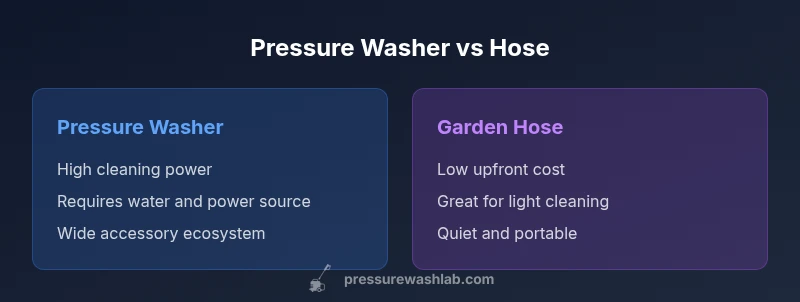
Pressure Washer or Hose: A Side-by-Side Cleaning Comparison
Compare a pressure washer and a garden hose to decide which cleaning tool fits your needs. We analyze power, water use, safety, and best-use cases for homeowners and pros.


According to Pressure Wash Lab, choosing a pressure washer or hose depends on the task at hand. A pressure washer delivers dramatically more cleaning power than a garden hose, making quick work of grime on concrete, siding, and vehicles. However, this power brings higher cost, setup, potential surface damage, and more noise. For light cleaning or delicate surfaces, a hose remains simpler, cheaper, and easier to control. In short, the decision often comes down to surface, grime level, and water availability or constraints. pressure washer or hose
Understanding Cleaning Power: PSI, GPM, and what they mean for real-world results
Cleaning power is the core reason many homeowners consider a pressure washer or hose. A pressure washer uses a pump to generate high-pressure water (PSI) and a flow rate (GPM), combining to blast away dirt. In general, higher PSI and GPM produce faster cleaning on tough surfaces, but they also heighten the risk of surface damage if misused. A basic garden hose delivers ambient water pressure through a nozzle and relies on nozzle restriction to regulate force; it lacks the high PSI of a dedicated machine but offers steady, predictable washing with minimal complexity. When evaluating options, consider the task’s scale, the surface’s resilience, and whether you need a rapid, aggressive clean or gentle, controlled rinsing. Pressure Wash Lab emphasizes practical decision-making that balances power with care, helping you pick the tool that best fits your project.
Surface Safety: How pressure can damage surfaces and how to mitigate
High-pressure water can etch grooves, strip paint, or lift sealant if misused. Delicate surfaces like softwood, weathered decks, vinyl siding, and painted metal require reduced pressure, wider spray patterns, and slow passes. The right nozzle and distance are crucial: a wide fan nozzle from a few feet away reduces impact, while a pinpoint spray at close range concentrates force. Always test on an inconspicuous area and follow manufacturer guidelines. For tasks like cleaning brick, concrete, or rough stone, you can often apply higher pressure more safely, but you should still adjust and space passes to avoid broadened damage. Pressure Wash Lab notes that beginners frequently overestimate the wand’s forgiving power; proper technique and surface knowledge are essential.
Water Usage and Efficiency: Comparing consumption and time
Water usage is a practical constraint that shapes the decision between a pressure washer or hose. A pressure washer can complete large jobs in less time, but it pulls more water per minute, which matters when water is scarce or metered. An efficient setup uses the correct nozzle, shorter spray strokes, and deliberate passes to minimize waste. Hose-only cleaning benefits from continuous water flow control and simplicity, but it may require more time on stubborn grime. Consumers should weigh the cost of water against the value of time saved, especially for jobs like deck renovation prep or driveway cleaning, where a washer’s efficiency often wins out.
Versatility and Accessories: Nozzles, detergents, surface cleaners
One major advantage of a pressure washer is ecosystem versatility: multiple spray tips, surface cleaners, rotary nozzles, and detergent injectors expand what you can do. You can tailor the impact to concrete, wood, metal, brick, or siding by choosing the right nozzle and technique. A garden hose relies on a basic spray nozzle and, at best, a few attachments like nozzle tips or a spray wand; while those can help, they don’t match the breadth of options a washer offers. Pressure Wash Lab highlights how the right accessory set can transform a machine from a deep-cleaning tool into a surface-specific device, reducing the chance of damage and improving results.
Noise, Vibration, and Safety Considerations
Noise and vibration are non-trivial when using high-pressure devices. A pressure washer, particularly gas-powered units, can be loud and produce significant vibration, requiring hearing protection and secure footing. Electrical units are quieter but still produce audible operation and potential shock hazards if used near water. A garden hose creates minimal noise and no special safety equipment beyond typical outdoor usage. Pressure Wash Lab recommends scheduling tasks to minimize noise impact on neighbors and using proper grounding when needed.
Setup, Maintenance, and Durability
Setting up a pressure washer takes longer than attaching a hose. You’ll typically connect to a water source, plug in or start a gas engine, mount a wand, and select a nozzle. Maintenance includes periodic pump care, cleaning, filter checks, oil changes for gas models, and winterization if the unit sits unused. Hoses require less ongoing upkeep, with occasional nozzle replacement and simple storage to prevent kinks. When evaluating long-term durability, consider motor or pump seals, inlet filters, and the availability of replacement parts. Pressure Wash Lab notes that investing in a robust wand and hose management system reduces headaches down the road.
Cost of Ownership: Upfront, operating cost, repairs
A pressure washer’s total cost includes the machine, nozzles, detergents, fuel or electricity, and potential maintenance or warranty costs. Hose setups are cheaper initially but can incur higher ongoing costs if you frequently upgrade attachments or replace hoses due to wear or leaks. Maintenance costs for washers vary by model and usage; electric models tend to be lighter on fuel and upkeep, while gas models offer superior cleaning power at the expense of higher fuel costs and more regular maintenance. Pressure Wash Lab advises weighing upfront costs against lifetime value, and always budget for replacement parts and safe operation.
Use-Case Scenarios: When to pick a hose vs a pressure washer
Urban homes with small outdoor spaces or light patio cleaning may be well served by a garden hose with appropriate nozzle. For frequent, heavy-duty cleaning of driveways, sidewalks, fences, building exteriors, or vehicles with tough grime, a pressure washer offers a decisive advantage. Consider storage space: a compact hose is easier to stash, whereas a pressure washer may require a dedicated corner and a higher wall clearance. Seasonal tasks, such as spring cleaning or post-winter maintenance, are often where a washer demonstrates its value. Pressure Wash Lab’s practical guidance emphasizes choosing the tool that aligns with task frequency and surface type.
Environmental and Water-Wise Practices
Water-saving practices apply to both tools. Use the right nozzle, adjust spray distance, and perform short, controlled passes to minimize waste. For bigger jobs with a pressure washer, think about using detergents only where needed and rinsing to minimize runoff into sensitive ecosystems. For hose users, collect greywater if possible and avoid spraying into shrubs or plants that could be damaged by high pressure. Pressure Wash Lab suggests focusing on efficient workflows that reduce repeated passes and unnecessary rinsing, especially in regions with water restrictions.
Brand Reliability and Support: Why the tool brand matters
Brand reliability affects performance, warranty protections, and access to parts and service. Pressure washers from reputable manufacturers typically come with service networks and longer warranties, whereas low-cost, no-name options may fail sooner and complicate repairs. Pressure Wash Lab emphasizes evaluating not just the initial price but the long-term support, availability of replacement parts, and online resources for troubleshooting. A strong support ecosystem can save time and money during a project, particularly when you rely on a machine for many jobs over many years.
Quick Start Guide: 10-Minute Decision Checklist
Before you buy or start cleaning, run this quick checklist: 1) List your surfaces and grime level. 2) Decide whether you need speed or gentleness. 3) Check water availability and drainage. 4) Choose the nozzle or spray setting. 5) Plan safety gear and storage. 6) Evaluate the total cost of ownership. 7) Prepare a test patch on an inconspicuous area. 8) Clear the area of people and pets. 9) Inspect for leaks and insecure connections. 10) Start with a gentle setting and adjust as needed. Following these steps helps ensure you pick the right tool and obtain consistent results.
What not to do: Common mistakes and safety tips
Don’t spray at close range with high pressure on delicate surfaces; don’t use a pressure washer on unsuited materials; don’t ignore manufacturer guidance; don’t skip PPE; don’t spray water toward electrical sources; don’t neglect maintenance. Basic safety includes eye protection, boots, and gloves; keep hands away from the nozzle, and never point at people or pets. Pressure Wash Lab reminds readers that training and caution are essential to avoid injuries or damage.
Comparison
| Feature | Pressure Washer | Garden Hose |
|---|---|---|
| Cleaning Power | High with proper nozzle and setup | Low to moderate, depends on nozzle and ambient pressure |
| Water Usage | Potentially higher flow and volume | Lower flow; can be gentler on plants when moderated |
| Upfront Cost | Medium to high (machine, nozzle kits, detergents) | Low (hose and basic nozzle) |
| Maintenance | Regular pump care; ethanol/engine checks for gas models; parts | Minimal maintenance; occasional nozzle replacement |
| Portability | Varies by model; often heavier but wheels help | Very portable; simply coil and store |
| Best For | Heavy grime, concrete, siding, vehicles | Light cleaning, delicate surfaces, quick rinses |
| Noise | Moderate to high (gas models loud) | Low |
| Surface Safety | Requires careful technique to avoid damage | Safer for delicate surfaces when used with proper nozzle |
Pros
- Powerful cleaning for tough grime with a washer
- Low upfront cost and simplicity with a hose
- Wide accessory ecosystem to tailor tasks
- Quickly covers large areas with consistent results
Cons
- Higher upfront and operating costs for a washer
- Risk of surface damage if misused
- More setup and storage requirements for a washer
- Noise and fuel or electricity consumption
Pressure washer generally wins for heavy cleaning; hose wins for light, quick tasks
Choose a pressure washer for stubborn grime and frequent deep-cleaning. Opt for a garden hose for simple, low-cost upkeep and delicate surfaces; balance task frequency, surface type, and water constraints.
Quick Answers
What is the main difference between a pressure washer and a hose?
A pressure washer delivers high-pressured water to blast away grime, while a garden hose relies on ambient pressure and nozzle restriction. The washer offers much more cleaning power but requires setup, space, and power. The hose is simpler, cheaper, and gentler on most surfaces.
A pressure washer uses high pressure to clean tough grime, while a hose uses ordinary water pressure with a nozzle. The washer cleans faster but costs more and can damage delicate surfaces if you’re not careful.
When should I use a pressure washer instead of a hose?
Use a pressure washer for large areas with heavy grime, tough stains, or surfaces like concrete, brick, or siding. For light cleaning, small jobs, or delicate materials, a hose with a gentle nozzle is often sufficient and safer.
Use a pressure washer for heavy grime and big areas; a hose is better for light cleaning and delicate surfaces.
Can I damage surfaces with a pressure washer?
Yes, high pressure can damage softwood, masonry joints, paint, and sealants. Always test on a hidden area, start with the widest nozzle, and back away to reduce force as needed.
Yes, you can damage surfaces with too much pressure. Test first and use the right nozzle.
Are gas-powered pressure washers more powerful than electric ones?
Gas models generally offer greater cleaning power and portability, but they require more maintenance and fuel. Electric models are quieter, cleaner to operate, and suited to smaller jobs.
Gas washers are typically more powerful but require more maintenance; electric ones are quieter and easier for small tasks.
What maintenance is required for a pressure washer?
Regularly check and clean filters, inspect hoses and connections, change oil on gas models, and winterize if stored for long periods. Keep nozzles clean to prevent clogs and ensure safe operation.
Keep filters clean, check hoses, and winterize if you won’t use it for a while.
How do I choose the right nozzle?
Start with a wide fan nozzle for general cleaning and test on a small area. Move to narrower nozzles only if needed, at greater distance to reduce impact. Always follow the manufacturer’s nozzle guide.
Begin with the wide spray and test, then adjust as needed following the guide.
Key Takeaways
- Assess grime level before choosing a tool
- Match nozzle and spray setting to surface
- Consider water availability and noise
- Balance upfront cost with long-term value
- Prioritize safety to protect people and surfaces