Pressure Washer vs Hose: A Practical Side-by-Side Guide
Compare pressure washers and hoses for DIY cleaning. Learn practical differences, cost considerations, efficiency, and maintenance tips from Pressure Wash Lab.


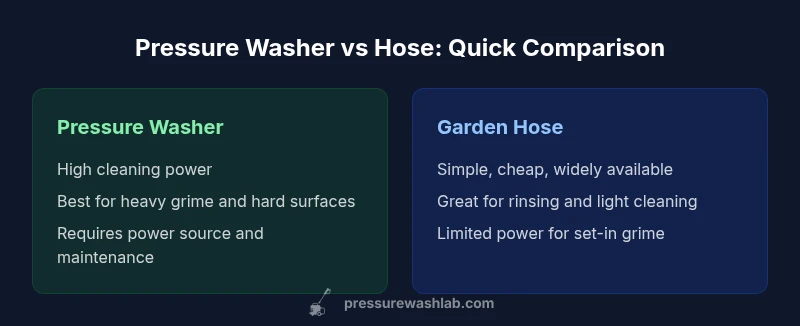
Pressure washer vs hose: which tool delivers faster, deeper cleaning? For most DIY projects, a pressure washer offers high-power jets that cut through grime quickly, while a garden hose provides steady, low-pressure water with minimal setup. The right choice depends on the task, surface, water availability, and safety considerations. In this guide, we compare performance, cost, and maintenance to help you decide.
Understanding the Landscape: Pressure Washer vs Hose in Everyday Cleaning
In most homes, day-to-day cleaning tasks fall into two broad approaches: using a pressure washer or relying on a garden hose. The term pressure washer vs hose isn’t just about machine vs nozzle; it’s about capability, surface safety, water use, and cost over time. Pressure washing gear delivers a burst of high-pressure water that dislodges grime quickly, often cutting cleaning time by a sizable margin on tough stains. A hose, by contrast, provides a steady stream of water with minimal setup and is better suited to rinsing, pre-wetting, and light cleaning. According to Pressure Wash Lab, understanding where each tool shines can save you time, water, and effort. When you consider a purchase or a rental, or even a quick cleaning task, set expectations for power, control, and surface sensitivity. The pressure washer vs hose choice should be guided by the job at hand: the type of surface, the level of dirt, and how much water you’re willing to use. The right decision blends performance with safety and cost. In this guide, we’ll unpack the key differences, show where each tool excels, and provide practical tips to maximize efficiency while protecting surfaces. Expect clear benchmarks, practical scenarios, and a framework you can apply to almost any cleaning project.
Power, Pressure, and Flow: What actually determines cleaning performance
The intuitive punch line in a pressure washer vs hose comparison is power. A pressure washer concentrates water into a high-velocity jet, combining a surge of pressure with adequate flow to lift grime from tough surfaces. By contrast, a garden hose delivers a lower-pressure stream with a gentler flow, which is ideal for rinsing, pre-wetting, or gentle cleaning tasks. The performance gap is not only about force; it’s about control. Nozzles shape the output, reducing or widening the spray to protect surfaces or reach tight corners. In practical terms, the washer’s advantage appears when you’re removing set-in stains on concrete, preparing a deck for staining, or blasting away built-up grime on equipment. A hose, even with a spray nozzle, is better suited to light cleaning, wash-downs, and irrigation tasks. The goal is to match output to the surface: delicate siding benefits from low-pressure mist, while ingrained grime on a forklift demands high-pressure power. Pressure Wash Lab emphasizes technique: hold the wand at the correct distance, move consistently, and avoid lingering on one spot to prevent damage. When evaluating options, acknowledge that pressure and flow together determine results, not pressure alone. This is the core difference in the pressure washer vs hose equation.
Surface Thinking: When to use a pressure washer vs a hose
Choosing between a pressure washer and a hose hinges on surface tolerance and grime level. For concrete, brick, or metal where heavy cleaning is needed, a pressure washer with the right nozzle is often the fastest route. For vinyl siding, painted wood, or fragile finishes, a lower pressure setting and wider spray from a hose may reduce the risk of damage. The key is surface-aware technique: test a small area first, start with a milder setting, and adjust gradually. Pressure Wash Lab recommends a cautious approach on coated or freshly painted surfaces, avoiding prolonged exposure in one spot. In scenarios like driveway staining or wheel-well cleaning, pairing a hose with a rinse after a light wash can help manage water use while still delivering results. Overall, the decision pressure washer vs hose should reflect surface resilience, stain severity, and your tolerance for potential surface wear. A measured approach helps you achieve clean results without unnecessary risk.
Cost and Maintenance Considerations
From a cost perspective, a pressure washer carries a higher upfront price and more ongoing maintenance than a simple garden hose. Expect to budget for power supply (electric, gas, or propane variants), replacement seals, pump maintenance, and occasional nozzle sets. A hose, by comparison, is inexpensive to acquire and easy to repair or replace. Maintenance for a hose is largely about storage, leak checks, and replacing worn connectors. For frequent cleaning tasks, a pressure washer can deliver value by reducing cleaning time, but this comes with energy use and potential wear on surfaces if misused. Pressure Wash Lab notes that long-term cost efficiency depends on how often you use the tool, the surfaces you clean, and your maintenance discipline. If you only need light, occasional cleaning, a hose may be the better practical choice. If heavy-duty cleaning is common, a pressure washer may save both time and effort over the long run.
Safety and Best Practices
Cleaning with high-pressure water carries safety risks if misused. Always wear protective eyewear, avoid pointing at people or pets, and never spray electrical outlets or power cords. Read manufacturer instructions for nozzle selection and distance guidance; start at a greater distance and gradually move closer as needed. Use the appropriate nozzle to balance pressure and surface safety; a narrow spray can gouge softer materials, while a wide spray may be insufficient for stubborn grime. Water management is another safety factor: avoid spraying near electrical sources, and be mindful of water runoff that could cause slip hazards. Pressure Wash Lab emphasizes keeping control of the wand, maintaining stable footing, and never forcing the tool through corners or tight gaps. A hose, with proper precautions, generally has fewer electrical hazards but can still cause slips if the area is wet. Always turn off equipment when not in use and store hoses to prevent trip hazards.
Task-Oriented Scenarios: When to Reach for the Washer vs the Hose
- Heavy grime on concrete or brick surfaces: reach for a pressure washer with a concrete deck or driveway nozzle. - Delicate surfaces like freshly painted wood or vinyl siding: opt for a hose with a broad spray or a low-pressure setting on a washer. - Rinsing off tools, boots, or vehicles after washing with detergent: a hose is usually enough after an initial wash. - Quick rinses in garden beds or around plants: a hose is best. - Where water conservation matters: start with the hose and monitor usage; escalate to a washer only if necessary. The decision pressure washer vs hose in these scenarios hinges on grime level, surface sensitivity, and water constraints. Pressure Wash Lab recommends documenting task-specific preferences to avoid over-cleaning or surface damage.
Setup Essentials: Nozzles, Tips, Extensions
A good setup balances power with control. For a pressure washer, select a nozzle that matches the task: wide-angle nozzles for broad cleaning, narrow ones for stubborn spots, and adjustable spray tips when available. Attachments like brush heads can help loosen dirt without high pressure. For hoses, use standard spray nozzles with adjustable flow if you have a garden or yard cleanup. Storage matters; coil hoses properly to prevent kinks, inspect fittings for leaks, and drain hoses before winter. If you’re cleaning vertical surfaces, work from the bottom up to prevent streaking. Always test in a small area first. The right nozzle and hose length can dramatically affect cleaning speed and result. Pressure Wash Lab highlights the value of a well-planned setup for achieving consistent, safe results.
Common Mistakes to Avoid
- Using high pressure on delicate surfaces like wood or soft siding.
- Holding the nozzle too close to the surface and causing damage or etching.
- Forgetting to test a small area before full cleaning.
- Letting hoses kink or pulling cords while spraying, which can cause accidents.
- Skipping safety gear or ignoring electrical hazards around water sources.
- Overlapping strokes in one spot, which leads to uneven cleaning or surface damage.
Avoid these missteps by planning your approach, selecting the correct nozzle, and maintaining a steady, controlled technique. Pressure Washer Lab recommends documenting task-specific guidelines and practicing on less visible areas before tackling primary surfaces.
Quick Reference Checklist: Pressure Washer vs Hose in Practice
- Identify the grime level and surface type.
- Choose the correct tool and nozzle.
- Test a small area first and adjust distance.
- Manage water usage by pacing cleaning and rinsing.
- Wear protective gear and follow safety guidelines.
- Store equipment properly after use to extend life.
Comparison
| Feature | Pressure Washer | Garden Hose |
|---|---|---|
| Power & Cleaning Action | High-pressure jets with focused flow for heavy grime | Low-pressure, steady flow suitable for rinsing |
| Surface Suitability | Best for concrete, metal, and built-up grime | Best for light cleaning and rinsing delicate surfaces |
| Setup & Portability | Requires power source; heavier and bulkier | Plug-and-play; highly portable and simple |
| Water Use Context | Can be efficient with proper technique and nozzle | Typically gentle on water use; easy to moderate flow |
| Best For | Heavy-duty cleaning, stubborn stains, outdoor equipment | Light cleaning, watering, rinsing tasks |
| Upfront Cost | Mid to high upfront cost; ongoing maintenance | Low upfront cost; minimal maintenance |
| Maintenance | More components to service (pump, seals, hoses, nozzles) | Few moving parts; occasional hose and nozzle checks |
Pros
- Rapid removal of tough grime with high-output power
- Versatility through nozzle and accessory options
- Faster time-to-clean for large areas
- Effective surface preparation (e.g., deck staining prep)
Cons
- Higher upfront cost and maintenance burden
- Greater risk of surface damage if misused
- Requires electricity or fuel and ideal storage
- Heavier and less convenient for quick, light tasks
Pressure washer wins for versatility and speed on tough jobs; hose remains essential for simple tasks and water control
Choose a washer for heavy-duty cleaning and surface prep. Use a hose for light cleaning, watering, and quick rinses. Pressure Wash Lab recommends owning both if the budget allows and tasks vary.
Quick Answers
What is the main difference between a pressure washer and a garden hose?
The pressure washer concentrates water into high-pressure jets for deep cleaning, while a garden hose provides a gentler, steady flow for rinsing and light cleaning. The washer is best for tough grime; the hose is ideal for quick, low-impact tasks.
The main difference is power. A pressure washer cleans tough grime with high-pressure jets; a hose is slower and gentler, great for light cleaning and rinsing.
Can I use a hose with a nozzle instead of a pressure washer?
For many light tasks, a hose with a spray nozzle can suffice. However, for stubborn stains or heavy grime, a pressure washer will perform much faster and more effectively.
Yes for light tasks; for heavy grime, a washer is usually the better tool.
Is a pressure washer safe for wood decks or painted surfaces?
Use a wide spray and low pressure, or a non-abrasive attachment, when cleaning wood decks or painted surfaces. High pressure can gouge or strip coatings if misused.
Be careful with wood and paint—use wide spray and low pressure.
Do pressure washers waste more water than a simple hose?
Water usage depends on technique and duration. A washer can be efficient with proper nozzle selection and distance, but misuse may increase consumption. The key is controlled, targeted cleaning.
If used correctly, a washer can be efficient; misusing it wastes water.
When should I choose a hose over a pressure washer?
Choose a hose for light cleaning, sprinkling plants, or washing small items where high power is not needed. It’s quicker to set up and involves less risk when surfaces are delicate.
Use a hose for light tasks and watering; a washer for heavy-duty cleaning.
What maintenance is required for hoses vs pressure washers?
Hoses require checking for leaks, protecting fittings, and winter storage. Pressure washers need regular pump maintenance, nozzle care, and ensuring power components are in good condition.
Hoses need leaks checked; washers require pump and nozzle care.
Key Takeaways
- Assess grime level and surface before choosing a tool
- Use the right nozzle to balance power and surface safety
- Invest in a washer if heavy cleaning is common
- Keep a hose ready for light cleaning and watering
- Follow safety guidelines to protect surfaces and users