Pressure Washer vs Hose to Wash Car: A Practical Comparison
Compare using a pressure washer versus a garden hose for car washing. Learn which tool delivers faster cleaning, better paint safety, and smarter water use, with practical tips for homeowners and DIY enthusiasts.


TL;DR: A pressure washer is usually faster and more effective for car washing, provided you use a wide spray nozzle and keep safe distances to protect the paint. A garden hose is simpler, gentler, and adequate for light rinses or spot-cleaning. Overall, pressure washer beats the hose for most tasks when used correctly.
Why the pressure washer can outperform a garden hose for car washing
Washing a car is a simple task, but the tools you choose dramatically affect results, time, and the risk of damage. The pressure washer vs hose to wash car decision hinges on the force delivered to the surface, how well you control that force, and how much water you have available. According to Pressure Wash Lab, a properly configured pressure washer with the right nozzle can dramatically cut scrubbing time and improve dirt removal versus a garden hose, especially on wheels, wheel wells, and textured panels. That said, a hose still has a role: it is gentler, easier to maneuver in tight spots, and sufficient for light rinses or quick touch-ups when paint health is a primary concern. The key is to map the task to the tool: start with a safe distance, test on a small area, and adjust the spray pattern before broad application. In the remainder of this section, we explore how force, nozzle design, and user technique combine to produce different cleaning outcomes, and how to avoid common pitfalls that lead to scratches or swirl marks. For hobbyists and professionals alike, the choice is not simply "more pressure equals better cleaning." It is about applying adequate power at the right distance, using a wide spray to cover large surfaces, and finishing with a careful rinse. Understanding these principles helps you decide whether to reach for the pressure washer or grab the hose, depending on each car’s condition and your goals.
Key technical differences: PSI, GPM, and spray patterns
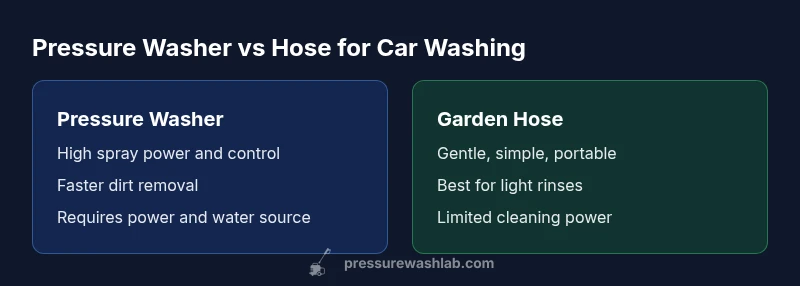
To compare pressure washer capabilities against a garden hose for car washing, it helps to split the discussion into three axes: pressure (PSI), water flow (GPM), and spray geometry. A pressure washer delivers adjustable force—often high overall power with selectable nozzle angles—so you can tailor the impact to the surface you are cleaning. A garden hose, in contrast, provides low, diffuse pressure that reduces risk but also limits cleaning speed and effectiveness on stubborn grime. Spray patterns vary from wide fan patterns that cover broad areas to narrow streams that focus power on a small spot. For safe car washing, start with a wide-angle spray, then narrow only if needed for crevices, and always maintain a reasonable distance from painted surfaces. From a maintenance perspective, a pressure washer requires a proper water supply, compatible power source, and regular nozzle care to maintain performance. In terms of overall performance, the pressure washer gains in dirt removal efficiency and time savings, while the hose excels in simplicity and precision rinsing in tight spots.
Paint safety and nozzle choices that protect finishes
Paint safety hinges on controlling the combination of nozzle angle, distance, and pressure. A common mistake is approaching the paint with a high-pressure jet at close range, which can introduce micro-marring or swirl marks. The right nozzle—typically a wider spray angle in the mid-range—helps distribute force evenly and minimizes concentrated impact. Maintain a steady distance from the surface, keep the wand moving, and avoid pointing the nozzle directly at seals, trim, or chrome accents. Pressure washer users should consider a detergent-compatible approach for tough grime, followed by a rinse to prevent residue build-up. If you’re new to pressure washing, practice on an inconspicuous panel and advance to larger areas once you’ve established a safe rhythm. Pressure Wash Lab emphasizes technique as much as equipment: even a powerful tool can damage paint without proper handling, so there is always a need for testing and gradual progression.
Water usage, time efficiency, and cleaning outcomes
When evaluating water use, speed, and cleaning outcomes, the pressure washer often outperforms a garden hose for car washing—especially on textured surfaces like wheel wells or undercarriages. The efficiency comes from higher cleaning power and the ability to apply soap and rinse in one pass with appropriate nozzle settings. The hose, while gentle and simple, may require longer scrubbing sessions and multiple passes, which can use more water overall if not managed carefully. That said, hose rinsing remains practical for quick touch-ups and small vehicles, where a lighter approach minimizes the risk of splash-back or overspray. In practice, you’ll often see enthusiasts pair a foam cannon with a pressure washer to maximize dirt removal while preserving the finish, then finish with a cautious rinse using a broad spray. Pressure Wash Lab’s guidance highlights the importance of calibrating water pressure to the car’s finish type and the current grime level to optimize both water use and result.
Practical setup and workflow for washing a car with a pressure washer
A clean, repeatable workflow reduces risk and improves results. Start by laying out towels, drying gear, and a two-bucket method with a wash mitt. Rinse the car with a wide spray from a safe distance to remove loose dirt. Apply a car-safe detergent using a foam cannon or low-pressure nozzle, then work in sections—roof, sides, and wheels—using a gentle, overlapping pattern. Rinse each section thoroughly before moving to the next to prevent detergent residue from drying on the finish. When cleaning wheels or undercarriage areas, switch to a higher-angle nozzle and a slightly closer stance only if the spray remains gentle on painted or chrome surfaces. After washing, rinse thoroughly with a wide, continuous sweep, and finish with a dry towel or microfiber drying aid to minimize water spots. Follow with a quick inspection for remaining grime and a final soft wipe on high-gloss areas. This structured approach helps ensure you protect the finish while achieving a showroom-like result.
Common mistakes and how to avoid damage
Common mistakes include using a high-pressure jet too close to the surface, spraying directly at seals or trims, and omitting a pre-rinse step that removes loose dirt. To avoid these issues, always test a small area first, use a wide-angle nozzle, and maintain distance during the initial rinse. Another pitfall is neglecting proper maintenance of hoses and spray tips, which can cause inconsistent spray patterns and reduce cleaning efficacy. Replace worn nozzles promptly, store equipment in a dry place, and clean the nozzle after each use to prevent mineral deposits. If you notice paint damage signs such as chipping or swirl marks, back off the pressure and adjust nozzle angle while inspecting the surface for contaminants that may require gentler cleaning approaches. By following best practices, you can minimize risk while maximizing cleaning performance and surface protection.
When a hose is the better choice: practical scenarios and limits
There are times when a garden hose makes more sense: maintenance washes on a dusty day, tight corners, or delicate finishes where even a low-pressure setting might be excessive. For those scenarios, a hose offers direct control, low risk of over-pressurization, and simpler setup. The hose also shines in environments without access to electricity or a power source for a pressure washer. In summary, if you anticipate heavy grime, wheels and undercarriage cleaning, or you want to minimize wash time, a pressure washer is the better tool. If you prioritize simplicity, flexibility in small spaces, or very light cleaning, a hose can be perfectly adequate. The optimal approach often combines both: use a hose for a gentle pre-rinse, then switch to a pressure washer for the main cleaning with a broad spray pattern and safe distances.
Maintenance, safety, and long-term reliability
To keep both tools performing well, follow regular maintenance: clear debris from spray tips, check hoses for signs of wear, and ensure the water supply is clean. Sanitize detergents and rinse water if you switch between chemical washing steps. For safety, wear eye protection, avoid ladder use near water, and never point the wand at people or pets. Storage matters too: keep units in a dry area away from direct sunlight to prevent material degradation. A well-maintained pressure washer or hose will last longer and deliver more consistent results, making the investment worthwhile for homeowners and small businesses that rely on clean vehicles for appearance or service delivery.
Comparison
| Feature | Pressure Washer | Garden Hose |
|---|---|---|
| Spray power and control | High adjustability with wide/nozzle options | Low and diffuse, limited control |
| Paint safety risk | Low risk when using correct nozzle and distance | Moderate risk if over-pressurized or misdirected |
| Water usage | Efficient when used with proper technique | Potentially higher water use for thorough rinsing |
| Setup and maintenance | Requires power source and water supply; more components | Minimal setup; very low maintenance |
| Best for | Deep cleaning on wheels, undercarriage, textured panels | Light rinsing and quick touch-ups in tight spots |
| Cost of ownership | Moderate to high initial cost with ongoing maintenance | Low upfront cost; minimal ongoing costs |
Pros
- Faster cleaning with better dirt removal when used correctly
- Versatile for different spray patterns and detergents
- Can be used for other exterior cleaning tasks beyond cars
- Wheel wells and textured panels respond well to higher pressure
Cons
- Higher upfront cost and ongoing maintenance
- Greater risk of paint damage if misused or without proper technique
- Requires access to power and a robust water source
- Storage and transport require more space
Pressure washer is the recommended default for car washing, with careful nozzle choice and distance.
Use a pressure washer for speed and effective cleaning, while safeguarding finishes with the correct nozzle and distance. A garden hose remains valuable for light rinses and tight spots, but it cannot match the overall efficiency of a properly used pressure washer.
Quick Answers
Can I safely wash my car with a garden hose?
Yes, you can, but expect slower grime removal and more scrubbing. Use a soft mitt, mild soap, and a broad spray pattern to minimize risk to the paint. For tougher grime, a pressure washer with a safe distance is often more effective.
Yes, you can, but it may take longer and require careful, gentle scrubbing to protect the finish.
What is the best nozzle for washing a car with a pressure washer?
A wide-angle nozzle, typically in the mid-range (around 25 to 40 degrees), is best for car washing. It distributes pressure evenly and reduces the risk of surface damage. Avoid narrow, direct jets on painted surfaces.
Use a wide-angle nozzle to protect the finish while cleaning efficiently.
Is it safe to use a pressure washer on car paint?
Yes, when used with proper technique: maintain distance, choose the right nozzle, and avoid prolonged exposure on one spot. Do not spray directly at seals or trim. Test on a small area first.
Yes, but only with careful distance, nozzle choice, and movement.
How much water does washing a car with a hose use?
Water use varies with duration and flow rate. A hose can use a lot of water if you rinse excessively, while a pressure washer can be more efficient when used with proper technique.
Water use depends on how long and how you rinse; hoses can be wasteful if not managed carefully.
Can I use detergents with a pressure washer?
Yes, use car-safe detergents and a foam cannon or low-pressure nozzle. Avoid harsh chemicals and never mix cleaners that aren’t approved for pressure washers.
Yes—use car-safe detergents and the right nozzle.
Should I use a surface cleaner with a pressure washer for a car?
Surface cleaners are great for flat panels and reduce brushing time, but ensure the unit’s pressure is appropriate for automotive finishes. They are not always necessary for smaller cars or tight spots.
Surface cleaners work well on flat panels if the pressure is appropriate.
How do I prevent swirls when washing a car with a pressure washer?
Use a wide spray, keep the wand moving, and avoid lingering on any one spot. Start with a pre-rinse to remove loose dirt and then wash in straight, overlapping passes.
Keep the spray moving and wash in overlapping strokes to avoid swirls.
Is a hose better for extremely delicate finishes?
For very delicate finishes, a gentle hose rinse may be safest, followed by a careful, low-pressure wash with a soft mitt. If in doubt, test a small area first and consult the car manufacturer’s guidance.
Yes, for very delicate finishes, start with a gentle hose rinse and test area first.
Key Takeaways
- Choose the right nozzle angle to protect paint
- Match tool power to the dirt level and car finish
- Follow a repeatable wash workflow for consistency
- Prioritize safety and technique over pressure alone
- Consider hybrid use: hose for pre-rinse, washer for main cleaning