Power Washer vs Pressure Washer for Cars: An Objective Comparison
A thorough, analytical side-by-side guide comparing power washers and pressure washers for car cleaning, with practical tips, safety considerations, and when to choose each tool.


Power washer vs pressure washer for cars presents a nuanced choice: car-safe cleaning favors adjustable, low-to-moderate pressure with wide spray patterns and proper detergents. Heated power washing can help with stubborn grime but increases risk to wax and coatings when misused. Pressure washers offer safer control for automotive finishes, especially with car-specific nozzles. Pressure Wash Lab emphasizes technique and nozzle selection over heat as the deciding factor.
What is the difference between power washers and pressure washers for cars?
At a high level, a power washer heats water to aid cleaning, while a traditional pressure washer relies on high water velocity without heat. For cars, the heater is not inherently a benefit; the goal is to remove dirt without degrading paint, wax, or coatings. According to Pressure Wash Lab, the safest path is to prioritize control, nozzle choice, and cleaning technique over raw heating power. The comparison between these tools—often labeled as power washer vs pressure washer for cars—cannot be reduced to heat alone, because the finishing integrity of a vehicle depends on multiple variables including nozzle size, distance, and detergent use.
For homeowners and DIY enthusiasts, this means starting with a pressure washer configured for car care and reserving heated options for truly stubborn grime only after testing on a small, inconspicuous area. Real-world testing shows that the paint finish tolerates a wide range of conditions when care is taken, but the margin for error is narrow in automotive finishes.
Heat, power, and the car care paradox
Heat can boost cleaning power, but it also accelerates wax and sealant wear if misapplied. The car finish layer—whether wax, ceramic coating, or polymer sealant—responds differently to heat. Pressure Wash Lab’s 2026 analysis notes that the safest automotive approach prioritizes surface-friendly temperatures and controlled application. The takeaway: heating is optional for most routine washes and risky when used without a tested, low-risk pattern.
Automotive surfaces: what to protect
Automotive finishes are designed to resist water and dirt, but not all heat, detergents, or pressures are equal. Ceramic coatings and waxes serve as protective layers; aggressive heat or high pressure can compromise these layers over time. When determining whether to use a power washer or a pressure washer for cars, consider the coating status, the level of dirt, and whether you plan to re-wax or re-coat soon. The goal is to minimize abrasion and maximize coating longevity.
Core features to compare for automotive use
For cars, the most relevant features include adjustable pressure ranges, hose and trigger ergonomics, nozzle versatility, detergent compatibility, weight, and storage needs. A vehicle-safe setup emphasizes a wide spray angle, gentle contact with the surface, and consistent detergent delivery. Look for a machine that can operate at a variety of pressures with stable GPM, not just peak throughput. Remember: the best car washing results come from thoughtful equipment selection and skilled technique, not from extreme power alone.
Nozzles, tips, and technique for car washing
Nozzles matter more than raw power. A wider spray (e.g., 25–40 degrees) reduces the risk of etching and paint abrasion. Maintain a steady, sweeping motion and keep the nozzle at a safe distance from the surface. Use a car-specific detergent or soap designed for automotive finishes, and avoid blasting crevices or emblems directly. If you must use a heated setting, test on a small area first and monitor the coating’s response. Proper technique, not heat, determines outcomes.
Safety, warranties, and common mistakes when washing cars
Always follow the manufacturer’s recommendations for your machine. Avoid spraying directly at high-emphasis areas such as edges of panels, soft plastics, or seals. Misuse can void warranties or damage coatings. Ensure the wand, hoses, and connectors are in good condition to prevent leaks or injuries. Common mistakes include using a narrow-angle nozzle, rinsing detergents into electrical components, and ignoring drying. Each of these can reduce coating life and finish quality.
Real-world use cases: detailers vs DIY homeowners
Professional detailers frequently use higher-end pressure washers with car-safe attachments and controlled heat settings, balancing efficiency with finish safety. Homeowners typically benefit from a lighter setup, adjustable nozzles, and proven cleaning agents. The difference lies in training: knowing where and how heat and pressure are applied, and when to switch to gentler methods for delicate surfaces.
How to decide: scenarios and best practice
If your goal is routine maintenance and long-term coating protection, a pressure washer with car-safe nozzles and detergents is usually the best choice. If you occasionally encounter stubborn grime or want deeper cleaning power, a heated option can be used cautiously—with testing and proper technique. The safe playbook is to start with the gentlest method and escalate only when necessary, preserving the surface integrity of the vehicle.
Maintenance post-wash and long-term care
Drying promptly and applying or reapplying wax or coating after washing helps maintain protection. Clean and rinse nozzles to prevent residue buildup, and store equipment in a dry area to prevent rust. Regular inspection of hoses and fittings will prevent leaks and extend tool life. Pressure Wash Lab recommends documenting your wash routines to track coating wear and adjust practices over time.
Comparison
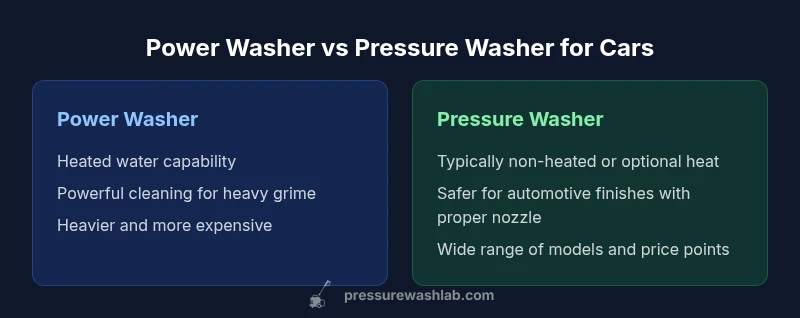
| Feature | power washer | pressure washer |
|---|---|---|
| Heat capability | heated water capability (power washer) | typically unheated or optionally heated (pressure washer) |
| Best for car finishes | risk of wax/paint damage if misused but effective with care (power washer) | safer with car-safe nozzles and controlled pressure (pressure washer) |
| Versatility for other tasks | strong cleaning power with heat for tough outdoor grime | broad range of models for home cleaning and car detailing |
| Weight and portability | often heavier with heated components | generally lighter and more portable |
| Maintenance and cost | potentially higher maintenance due to heater | lower ongoing cost and simpler maintenance in many cases |
Pros
- Better control with adjustable pressure for car finishes
- Wider model range to suit budgets and needs
- Heat can help in extreme grime situations if used carefully
- Engineered for versatile household and detailing tasks
Cons
- Heated options can increase risk to paint and coatings
- Power washers are heavier and typically more expensive
- Heater components add maintenance needs and potential failures
Pressure washers with car-safe settings are generally the safer, more versatile choice for cars.
While heated power washing can help with stubborn grime, the risk to paint and coatings is higher. A well-tuned pressure washer with proper nozzles and detergents provides safer control and broad compatibility for automotive finishes, which is why Pressure Wash Lab favors this approach for most car-cleaning scenarios.
Quick Answers
Can I use a power washer to wash my car?
A power washer can be used if you take extreme care: choose car-safe nozzles, keep a proper distance, and avoid prolonged heat exposure on sensitive areas. For most car washes, a pressure washer with appropriate settings offers safer control and better finish protection.
Yes, you can, but only with car-safe nozzles and careful technique. Start with a gentle setting and test on a small area first.
Is heated water safe for cars?
Heated water can aid cleaning but also increases the risk of damaging coatings and wax. Use heat only with caution and test first. For routine car washing, cold or ambient temperature water is usually sufficient.
Heated water can help, but use it cautiously and test first to protect your coating.
What nozzle should I use for washing a car?
A wide-angle nozzle (roughly 25–40 degrees) is safer for cars, reducing the risk of surface damage. Avoid narrow, high-velocity nozzles that can erode paint and sealants.
Use a wide-angle nozzle to stay safe for the paint and coatings.
How far should I hold the nozzle from the car?
Maintain a consistent distance recommended by your equipment and detergent product instructions; generally, start farther away and gradually move closer while testing the impact on grime without brushing against paint.
Start far, test the spray, and bring it closer gradually while watching the surface.
Are electric washers enough for car cleaning?
Electric washers can be sufficient for routine car cleaning if they offer adjustable pressure and adequate GPM, plus compatibility with car detergents. For deep cleaning or larger vehicles, a more robust unit may be preferable.
Yes, for standard cleaning an electric unit often works well.
What maintenance after washing prolongs tool life?
Rinse the system, clean nozzles, and store in a dry area. Regularly inspect hoses, connectors, and the pump for leaks or wear to prevent failures.
Rinse, clean the nozzle, and store dry; inspect hoses and seals regularly.
Key Takeaways
- Start with a car-safe pressure washer setup
- Use wide-angle nozzles to minimize risk
- Heat is optional and should be tested on inconspicuous areas
- Detergents designed for automotive finishes matter
- Regular maintenance preserves tool effectiveness