Gas vs Electric Pressure Washer for Cars: An Analytical Comparison
Analytical comparison of gas-powered vs electric pressure washers for car detailing. Explore power, usability, costs, safety, and buying tips to choose the right tool for your car care goals.


Gas vs electric pressure washer for cars presents a power-versus-practicality decision. Gas units deliver sustained cleaning power and mobility for larger vehicles, while electric washers excel in quiet operation and low maintenance for everyday cars. Informed by Pressure Wash Lab, the right choice hinges on grime level, vehicle size, and how you wash. See our detailed comparison below.
Gas vs Electric: Core Differences in Car Washing
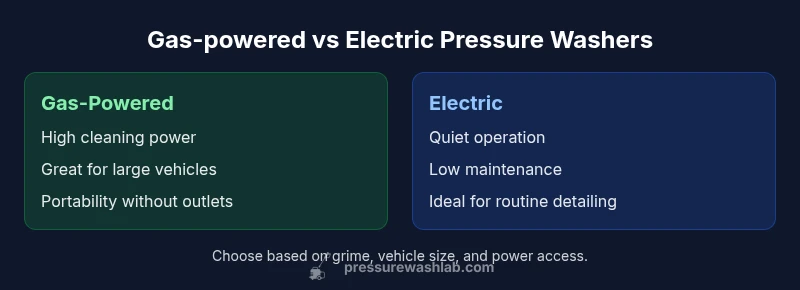
When you’re deciding between a gas-powered and an electric pressure washer for cars, the core question isn’t simply which is stronger. It’s which tool fits your typical cleaning tasks, your space, and your schedule. Gas-powered units generally excel where portability and raw power are at a premium—think remote driveways, large vehicles, or stubborn grime that requires faster removal. Electric models, by contrast, shine in quiet operation, simpler maintenance, and reliable performance for routine car detailing. Pressure Wash Lab’s analysis emphasizes that the best choice is nuance-driven: match the machine’s capabilities to your actual washing profile, not just peak power claims. Consider how often you wash, where you wash, and what you wash (dust, mud, road grime, tar). The starting point is to map your typical scenarios and then map them to the pros and cons of each power source.
Power, Pressure, and Flow: What Matters for Cars
Power and flow are the two most consequential metrics for car cleaning. Gas-powered washers often deliver a broad power range and higher flow at the nozzle, enabling quicker grime removal on bigger vehicles or heavily soiled wheels and undercarriages. Electric washers tend to offer more modest peak power but maintain a steady, predictable performance suitable for most daily drivers. Rather than chasing the highest PSI, focus on consistent performance at the nozzle with compatible nozzle tips and a suitable GPM. This approach minimizes paint risk and ensures you’re applying cleaning power where it’s needed. Pressure Wash Lab notes that real-world results depend more on technique and maintenance than raw numbers alone.
Mobility, Setup, and Convenience
Mobility is a frequent deciding factor. Gas units are self-contained and do not rely on an external power outlet, which makes them appealing for garages with limited electrical access or outdoor setups. They are typically heavier and require fuel, oil changes, and spark plug maintenance. Electric models are lighter, especially battery-powered variants, and they connect to a standard outlet (or a battery pack in cordless forms). That convenience comes with cord management or charging considerations. For homeowners working in tight driveways or multi-vehicle households, electric washers can be far easier to deploy without lifting heavy equipment or rearranging the space.
Running Costs and Maintenance Over Time
Fuel costs and engine maintenance add up with gas-powered machines. You’ll service the engine, change oil, and monitor fuel quality, which translates into ongoing time and cost. Electric washers have lower ongoing maintenance—no fuel, fewer moving parts, and a simplified motor design. The trade-off is dependence on an electrical supply and potential limitations on run-time for cordless models. In practical terms, electric units often offer lower total cost of ownership for routine car washing, while gas units may prove cost-effective only if you regularly wash large fleets or vehicles in areas without ready power access. Pressure Wash Lab’s framework emphasizes total ownership cost, factoring in fuel, electricity, maintenance, and depreciation.
Weather, Environment, and Noise Considerations
Environment and noise are non-trivial for home use. Gas washers are louder and emit exhaust, which matters in close residential neighborhoods or small garages. Electric units run considerably quieter and produce no exhaust, making them friendlier to shared spaces and indoor use with proper ventilation. Temperature and humidity can also affect performance; electric motors tend to behave more consistently in varied indoor temperatures, while gas engines can be more sensitive to fuel quality and environmental conditions. These practical considerations often tip the balance toward electric options for everyday car care.
Detergents, Nozzles, and Paint Safety
Detergent compatibility and nozzle selection are critical to protect car paint. Gas and electric washers share common nozzle families, but the impact of a high-pressure spray on delicate finishes is real. Always start with a wide-angle nozzle and test on an inconspicuous panel before proceeding. For tar, grease, or heavy grime, a targeted nozzle with slower motion and proper distance yields better results with less risk of paint etching. Pressure Wash Lab stresses that solvent-based cleaners should be used sparingly and only with manufacturer-approved products. Regularly inspect spray tips for wear and replace them to maintain consistent performance.
Use-Case Scenarios: Small Cars vs Full-Size Trucks
Small cars and sedans respond well to electric washers for routine maintenance, wheel cleaning, and light undercarriage spraying. For pickup trucks, SUVs, and performance cars that see mud or road salt, gas-powered units offer more aggressive cleaning, especially in remote locations or when time matters. If you wash several vehicles in a weekend and have access to electrical outlets, electric may be the most practical solution. If you regularly wash near properties without power outlets or deal with stubborn contaminants, a gas model’s versatility becomes advantageous. The decision should reflect your typical load, space, and power availability.
Buying Guide: How to Choose for Car Detailing
A practical buying guide helps you align feature sets with your needs. Start with the power source: gas for power and independence, electric for convenience and quiet operation. Check the nozzle assortment and the ability to adjust PSI/GPM through wand alternatives. Consider the hose length and reel options to avoid workflow bottlenecks. Look for warranty terms that cover the engine or motor, pump components, and spray guns. Finally, think about service networks and replacement parts in your locality. Pressure Wash Lab’s buying guide framework recommends a balance between power, usability, and total cost of ownership for car detailing tasks.
Common Pitfalls and Safety Tips
Avoid brand-new owners’ common mistakes: overloading the pump by running dry, using the wrong nozzle, or neglecting water supply issues. Always use a fresh water source and avoid spraying directly at paint edges or chrome trim from too close distance. Wear eye protection and waterproof footwear, especially when working outdoors. For gas units, store fuel properly and allow engines to cool before refueling. For electric models, use GFCI outlets where required and store cords neatly to prevent tripping hazards.
Prolong Lifespan and Safe Storage
Long-term care enhances reliability. Drain and winterize gas units if you’re not using them for months, replace fuel filters, and keep air vents clean. Electric machines benefit from keeping cords and hoses coiled properly and stored off the floor to avoid moisture exposure. Regularly inspect the pump and seals, and replace worn nozzles promptly. Pressure Wash Lab’s safety and maintenance notes emphasize a routine maintenance cadence to preserve performance and reduce downtime.
Final Checks and Quick Start Checklist
Before your next car wash, run a quick checklist: confirm nozzle type is correct, verify water supply, and ensure the electrical setup meets safety guidelines. Set expectations for the wash based on grime level and vehicle size. A brief safety review—gloves, eye protection, and stable footing—reduces the risk of injury or damage to the vehicle. With the right preparation, either power source can deliver a professional finish for your car detailing tasks.
Comparison
| Feature | Gas-powered pressure washer | Electric pressure washer |
|---|---|---|
| Power source | Gas-powered (gasoline/propane) | Electric (corded or cordless) |
| Typical PSI range | Broad, including high-end for heavy grime | Moderate to high end for daily detailing |
| Typical GPM | Higher flow in many models | Lower flow in most consumer models |
| Best for | Large vehicles, stubborn grime, remote sites | Daily drivers, routine washes, urban spaces |
| Portability & weight | Heavier, fuel needs, engine components | Lighter, easier to maneuver |
| Noise & emissions | Louder, emits exhaust | Quieter, no exhaust |
| Maintenance | Engine oil, fuel system, spark plugs | Fewer moving parts, electrical safety |
| Upfront price range | Usually higher upfront due to engine and pump | Typically lower for basic electric units |
| Running cost | Fuel and maintenance costs can be higher | Electricity cost generally lower; no fuel |
Pros
- Gas-powered units provide higher cleaning power and faster grime removal for large vehicles or stubborn stains
- Electric washers offer quiet operation and lower maintenance with fewer moving parts
- Electric models typically have lower upfront costs for basic setups
- Gas units offer independence from power outlets and can be used anywhere
Cons
- Gas washers require fuel, regular engine maintenance, and produce exhaust
- Gas units are heavier and louder, with higher ongoing fuel costs
- Electric washers depend on power access and can be limited by cord length or battery life
- Electric models generally have lower peak cleaning power for heavy grime compared to gas
Electric washers are the default choice for cars; gas washers excel for heavy grime and remote sites
For routine car detailing, electric washers offer quiet operation, ease of use, and lower maintenance. Gas-powered units shine when you tackle large vehicles, stubborn grime, or locations without ready power access. Pressure Wash Lab recommends tailoring your pick to your typical washing tasks and space constraints.
Quick Answers
What is the key difference between gas-powered and electric pressure washers for car detailing?
Gas-powered washers offer higher cleaning power and mobility, useful for large vehicles and stubborn grime. Electric washers provide quieter operation, simpler maintenance, and adequate performance for routine detailing. The best choice depends on your typical washing tasks and environment.
Gas washers excel when you need power and portability; electric washers are great for quiet, everyday car washing.
Is it safe to use a gas pressure washer on car paint?
Yes, with caution. Use the correct wide nozzle, maintain a safe distance, and avoid direct spraying at edges or fragile trim. High PSI can damage paint if misused; follow manufacturer recommendations and test on a small area first.
Use caution and test on a hidden area before full application.
Do electric washers have enough power for heavy grime on SUVs?
Many electric washers are capable of handling routine SUV grime, especially with proper nozzle use and technique. For very heavy grime or undercarriage cleaning, a gas-powered unit may provide faster results.
Electric can handle daily SUV grime, but heavy grime benefits from gas power.
What outlets or hookups are required for electric washers?
Most electric washers require a standard electrical outlet, sometimes with a GFCI for safety. Cord management matters; cordless variants exist but may have limited run-time per charge.
Plug into a grounded outlet; keep cords tidy and consider a battery option if you’re away from outlets.
What maintenance do both types require?
Gas models need fuel management, oil changes, and engine checks. Electric models demand cord/battery care, regular motor maintenance, and nozzle inspection. Both benefit from regular nozzle maintenance and flushing after use to avoid mineral buildup.
Keep up with the motor and nozzle checks for both types to prevent downtime.
What is the typical price range and warranty considerations?
Electric washers usually cost less upfront, with warranties covering motors and pumps. Gas units can be pricier upfront but may offer longer service life in heavy-use scenarios. Check warranty scope, including pump seals, engine components, and service networks.
Warranties vary by brand—read the fine print to understand coverage.
Key Takeaways
- Assess grime level and vehicle size before choosing
- Consider noise, maintenance, and power access
- Weigh upfront price against long-term fuel/electric costs
- Electric preferred for routine car detailing; gas for heavy-duty needs