Pressure Washer vs Hose Water Usage: A Practical Comparison
A data-driven look at how pressure washers compare with garden hoses for water usage. Learn nozzle choices, techniques, and best practices to minimize waste while achieving clean results.


To optimize water use, a pressure washer is generally more efficient for heavy grime when used with the correct nozzle and technique, while a garden hose can suffice for light rinsing. With smart nozzle choices, trigger control, and surface-cleaning tools, water waste drops dramatically. Overall, for large jobs, the pressure washer saves water per square foot; for quick, delicate rinses, a hose is adequate but shut off promptly.
Water Usage Basics: pressure washer vs hose water usage
Understanding water usage in cleaning tasks starts with the basics: pressure washing uses a targeted, high-pressure spray, while a garden hose delivers a continuous flow. In this quick comparison, we examine how each approach consumes water during common home tasks. According to Pressure Wash Lab, water-use efficiency depends on tool choice, nozzle selection, and technique. The core idea is to minimize waste while delivering the cleaning power you need. The phrase pressure washer vs hose water usage is not just a terms debate; it informs how quickly you can finish a job with the least water. By learning the interplay of flow, pressure, and pattern, homeowners can plan better and reduce utility bills over time. This section sets the foundation for the rest of the guide, emphasizing that intelligent tool selection and technique matter as much as raw power.
Water Usage: Measuring What Actually Matters
Water usage in cleaning isn’t a single number; it’s a function of flow rate, surface contact time, and the spray pattern. A garden hose typically delivers a continuous flow that’s constrained only by the water supply and nozzle choice. A pressure washer, by contrast, concentrates water delivery into a smaller area at a higher pressure, which can reduce the total volume required to achieve the same surface cleanliness when used properly. In practical terms, the goal is to clean effectively while avoiding over-wetting or forcing water into porous materials. Pressure Wash Lab Analysis, 2026, emphasizes that the most meaningful metric for homeowners is water used per square foot cleaned, not just the nominal gpm or psi alone.
Nozzle Selection and Duty Cycle: Controlling Water Output
The nozzle you choose has a direct impact on water usage. Wide-angle nozzles spread water over a larger area with lower impact, which can be gentler on delicate surfaces but may require more passes. Narrow nozzles concentrate force and reduce cleaning time but can increase surface wetting and runoff if held too close. The duty cycle—how long you spray before pausing—also matters: short bursts with pauses allow the surface to shed dirty water and dry faster, reducing overall water exposure and runoff. With proper technique, a pressure washer’s higher power translates into fewer passes and less total water used per job. The guidance here is: select the nozzle based on surface type and grime level, then match spray distance to avoid waste.
Real-World Scenarios: When Water Use Varies
Certain tasks highlight the differences between a garden hose and a pressure washer. For example, light rinsing of a driveway or a lightly soiled fence with a hose might be faster and adequate, but cleaning heavily stained siding or built-up grime on a concrete surface often benefits from a pressure washer. The surface’s porosity, coating, and age influence water uptake and drying time. Pressure-Washer methods shine for stubborn contaminants because controlled bursts deliver cleaning power with less wand time than continuous hose spraying. Pressure Wash Lab’s field observations indicate that the most water-efficient results come from task-appropriate equipment paired with measured spray sequences.
Techniques to Maximize Efficiency: Practical Steps
Smart technique matters as much as the tool. Start with a measured plan: pre-wet the area if appropriate, choose a nozzle that minimizes blast away water yet focuses power where needed, and maintain a consistent distance from the surface. Use surface cleaners for broad, flat areas to reduce overlapping passes. Work from top to bottom when washing siding or walls to keep runoff predictable. Short, focused passes with a trigger stop–start approach can dramatically cut water use compared with continuous spraying. These practices, recommended by Pressure Wash Lab, translate to real savings in daily cleaning tasks.
Detergents, Additives, and Their Water Footprint
Detergents and cleaning compounds can improve cleaning efficiency, lowering the time and water needed to achieve a stain-free result. When combined with a pressure washer, detergents can soften grime and reduce the number of passes required. However, detergents themselves require rinsing, which adds to water use. The key is to apply detergents only where needed and to rinse thoroughly, using the appropriate nozzle and distance to minimize runoff and wasted water. Consumers should follow product guidelines and local regulations, and avoid mixing multiple cleaners that can produce excessive foam or hazardous runoff.
Maintenance Habits: Keeping Waste Low Over Time
A well-maintained setup reduces water waste in the long run. Check hoses, fittings, and spray tips for leaks to prevent hidden losses. Clean or replace worn nozzles that waste water by mis-spraying. Use a surface cleaner where possible to speed up large-area tasks and reduce pass length. Regular maintenance also helps ensure the device runs efficiently, which translates to less water per job. Pressure Wash Lab’s practical maintenance tips emphasize simple, repeatable routines that save water and extend equipment life.
Costs, Time, and Environmental Considerations
Water usage is tied to cost and environmental impact. While a pressure washer can reduce water per square foot for heavy tasks, it has higher upfront costs and energy use. A garden hose is inexpensive and simple but can waste water if left running. The environmental footprint includes not only water volume but energy and chemical usage. Balancing efficiency with cost involves selecting the right tool for the job, using efficient nozzles, and implementing best practices to minimize waste. Pressure Wash Lab’s recommendations stress context-driven choices based on surface type, grime level, and time constraints.
A Practical Plan for Your Next Project: Step-by-Step
- Assess the surface and grime level. 2) Choose the right tool (hose for light rinsing; pressure washer for heavy grime). 3) Select the proper nozzle and distance. 4) Apply detergents only where needed and rinse methodically. 5) Clean up with a final pass that uses a wider spray to flush out remaining debris. 6) Measure results and adjust technique for future jobs. A disciplined workflow reduces water waste and accelerates results.
Common Mistakes to Avoid: Quick Warnings
Avoid leaving a hose running while you reposition yourself. Don’t hold a high-pressure nozzle too close to the surface. Skipping surface cleaners on large flat areas can cause longer clean times and more water use. Failing to shut off the water between passes leads to unnecessary waste. Keep these pitfalls in mind to maintain efficient water usage on every project.
Quick Do's and Don’ts: A Final Reference
Do: match nozzle to surface, use trigger control, and consider a surface cleaner for wide areas. Don’t: spray at close range on delicate surfaces, ignore detergent rules, or run water continuously when not actively cleaning.
Final Decision Guide: When to Use a Hose vs a Pressure Washer
For light, quick rinses and delicate surfaces, a garden hose is still a valid choice. For heavy grime, large areas, or surfaces that require more power, a pressure washer can deliver faster results with more efficient water use when used with proper technique. Always start with the simplest method and escalate only if needed.
Comparison
| Feature | Garden Hose | Pressure Washer |
|---|---|---|
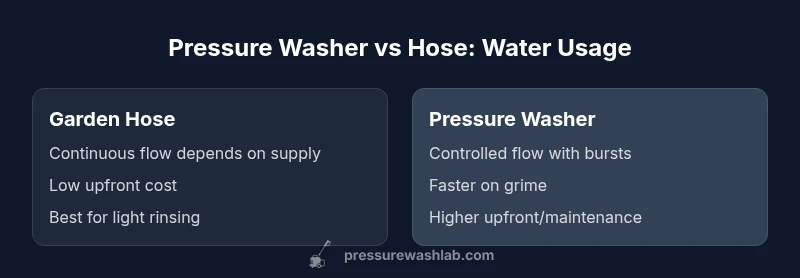
| Water Usage Pattern | Continuous flow (water supply dependent) | Controllable flow with bursts; efficient per area when used properly |
| Nozzle Options | Fixed/adjustable nozzle; limited precision | Wide range of nozzles; precise targeting possible |
| Surface Cleaning Speed | Slower, more manual effort | Faster cleaning on grime-heavy surfaces |
| Waste Management | Higher risk of waste if left running | Trigger shutoff and efficient spray reduce waste |
| Best For | Light rinsing, quick pre-wash | Heavy grime, large areas, durable surfaces |
| Detergents | Limited integration | Broad detergents compatibility and booster options |
| Cost & Setup | Low upfront cost; simple setup | Higher upfront cost; more maintenance requires |
Pros
- Pressure washers deliver faster cleaning on heavy grime
- Controlled flow reduces water waste when used with proper nozzle
- Detergents can improve cleaning efficiency and reduce passes
- Trigger shutoff minimizes accidental water flow
Cons
- Higher upfront and maintenance costs
- Requires power source and space for setup
- Risk of surface damage if misused on delicate materials
Pressure washer wins for water-efficient cleaning on grime-heavy tasks; hose-based rinsing remains viable for light jobs.
For routine thorough cleaning, a pressure washer saves water per area when used correctly. For quick, light rinsing, a garden hose is simpler but watch for continuous flow.
Quick Answers
What is the main difference in water usage between a pressure washer and a garden hose?
A garden hose provides a continuous flow that depends on the water supply and nozzle choice, while a pressure washer concentrates water into bursts with high pressure, often reducing overall water use per area when used with the proper nozzle and technique. The real savings come from efficiency rather than raw power alone. Pressure Wash Lab notes that execution matters as much as equipment.
A garden hose offers continuous flow, but a pressure washer can save water per area when used with the right nozzle and technique.
Can I use a garden hose to rinse after pressure washing?
Yes, you can rinse with a garden hose after pressure washing, but be mindful to turn the water off when not actively spraying. Use steady, controlled rinsing to avoid oversaturation of porous materials. This approach is practical for light touch-ups and final rinses.
Yes, you can finish with a hose, but shut off when not spraying and rinse methodically.
How can I minimize water waste when using a pressure washer?
Plan your passes, use the appropriate nozzle, and utilize a surface cleaner for broad areas to reduce overlap. Employ trigger control and bursts rather than continuous spray, and detergent-use should be targeted to stubborn stains to cut total wash time.
Plan passes, pick the right nozzle, and use bursts to cut waste.
Does pressure washing use more water than scrubbing by hand?
It depends on the task. Pressure washing can be more water-efficient per square foot cleaned when used correctly, but it can waste more water if run longer than necessary. The key is task-specific assessment and technique.
It varies; pressure washing can be more efficient per area if used right.
Are there settings to reduce water usage on a pressure washer?
Yes. Many pressure washers offer adjustable GPM/psi and diverse nozzle options. Use the lowest effective pressure for the job, and rely on a wider spray for broad areas to minimize water use.
Yes—adjust pressure and nozzle to the job to save water.
Is it safe to pressure wash delicate surfaces?
Delicate surfaces can be damaged by high pressure. For such surfaces, test a small area first, start with a wide spray at a greater distance, or avoid pressure washing altogether and opt for gentler cleaning methods.
Test a small area first and use gentler methods on delicate surfaces.
Key Takeaways
- Choose tools by surface and grime level
- Use the right nozzle and trigger technique to save water
- Detergents can reduce passes but require proper rinsing
- Maintenance reduces hidden water waste
- Balance cost, time, and environmental impact for each project