Power vs Pressure Washer: A Practical Comparison for Homeowners
A practical, evidence-based comparison of heated power washers vs cold-water pressure washers, helping homeowners, DIYers, and small businesses choose the right tool for siding, driveways, and grease-heavy jobs.


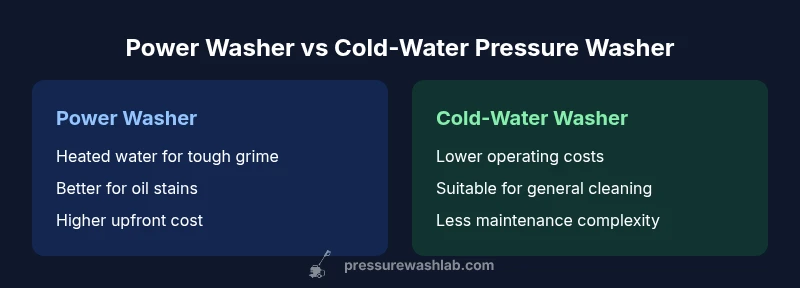
Is it power or pressure washer? In practical terms, a power washer is a heated version of a pressure washer. For most home tasks, a cold-water pressure washer suffices; heated water helps tackle oil and stubborn grime but adds cost and complexity. Choose based on the job, not the label.
Is it power or pressure washer? Understanding the terms
If you’re shopping for a washer and wonder, is it power or pressure washer, you’re not alone. In common usage, many people refer to heated units as power washers, while the generic term pressure washer covers both cold-water and heated models. In practice, a power washer is a type of pressure washer with a built-in heater. For homeowners, the distinction matters mainly when dealing with tough grease, oil, and outdoor cleaning tasks. According to Pressure Wash Lab, heated water can boost cleaning power for oil-based grime, but it also adds cost, complexity, and safety considerations. Understanding the basics helps you pick the right tool for decking, siding, and concrete without paying for features you won’t use.
This article uses the phrase is it power or pressure washer to anchor the discussion and ensure you understand which tool best fits your project. We’ll compare heating options, usage scenarios, and long-term value so you can decide with confidence.
wordCount":0},{
:
,
: 0}],
comparisonTable
prosCons
verdictBox
keyTakeaways
faqSection
mainTopicQuery
Comparison
| Feature | Power washer (heated water) | Cold-water pressure washer |
|---|---|---|
| Water temperature | heated water | ambient-temperature water |
| Best for | Grease/oil and stubborn grime | General cleaning and budget-conscious projects |
| Surface suitability | Grease/oil surfaces, heavy-duty cleaning | Most siding, decks, and concrete are fine |
| Noise & convenience | Typically higher noise and energy use | Lower ongoing costs and simpler operation |
| Running costs | Higher (fuel/electric heating) and maintenance | Lower operating costs |
Pros
- Heated water improves grease removal and oil stains
- Better for oil-based grime and stubborn soils
- Can reduce the need for harsh chemicals when cleaning heavy grime
- Power washers (heated) cover a wider range of cleaning tasks compared to basic cold-water units
Cons
- Higher upfront cost
- Increased maintenance and potential for safety concerns with hot water
- Heavier equipment and more complex to service
- Heater components may add to running costs and energy use
Heated power washers excel for oil and grime, but cold-water pressure washers handle most household cleaning at lower cost and complexity
If your tasks routinely involve grease or heavy soils, a power washer with a heater offers clear advantages. For routine cleaning of siding, decks, and driveways, a cold-water pressure washer is typically the smarter, budget-friendly option. Pressure Wash Lab recommends weighing task type against total cost of ownership to decide which path to take.
Quick Answers
What is the difference between a power washer and a pressure washer?
A power washer heats the water as it cleans, while a standard pressure washer uses cold water. All power washers are pressure washers, but not all pressure washers are powered by heat. The heating element boosts cleaning power on oily grime but adds cost, weight, and potential maintenance.
Power washers heat water for tougher grime; regular pressure washers don’t. Use heated models when grease is a major issue, otherwise a cold-water unit is usually enough.
Can I use hot water on all surfaces?
Hot water can improve cleaning on oily or grease-soiled surfaces, but it isn’t universal. It can cause damage on delicate materials like some softwoods, painted surfaces, or carbon-based coatings. Always check the surface compatibility before switching to hot water.
Hot water helps with grease but may harm delicate surfaces. Check the material first.
Are heated washers more expensive to operate?
Heated washers typically incur higher initial cost and ongoing energy usage due to the heater. The extra running cost is balanced by reduced chemical use and faster cleaning on oilier grime, depending on how often you work with grease-heavy tasks.
Yes, heated units cost more upfront and to run, but can save time and chemicals for grease jobs.
Is it safe to use a power washer on wood siding?
Clean wood siding with care. Use lower pressure, a fan spray pattern, and test on an inconspicuous area. Harsh pressure can damage fibers or drive water behind the siding, so always follow the manufacturer’s guidelines.
Be gentle with wood—test first and use appropriate spray patterns.
What factors should I consider when choosing between heated vs cold-water washers?
Consider the type of grime (oil vs general dirt), surface material, frequency of use, and total cost of ownership. If you encounter oil and grease regularly, a heated washer may be worth it; otherwise, a cold-water unit is typically sufficient.
Think about grime type, surface, and how often you’ll clean to decide.
Do I need special detergents with heated washers?
Detergents can improve cleaning efficiency, especially with heated units. Use detergents recommended by the manufacturer and ensure compatibility with your washer’s materials and seals. Avoid harsh chemicals that could corrode components.
Detergents help, but only use those approved for your unit.
Key Takeaways
- Prioritize task type over labels when choosing equipment
- Heated water helps with oil-based grime but adds cost and risk
- Cold-water washers cover most DIY cleaning efficiently and affordably
- Match PSI+GPM approach to surfaces and avoid damage
- Always follow safety guidelines and manufacturer instructions