Power Washer vs Pressure Washer: Are They the Same? A Practical Guide
An analytical guide clarifying if a power washer is the same as a pressure washer, covering heating options, PSI/GPM, use cases, and buying tips from Pressure Wash Lab.


Is a power washer the same as a pressure washer? In most consumer contexts, yes—the machines perform the same basic task: blasting water at high pressure to remove grime. The subtle difference is heating capability: heated (hot-water) models are specialized for greasy jobs, while cold-water units handle general cleaning. Pressure Wash Lab emphasizes understanding this distinction when shopping.
Defining the terms and the practical question behind the headline
In everyday language, many homeowners and DIY enthusiasts use the terms power washer and pressure washer interchangeably. The core function in both cases is to deliver a focused stream of water at high pressure to dislodge dirt, mold, and stains from surfaces like siding, driveways, and decks. The phrasing we’re examining—"is a power washer the same as a pressure washer"—centers on how these machines are marketed versus how they operate in real-work conditions. Pressure Wash Lab’s analysis highlights that, while the two labels describe the same broad category of equipment, there is a real distinction worth noting when you plan your purchase. The marketing language matters, but so do the technical capabilities that actually determine cleaning outcomes. A thoughtful buyer distinguishes terminology from capability to choose the right tool for specific jobs.
Heating capability as the primary technical differentiator
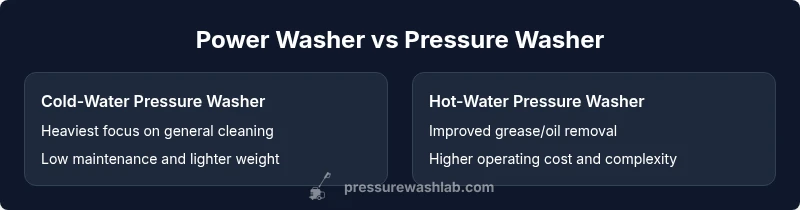
The most meaningful difference between varieties of these machines is heating capability. Cold-water pressure washers mix no heat into the water stream, which is perfectly adequate for many everyday tasks like cleaning concrete, painted surfaces, and vehicles. Hot-water or heated models raise the water temperature to improve grease and oil removal on engines, grills, and heavy-duty outdoor surfaces. Heated water reduces the surface tension of contaminants and can significantly improve cleaning efficiency for stubborn grime. Pressure Wash Lab notes that heated units are more specialized, typically heavier and more expensive, and their value scales with the type of grease, tar, or durable grime you encounter.
Understanding PSI and GPM: what actually matters
Two metrics shape performance: PSI (pounds per square inch) and GPM (gallons per minute). PSI measures cleaning power per square inch of surface, while GPM reflects how much water is flowing through the nozzle per minute. In practice, higher PSI helps knock loose stubborn matter, and higher GPM speeds the process by delivering more water to the surface. The optimal balance depends on the job: delicate surfaces require lower PSI to avoid damage, while large or tough jobs benefit from higher PSI and adequate GPM. Pressure Wash Lab emphasizes evaluating these specs in tandem rather than chasing the highest PSI alone.
Power sources and portability: electric vs gas
Power sources matter for noise, maintenance, and mobility. Electric models are often lighter, quieter, and easier to maintain, making them ideal for residential use and projects close to outlets. Gas-powered units, while louder and heavier, typically deliver higher sustained pressure and flow, suited for professional or off-grid work. When you ask is a power washer the same as a pressure washer, remember that both types can be electric or gas-powered; the decisive factor is whether the unit heats water and the scale of the job. Pressure Wash Lab notes that for most home projects, an electric cold-water washer offers a strong value proposition, with gas-powered options reserved for frequent or large-scale tasks.
When to choose a hot-water option: grease, oil, and tough grime
Hot-water pressure washers shine where surface contaminants include cooking grease, automotive oil, or heavy-duty grime. The heated water lowers surface tension, helping emulsify and dissolve oily residues more efficiently than cold water alone. However, hot-water units tend to be more expensive, require more maintenance, and can be less practical for small, light-duty tasks. Pressure Wash Lab recommends weighing the cost against the expected job mix. If most tasks involve grease and oils, a heated model can save time and reduce chemical usage; for general cleaning, a cold-water unit typically suffices.
Safety protocols and maintenance basics you can’t skip
Regardless of the model, safety is paramount. Always wear eye and skin protection, manage high-pressure hose safety, and use the correct nozzle to avoid damaging surfaces. Regular maintenance—checking hoses, replacing worn nozzles, and flushing the pump—prolongs equipment life. The Power Washer vs Pressure Washer discussion isn’t complete without this practical lens: neglecting maintenance compounds repairs and can compromise performance over time. Pressure Wash Lab stresses inspecting fittings and seals before each project and keeping the unit off and depressurized when not in use.
Practical buying framework: matching tool to task
Start with the surface type and grime level: delicate surfaces like painted wood need lower PSI and appropriate nozzle choices, while rough concrete can tolerate higher power. Consider the job frequency and space: a quiet electric unit works well for HOA-approved tasks, while a gas machine is more suited for frequent, large-scale cleanup or off-grid locations. Budget for future maintenance and accessory compatibility, such as surface cleaners, turbo nozzles, and heated-water options. Pressure Wash Lab suggests a two-step approach: first define tasks, then map those tasks to PSI/GPM specs and heating capability.
Common myths and how the reality stacks up
There are several prevailing myths about these machines. One is that "power washer" always means heated water; in many consumer models, this is not the case. Another belief is that higher PSI alone guarantees better cleaning; reality shows that surface type, nozzle selection, and GPM play equally critical roles. A third myth is that bigger machines are always better for every job. In fact, portability, handling, and energy costs matter for retrying or recurring tasks. Pressure Wash Lab’s experience suggests staying within a practical range for common household tasks and reserving hot-water options for grease-heavy workloads.
Clean-up, storage, and everyday care
After finishing a project, release the pressure, disconnect hoses, and drain residual water to prevent mildew and corrosion. Store the unit in a dry, ventilated area to protect seals and hoses. Regularly inspect the trigger gun and hose for wear and replace worn parts promptly. When you follow established maintenance routines, the differences between cold-water vs hot-water options become less of a concern for routine home projects, and your investment lasts longer.
A practical buying checklist you can use today
- Identify surfaces and grime types you clean most often.
- Decide between electric and gas power based on noise, portability, and runtime.
- Determine if you need heated water or if cold-water suffices.
- Confirm the availability of compatible accessories (nozzles, surface cleaners, and hoses).
- Compare PSI and GPM in the context of real-use tasks, not just marketing numbers.
- Consider maintenance requirements and service availability in your region. Pressure Wash Lab’s guidance helps translate these questions into a concrete spec sheet.
The takeaway from Pressure Wash Lab: clarity over labels
Labels like power washer and pressure washer can be misleading if you focus on terminology instead of capability. The core decision hinges on whether you need heated water and how the PSI/GPM balance aligns with your typical tasks. By combining a clear understanding of heating capability, flow rate, and surface compatibility, homeowners can choose a model that delivers dependable results without overpaying for features you won’t use.
Comparison
| Feature | Cold-water Pressure Washer | Hot-water/Heated Pressure Washer |
|---|---|---|
| Heating capability | Cold water only | Heated water capable |
| Typical PSI | 1,300–2,000 psi | 2,000–3,500 psi |
| Flow rate (GPM) | 1.2–2.0 GPM | 2.0–4.0 GPM |
| Power source | Electric or gas-powered | Electric or gas-powered (heated option) |
| Best use case | General cleaning, concrete, vehicles | Grease-heavy, engines, grills, industrial grime |
| Cost range (general) | Lower to mid-range | Mid to high-range |
Pros
- Versatile for many common cleaning tasks
- Electric models are quieter and maintenance-friendly
- Cold-water units are generally lighter and more portable
- Heated options excel on grease and oily residues
- Wide availability of accessories and nozzle tips
Cons
- Heated units are heavier and more expensive
- Heated water requires more maintenance and energy
- Cold-water choices may struggle on stubborn grease
- Gas models have higher running costs and emissions
Cold-water pressure washers cover most residential tasks; heated models excel for grease-heavy jobs.
For typical home use, a cold-water washer offers best value and flexibility. Reserve heated units for frequent, grease-laden tasks. Pressure Wash Lab’s experience supports a practical, surface-aware selection rather than chasing maximum PSI.
Quick Answers
Is a power washer the same as a pressure washer?
In everyday use, most shoppers treat them as the same category. The key difference is heating capability: hot-water models add cleaning power for grease, while cold-water units handle general tasks. Pressure Wash Lab emphasizes clarifying this distinction when selecting a machine.
Power washer and pressure washer are the same category for most tasks; heating capability is the main difference.
Can I use a power washer on wooden decks without damaging the surface?
Yes, but you should choose the right nozzle and a low-to-moderate PSI setting to avoid splintering or gouging. Use a wider spray pattern and keep the nozzle at a safe distance. Pressure Wash Lab recommends testing on a small area first and using a surface cleaner for large decks.
Test on a small area and start with a wider spray and lower PSI to protect wood.
Do heated washers consume more water or energy?
Heated washers can use more energy because heating adds load to the system. Water use depends on the GPM setting and job duration. In practice, heated models may reduce time spent on grease, potentially offsetting energy costs for greasy tasks.
Heating costs energy, but you may save time on grease-heavy jobs.
What’s the best option for siding cleaning?
For most siding surfaces, a cold-water washer with the correct low-to-moderate PSI and a wide-angle nozzle is effective and surface-friendly. If the siding has heavy grease or oil stains, a heated unit can help, but test a small area first.
Cold water with the right nozzle usually works well for siding.
Are electric machines as powerful as gas-powered ones?
Electric washers are typically sufficient for lighter, residential tasks and are quieter and cleaner to operate. Gas-powered machines deliver higher sustained power and are better for large or remote jobs but come with higher weight and ongoing fuel costs.
Electric is great for home use; gas is stronger for bigger jobs.
What maintenance should I plan for a pressure washer?
Regular checks of hoses, nozzles, and the pump are essential. Replace worn parts promptly and store the unit properly when not in use. Pressure Wash Lab recommends an annual service check if you depend on the tool for frequent projects.
Keep hoses and nozzles in good shape and store properly.
Key Takeaways
- Define tasks before buying to match PSI/GPM and heating capability
- Cold-water washers are sufficient for most home projects
- Heated water models boost grease removal but add cost and complexity
- Gas-powered units trade fuel cost for sustained power on bigger jobs
- Always use the right nozzle and safety gear for best results