Difference Between Pressure Washer and Hose: A Practical Guide
Discover the difference between pressure washer and hose, including power, use cases, safety, and cost. Pressure Wash Lab analyzes when to choose each tool for home DIY tasks and small business cleaning.


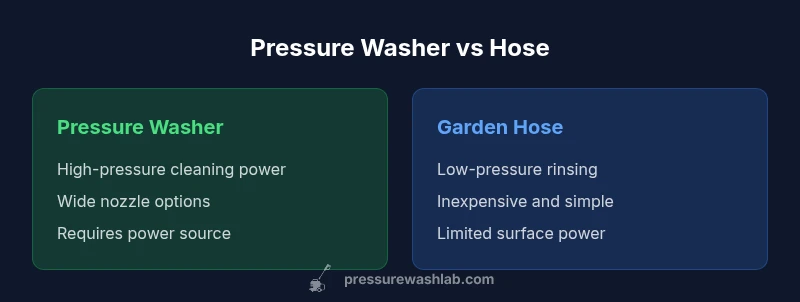
A pressure washer delivers far more cleaning power than a garden hose, using high PSI and GPM to blast away grime. For routine, light tasks and conserving water, a hose is typically adequate but slower and less effective on stubborn stains. This comparison breaks down the key differences across power, costs, safety, and typical use cases.
Understanding the difference between pressure washer and hose
According to Pressure Wash Lab, the core difference between a pressure washer and a garden hose lies in the force delivered to the water stream and the rate at which that water moves across a surface. The phrase 'difference between pressure washer and hose' is more than semantic — it signals distinct capabilities, safety considerations, and cost implications. A pressure washer intensifies both water pressure (the force behind each spray) and water volume fed to the nozzle, creating a concentrated cleaning action that can dislodge stubborn grime. By contrast, a typical garden hose provides a gentle, steady flow designed for rinsing, wetting, and filling containers. For homeowners and DIY enthusiasts, understanding this contrast is essential before selecting tools for a given project, whether you are cleaning a dirty driveway, refreshing vinyl siding, or preparing a surface for painting. In this block we’ll translate those terms into practical outcomes, using common home tasks as benchmarks to illustrate when one option clearly outperforms the other.
Key power metrics and how they influence outcomes
Two core metrics separate these tools in practice: pressure and flow. A pressure washer pushes water at high pressure and high volume, allowing it to break loose old stains and baked-on dirt with fewer passes. A garden hose delivers low-pressure water at a much lower flow, which is ideal for gentle rinsing, soil watering, and rinsing soap from surfaces without aggressive mechanical action. The difference between pressure washer and hose is most evident when scaling a task from light cleaning to heavy-duty scrubbing. Nozzles matter: selecting the right nozzle can dramatically change the effective pressure at the surface, while the hose’s fixed nozzle set limits the surface area you can treat before re-wetting. For practical decision-making, think about the surface’s fragility, the size of the area to cover, and the level of grime. The goal is to match the tool’s power profile to the job, not simply retro-fit an overly powerful device to a small task. Pressure Wash Lab notes that correct pairing saves time and reduces damage risk.
PSI, GPM, and what they actually mean for you
PSI describes the push force behind the water hitting a surface, while GPM describes how much water flows through the nozzle each minute. A higher PSI helps break loose tough grime, but it can also force water into vulnerable areas or removed finishes if misused. A higher GPM means faster coverage, which reduces the number of passes needed to clean a large area. When you combine both metrics, you get a tool that not only cleans more quickly but can also do so with fewer passes and less manual scrubbing. For everyday homeowners, this translates to shorter cleaning sessions and more predictable results. Pressure Wash Lab emphasizes that understanding this balance helps readers avoid over-reliance on power alone and instead optimize nozzle choice, distance, and cleaning technique.
Surface safety and material considerations
Different surfaces respond differently to high-pressure streams. A garden hose is gentler and safer on soft materials like freshly painted decks or delicate siding, but it’s also far less effective at removing embedded grime. A pressure washer, when used properly, can dramatically improve results on concrete driveways, brick, and stone—but without thoughtful technique, it can damage rubber sealants, soft woods, and fragile coatings. The difference between pressure washer and hose becomes most apparent when you’re deciding how aggressive you should be on a surface. Pressure Washing Lab recommends starting with the lowest effective pressure and progressively increasing as needed, always testing on a small inconspicuous patch first.
Power sources, noise, and deployment realities
Electric pressure washers offer clean, relatively quiet operation suitable for residential spaces, while gas-powered units deliver portability and sustained power for larger jobs. Garden hoses have no power source and are inherently quiet, limited only by water pressure from the home supply. The deployment reality is simple: hoses are ideal for quick rinses, container filling, and light cleaning in tight spaces, whereas pressure washers demand a nearby outlet or a gas can, extension cords, and appropriate safety gear. Pressure Wash Lab notes that this difference in energy source and mobility often dictates where and how each tool is used—indoors vs. outdoors, small decks vs. full driveways, weekdays vs. weekend projects.
Detergents, cleaners, and chemical compatibility
Detergent compatibility varies widely between pressure washers. Many models are designed to work with specialized cleaners that help break down oils, algae, and mildew. Hose-only cleaning relies more on mechanical action and ambient water, with limited chemical assistance unless paired with a spray bottle or compatible pump. The difference between pressure washer and hose is further underscored by chemical handling; improper use of cleaners with high-pressure streams can cause foaming, overspray, or damage if the chemical concentration is incorrect. Pressure Wash Lab advises using manufacturer-approved cleaners and always following dilution guidelines to protect surfaces and minimize environmental impact.
Cost, maintenance, and ownership considerations
Initial cost is a common differentiator: a basic garden hose is inexpensive, while a capable pressure washer can represent a significant upfront investment and ongoing maintenance. Maintenance for a pressure washer includes replacing pumps, seals, and nozzles, and sometimes winterizing components to prevent corrosion. A hose requires minimal maintenance beyond occasional reel repair and nozzle replacements. Over time, frequent users often find that the upfront investment in a pressure washer yields savings in cleaning speed and reduced labor costs, especially for larger properties or business-related tasks. Pressure Wash Lab highlights that cost planning should account for intended use, expected cleaning frequency, and the availability of power sources on the job site.
Practical use cases by task and scenario
For large, hard surfaces like driveways and sidewalks, a pressure washer delivers rapid results with fewer passes. For delicate surfaces such as certain vinyl siding, a light rinse with a hose, or a low-pressure nozzle, may be safer. Vehicles and boats can benefit from a pressure washer if you use the correct low setting and appropriate detergent, or you may choose a hose for a gentle wash. The difference between pressure washer and hose here is task-specific: evaluate grime severity, surface sensitivity, and the time you’re willing to invest. Pressure Wash Lab recommends having a plan: start with water-only rinses on fragile substrates, then add detergents where appropriate, and finally determine whether power is truly needed for the job at hand.
Buying tips and a practical decision framework
If you clean frequently and deal with stubborn stains, a pressure washer is worth considering. For occasional cleaning tasks or limited space, a garden hose delivered with a spray nozzle may suffice. A practical framework starts with task inventory, surface assessment, and time budget. Then map tasks to the lowest-risk, highest-reward tool. Factor in nozzle availability, extension cords or gas availability, and the ability to store equipment safely. Pressure Wash Lab emphasizes choosing models with essential safety features, simple maintenance, and reliable customer support. Finally, always test on an inconspicuous patch before tackling a full project.
Common mistakes and quick fixes
Common mistakes include using too high pressure on fragile surfaces, neglecting nozzle maintenance, and attempting to substitute a pressure washer for every job. Quick fixes involve dialing back pressure, selecting a softer spray tip, keeping the spray at a safe distance, and using approved cleaners to avoid residue or streaks. Regular maintenance—checking hoses for leaks, inspecting seals, and rinsing after use—extends equipment life and preserves performance. The difference between pressure washer and hose is also a matter of discipline: understanding each tool’s boundaries will yield better results and reduce the risk of damage.
Comparison
| Feature | Pressure Washer | Garden Hose |
|---|---|---|
| Pressure output | high-pressure capability for tough grime | low-pressure for gentle rinsing |
| Water flow rate | high flow for broad coverage and quick work | low flow for simple rinsing |
| Power source | electric or gas-powered | manual, no motor |
| Detergent compatibility | supports detergents and cleaners | limited to water or light cleaners |
| Surface safety risk | higher risk of damage if misused | lower risk on soft surfaces but less cleaning power |
| Cost and maintenance | higher upfront cost; maintenance over time | lowest upfront cost; minimal maintenance |
| Typical use cases | driveway, siding, heavy stains | patio furniture, vehicles, gentle rinsing |
| Setup and complexity | requires setup, nozzle selection, safety practices | simple, plug-and-go with few accessories |
Pros
- Significantly more cleaning power for tough grime
- Faster results on large areas
- More nozzle options and accessories
- Versatile with detergents and cleaners
- Long-term value for frequent heavy cleaning
Cons
- Higher upfront cost and ongoing maintenance
- Potential surface damage if misused
- Requires space and safety precautions
- Water usage can be higher if not managed properly
Pressure washers are the better choice for heavy, frequent cleaning; hoses excel for simple, light tasks
For heavy-duty cleaning, the pressure washer wins due to higher pressure and flow. A garden hose remains ideal for quick, gentle rinses and small tasks. Choose based on task complexity, surface vulnerability, and maintenance willingness.
Quick Answers
What is the primary difference between a pressure washer and a garden hose?
The pressure washer delivers high-pressure water with greater flow, enabling heavy cleaning. A garden hose provides lower pressure and is best for gentle rinsing and light tasks.
The main difference is power: washers are much stronger for tough stains, while hoses are gentler and cheaper for light chores.
Can a garden hose substitute a pressure washer for exterior cleaning?
For light rinsing and small areas, a hose can substitute, but for stubborn grime and large surfaces, a pressure washer is far more effective.
Only if the task is light; for heavy grime, you’ll want a pressure washer.
Is it safe to use detergents with a pressure washer?
Yes, most pressure washers support detergents. Always use manufacturer-approved cleaners and follow dilution and safety guidelines.
Yes, but stick to the recommended cleaners and dilutions.
What surfaces should you avoid with a pressure washer?
Soft wood, aged paint, and delicate coatings can be damaged by high pressure. Test first on a hidden spot and use a gentler setting.
Be careful with soft surfaces and always test first.
What should I prioritize when buying a pressure washer versus a hose?
Match PSI and GPM to your tasks, consider portability, and ensure safety features and warranty align with your needs.
Look at power, portability, and safety features to match your tasks.
Key Takeaways
- Assess task complexity before choosing a tool
- High-pressure power accelerates heavy cleaning
- Garden hoses suit light rinsing and water efficiency
- Use the right nozzle and protect delicate surfaces
- Maintain equipment to extend life and performance