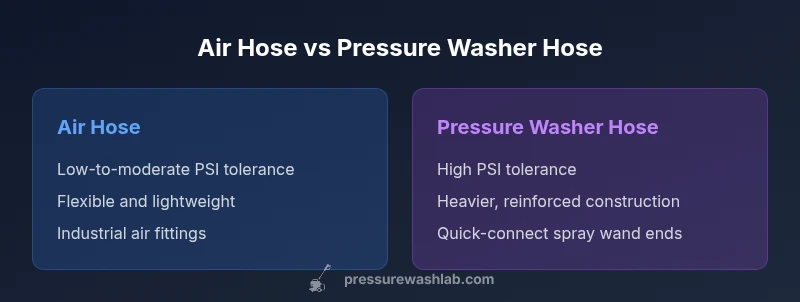
Air Hose vs Pressure Washer Hose: Core Differences
Learn the difference between air hose and pressure washer hose, including PSI tolerance, materials, and uses to help homeowners choose the right hose for pneumatic vs water cleaning tasks.


The difference between air hose and pressure washer hose centers on pressure capability, materials, and intended use. An air hose is designed for low-to-moderate PSI and delivers air to tools, while a pressure washer hose withstands high-water pressure for cleaning tasks. For typical home work, pair your tool with the correct hose type: air with pneumatic tools, water with a pressure washer.
The difference between air hose and pressure washer hose
Two hoses serve different energy systems: one delivers compressed air to power tools, the other channels high‑pressure water for cleaning. The difference between air hose and pressure washer hose matters not only for performance but for safety and longevity. In practical terms, air hoses are designed to transmit air at low-to-moderate PSI and are typically lighter and more flexible, while pressure washer hoses are built to resist high water pressure, allowing deep cleaning without ballooning or rupturing. This guide uses the phrase difference between air hose and pressure washer hose to anchor the distinctions and set expectations for homeowners and DIYers who juggle pneumatic tools and outdoor cleaning tasks.
- Air hoses excel in mobility: lighter weight, easier to coil, and compatible with a broad range of pneumatic tools.
- Pressure washer hoses excel in durability: thicker walls, reinforced layers, and fittings designed for high water pressure.
- Misusing one for the other can lead to tool damage, fit issues, or safety hazards, so matching the hose to the task is essential.
Comparison
| Feature | Air Hose | Pressure Washer Hose |
|---|---|---|
| Max Pressure Rating | low to moderate psi | very high psi |
| Common Materials | reinforced rubber/nylon blends for air delivery | rubber/elastomer with multiple reinforcement layers for water |
| Flexibility | high flexibility at room temperature | stiffer under high pressure and longer lengths |
| Connectors | industrial air fittings and couplers | quick-connect hose ends and spray-wand adapters |
| Typical Uses | pneumatic tools, inflating, sanders | washing, surface cleaning, and degreasing |
| Durability & Maintenance | regular inspection, UV exposure mitigation | abrasion and chemical resistance; replace when worn |
Pros
- Air hoses are lighter and easier to maneuver
- Air hoses typically cost less upfront and are widely available
- Pressure washer hoses deliver reliable high-pressure cleaning
- Both hose types couple with common fittings for flexibility
- Maintenance routines are straightforward for most PPE tasks
Cons
- Air hoses cannot safely deliver high-pressure water tasks
- Pressure washer hoses are heavier and less flexible, especially long runs
- High-pressure hoses require careful handling to prevent injury
- Cost to replace can be higher for wear-prone environments
Choose the hose that matches the task: air hose for pneumatic tools; pressure washer hose for high-water cleaning.
The key decision factor is pressure demand. Use air hoses with tools powered by compressors; reserve pressure washer hoses for water-based cleaning. Correct pairing improves safety and performance, reduces wear, and extends hose life.
Quick Answers
What is the main difference between air hose and pressure washer hose?
The main difference is their purpose and pressure tolerance: air hoses handle compressed air at low-to-moderate PSI, while pressure washer hoses withstand high water pressure for cleaning. They are not interchangeable due to safety and performance concerns.
The main difference is that air hoses carry air at low pressure, while pressure washer hoses carry high-pressure water. They’re not interchangeable due to safety and performance.
Can I use an air hose for pressure washing?
No. Air hoses are not designed for water and will fail under the high pressure of a washer. Using the wrong hose can cause ruptures or dangerous spray.
No. An air hose isn’t built for water pressure and can fail, risking injuries and damage.
Are air hoses rated for PSI?
Yes, but their ratings are lower than those for washer hoses. Air hoses are designed for low-to-moderate PSI and are not suitable for high-water pressure tasks.
Air hoses have lower PSI limits and aren’t safe for high-water cleaning.
What fittings are common on these hoses?
Air hoses use industrial air fittings and couplers, while pressure washer hoses use quick-connect ends compatible with spray wands and guns.
Air hoses use air fittings; pressure washer hoses use quick-connect ends.
How should I maintain both hoses?
Inspect regularly for wear, cracks, and leaks; store away from direct sunlight; replace damaged hoses promptly; follow manufacturer recommendations for connector care.
Check for wear, store properly, and replace damaged hoses to stay safe and effective.
Key Takeaways
- Know that PSI dictates hose choice
- Choose air hoses for pneumatic tools and moderate tasks
- Prefer pressure washer hoses for cleaning with high water pressure
- Check connectors and length to avoid kinks and leaks
- Regularly inspect hoses for wear and UV damage