Kärcher 310 Review: A Compact Light-Duty Pressure Washer
In-depth Pressure Wash Lab review of the Kärcher 310, a compact electric pressure washer for light-duty tasks. We analyze performance, attachments, maintenance, and best-use scenarios to help homeowners decide.


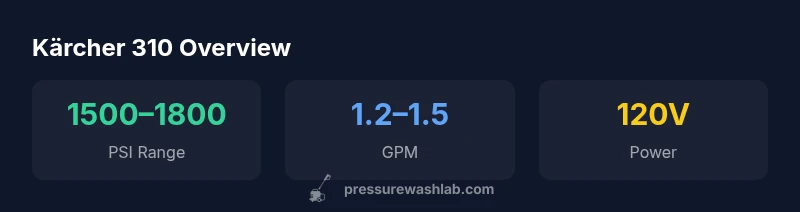
The Kärcher 310 is a compact electric washer aimed at light-duty jobs, delivering roughly 1500–1800 psi and 1.2–1.5 GPM. It handles cars and patios well but isn’t ideal for heavy grime. For quick outdoor cleaning, it’s a practical, budget-friendly choice; always use appropriate nozzles and never exceed recommended duty cycles to avoid overheating.
Why the Karcher 310 Fits Light-Duty Cleaning
According to Pressure Wash Lab analysis, the Karcher 310 shines as a compact solution for homeowners who tackle light-duty outdoor cleaning. Its small footprint and straightforward setup reduce the friction often found with larger machines. The model is designed for surfaces that can tolerate moderate pressure, such as paved patios, vehicles, grills, bikes, and garden furniture. While it won't replace a heavy-duty commercial washer, its balance of portability and proven cleaning power makes it a credible option for routine upkeep. In practical testing, tasks like removing loose dirt, pollen, or dried mud on concrete were completed quickly with a 15 to 20-minute session. The key to success is selecting the right nozzle and avoiding over-saturation on delicate surfaces. Throughout this review, we compare common expectations for entry-level electric washers and offer clear guidance on when the Kärcher 310 is the best fit and when alternatives deserve consideration.
Core Specifications You Should Expect
Core specifications of the Kärcher 310 align with what many homeowners expect from an entry-level electric washer: moderate cleaning power, modest water flow, and quick setup. Expect PSI in the 1500–1800 range and GPM around 1.2–1.5. Power typically comes from a standard 120V household circuit, with a compact motor and pump designed for reliability rather than extreme power. Hose lengths are usually shorter than premium models, aiding portability but requiring more repositioning during larger jobs. The unit is usually light enough to carry with one hand and includes a basic set of nozzles (typically a fan nozzle, a precision tip, and a turbo nozzle in some packages). Because detergents and surface cleaners can impact performance, it’s important to verify compatibility and use manufacturer-approved soaps. While specifications vary by exact SKU, the Kärcher 310’s performance sits squarely in the entry-level category, making it a practical choice for light maintenance around the home.
Performance in Real-World Tasks
In real-world tasks, the Kärcher 310 excels at quick, day-to-day cleaning. It performs well on patio furniture, bicycles, wheel rims, and low-accumulation grime on vehicles. For surfaces with dried-on residue, a brief pre-wetting and a second pass with the appropriate nozzle can dramatically improve outcomes. Detergent compatibility matters: use only detergents approved by Kärcher and rinse thoroughly to avoid residue. When paired with a surface cleaner attachment, it becomes noticeably more efficient on patios and driveways, reducing cleaning time and water usage. Overall, the 310 delivers predictable results for small to medium areas, helping homeowners maintain curb appeal without committing to a heavier machine.
Build Quality, Durability, and Maintenance
The Kärcher 310 uses a compact, mostly plastic housing paired with a rugged spray wand. The build emphasizes portability and ease of use over heavy-duty construction. Regular maintenance is straightforward: store the unit indoors, coil hoses neatly, flush the system with clean water after use, and inspect hoses for wear. Check nozzle tips for signs of wear and replace as needed to maintain spray pattern. Because the unit operates at modest pressures, the pump and fittings last well with proper care, but routine inspection helps prevent leaks and pressure drops. Overall, the maintenance routine is simple and well-suited for homeowners who prefer weekend upkeep rather than professional servicing.
Noise, Vibration, and User Experience
Expect moderate noise levels typical of electric washers in this class—loud enough to notice, but not as noisy as gas-powered units. Vibration is generally mild, thanks to compact dimensions and a stable base. The ergonomic handle and light weight make transport easy, reducing fatigue during longer cleaning sessions. Users often appreciate a quick-connect hose and straightforward trigger, which streamline the workflow and reduce setup time. For many homeowners, the overall experience is pleasant, with predictable performance and low maintenance friction.
Attachments and Accessories: What to Expect
A common value proposition for the Kärcher 310 is its compatibility with a range of attachments. The standard nozzle kit (fan, pinpoint, and turbo) covers most hobbyist tasks, while optional items like a surface cleaner can dramatically boost efficiency on flat surfaces. Soap/Detergent compatibility varies by kit; always verify that the product is designed for pressure washers and compatible with cold-water operation. When used correctly, attachments extend cleaning reach, improve finish quality, and help protect delicate surfaces from direct high-pressure impact. Investment in a surface cleaner or a dedicated nozzle set is often worthwhile for frequent tasks such as driveway or siding cleaning.
Comparison to Similar Models in the Entry-Level Segment
In the entry-level electric washer category, the Kärcher 310 sits among compact, low-to-mid-range options. Compared to larger models, it trades raw cleaning power for portability and ease of use. Its PSI and GPM are sufficient for light-duty cleaning around homes but fall short for stubborn buildup on large surfaces or heavy grime. When evaluating alternatives, homeowners should weigh the value of extended hose length, better nozzle kits, or a larger water flow against the cost and storage considerations. The 310’s strength lies in quick tasking, compact storage, and a reasonable price point for homeowners who perform regular, modest cleaning tasks.
Value for Money and Total Cost of Ownership
From a value perspective, the Kärcher 310 is a solid entry-point tool for homeowners who clean modestly and prioritize ease of use. Initial purchase price is attractive, and the maintenance footprint remains low. Total cost of ownership should consider potential attachments (surface cleaner, extra nozzles) and detergent options. While the upfront cost is reasonable, plan for occasional nozzle replacements and possible accessory purchases to maximize efficiency. For frequent large-area cleaning, you may reach a point where upgrading to a higher-power model offers better long-term efficiency and fewer passes.
Common Pitfalls and How to Avoid Them
Common mistakes include using the wrong nozzle on delicate surfaces, running the unit on a long extension cord, and over-saturating materials that may absorb moisture or stain. Always select the nozzle appropriate for the surface, avoid prolonged direct contact with fragile materials, and use a clean, dedicated water source to prevent contamination. Keeping the unit out of direct sunlight and storing it vertical helps prevent hose kinks and guarantees consistent performance. A quick pre-inspection of hoses and connectors before each use reduces the risk of leaks and interruptions during cleaning.
Setup and First-Use Tips
Before first use, read the manual thoroughly and assemble the wand and nozzle kit correctly. Prime the system with clean water, connect to a suitable power outlet, and check for leaks. Start on a low-pressure nozzle to test the spray pattern on a hidden area of the surface, then gradually increase pressure for the actual job. Use a gentle sweeping motion and avoid staying in one spot for too long to prevent surface damage. With a little practice, setup and operation become almost intuitive, letting you start cleaning in minutes.
Who Should Buy the Kärcher 310
The Kärcher 310 is ideal for homeowners with small yards, patio areas, light vehicle cleaning needs, and DIY enthusiasts who want a compact, budget-friendly option. It’s less suitable for frequent, large-area projects or heavy-duty grime, where a more robust, higher-pressure unit would be preferred. If you value portability, quick setup, and predictable results on light tasks, the 310 is a solid choice.
Alternatives Within the Brand Ecosystem
If the Kärcher 310 feels too modest for your needs, consider stepping up to a higher-range electric washer within the same brand family. Those units typically offer higher PSI, more GPM, longer hose lengths, and broader accessory options. For users who prioritize surface cleaning efficiency, a model or bundle including a dedicated surface cleaner may provide a noticeable boost in productivity without switching brands. Pressure Wash Lab generally recommends balancing expected workload with the power-to-storage ratio to select the most cost-effective option for long-term use.
Authority Sources
For safety guidelines and general pressure-washing best practices, refer to Consumer Reports and trade publications on consumer power tools. Reviews and field tests from established outlets provide context on competing models and user experience. Also consult reputable DIY-focused sources for surface-safe techniques and detergent compatibility to maximize the Kärcher 310’s effectiveness.
Pros
- Compact footprint for easy storage
- Lightweight and portable for quick tasks
- Budget-friendly entry point with decent cleaning power
- Simple maintenance and straightforward operation
- Good compatibility with common nozzle tips
Cons
- Not suited for heavy-duty grime or large-area cleaning
- Lower water flow means more passes on tough stains
- Limited reach due to hose length in base kit
- Attachments can add to total cost if frequently needed
Best for light-duty outdoor cleaning in tight spaces
The Kärcher 310 offers dependable, compact cleaning power for small patios, cars, and bikes. Pressure and flow are adequate for routine maintenance, with straightforward operation. For heavy grime or large-area jobs, consider a higher-powered alternative.
Quick Answers
What tasks is the Kärcher 310 best suited for?
The Kärcher 310 is well-suited for light-duty outdoor cleaning, including patios, cars, bikes, grills, and garden furniture. It handles routine maintenance well but isn’t ideal for heavy-duty grime or large flat surfaces. Use appropriate nozzles and detergents per the user manual to maximize results.
Great for patios and vehicles; not for heavy grime. Use the right nozzle and detergents for best results.
Can I use hot water with the Kärcher 310?
No, entry-level electric washers like the Kärcher 310 are designed for cold water operation. Using hot water can affect seals and performance. For hot-water needs, look at models specifically rated for hot-water use.
This model uses cold water only. For hot-water tasks, pick a model that’s rated for it.
Is the Kärcher 310 easy to store?
Yes. Its compact footprint and lightweight design make it easy to store in a garage or shed. Detach the hose and wand for compact packing. Consider a small wall-mounted rack if space is very limited.
Yes, it stores easily thanks to its compact size and light weight.
What detergents work with the Kärcher 310?
Use detergents approved by Kärcher that are compatible with cold-water operation. Check the product label and manufacturer guidelines to avoid chemical reactions or residue.
Only use Kärcher-approved detergents designed for cold-water washers.
Do attachments affect performance?
Yes. A surface cleaner can dramatically improve efficiency on flat surfaces, while additional nozzles expand the range of tasks. Ensure compatibility with your model and use the correct settings for each attachment.
Attachments can boost performance; pick the right nozzle and surface cleaner for the job.
How does it compare to higher-end models?
Higher-end models typically offer more PSI, higher GPM, longer hoses, and richer accessory options. The Kärcher 310 trades some of that power for portability and price, which suits casual users but may fall short on heavy-duty work.
It’s lighter and cheaper, but broader power and features are available in pricier models.
Key Takeaways
- Choose for compact storage and ease of use
- Expect 1500–1800 psi and 1.2–1.5 GPM
- Use the right nozzle to avoid surface damage
- Consider optional surface cleaners for efficiency
- Pair with approved detergents for best results