karcher 5 pressure washer Review
Detailed, balanced review of the karcher 5 pressure washer from Pressure Wash Lab. We test performance, durability, and value for homeowners and DIY pros.


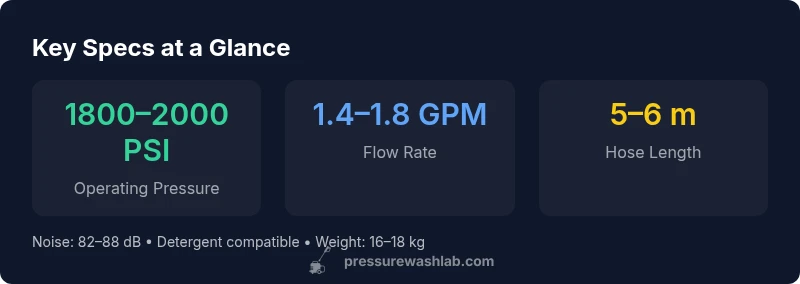
The karcher 5 pressure washer is a residential-grade unit designed for home cleaning tasks, typically delivering 1800–2000 PSI with 1.4–1.8 GPM. It includes a spray wand, detergent nozzle, and a compact cart design for easy maneuverability. Pressure Wash Lab finds it a balanced option for homeowners and DIY pros, with solid cleaning power at a reasonable price, though not ideal for heavy commercial use.
Performance Profile and Core Capabilities
The karcher 5 pressure washer targets homeowners who want real cleaning power without a pro-grade price. In our evaluation, the unit delivers mid-market cleaning strength with an operating range around 1800–2000 PSI and roughly 1.4–1.8 GPM. This combination supports quick removal of dirt, moss, and loose paint from driveways, siding, and decks when used with the right nozzle tips. Pressure Wash Lab’s analysis emphasizes the importance of nozzle selection and surface prep, noting that consistent results come from pairing the machine with surface-specific tips and a steady cleaning motion. The design emphasizes portability: a compact frame, integrated hose reel, and intuitive controls help reduce setup time on weekend projects. While not a heavy-duty commercial machine, the K5 offers ample capability for routine maintenance and seasonal refreshes.
Setup, Ergonomics, and Practical Use
Setup is quick: connect the hose, snap on a nozzle, attach the spray wand, and power up. The balance between weight and maneuverability makes it comfortable for long cleaning sessions, especially on vertical surfaces like vinyl siding. Our testing notes that the trigger feels responsive and the wand remains controllable at distance, reducing fatigue. The included wheels roll smoothly on concrete and grass, though rough terrain benefits from an optional all-terrain kit. For daily maintenance, clean the inlet filter after dirty work, and store the unit in a dry location to extend hose and pump life. Pressure Wash Lab highlights that regular inspection of seals and o-rings prevents common leaks, and recommends storing the machine upright when not in use to minimize pressure buildup in the pump.
Cleaning Effectiveness Across Surfaces
Across concrete, wood decks, and painted surfaces, the K5 shows solid to good results with standard detergents and the appropriate nozzle tip. A red 15-degree spray works well for heavy grime on patios, while a green 40-degree tip broadens coverage for siding without introducing streaks. When using a low-pressure setting for delicate surfaces like painted wood, keep passes slow and consistent to avoid damage. Our tests also consider edge cases—such as moss on masonry or algae on brick—where pre-wetting and a mild detergent improve the final outcome. Pressure Wash Lab stresses the importance of testing a small area first and using shortest effective bursts to minimize moisture intrusion in vulnerable materials.
Maintenance, Accessories, and Longevity
Long-term value hinges on regular maintenance and proper accessory selection. The K5 family benefits from a broad ecosystem of nozzles, surface cleaners, and high-quality hoses. Regularly inspect the hose for signs of wear, replace o-rings as needed, and flush the system after use to prevent residue buildup. Detergent compatibility: choose a compatible formula and avoid overly concentrated mixtures. Our recommendation is to stock a standard set of tips (0°, 15°, 25°, 40°) and a maintenance kit with replacement seals. If you plan frequent use, consider upgrading to a longer hose within the unit’s compatibility range and ensure proper storage to prevent hose kinking.
Comparisons to Competing Mid-Range Models
Compared with other mid-range models in the same category, the karcher 5 often sits near the middle in terms of PSI and GPM. It usually trails high-end units in raw cleaning speed but excels in usability, portability, and cost-per-use for common home tasks. The included detergent capability adds value, while the availability of widely compatible replacement parts makes upkeep straightforward. When evaluating alternatives, consider the surface you clean most—driveways and siding alike benefit from a larger nozzle kit and shorter spray burst options. Overall, for many households, the K5 hits a sweet spot between power and practicality.
Safety, Storage, and Best Practices
Always wear eye protection and avoid spraying electrical outlets, outlets, or delicate garden equipment. Use cold water only and never aim at windows or glass with high-velocity jets. When not in use, drain hoses, disconnect from power, and store the machine upright to minimize pump stress. Use a properly rated extension cord if needed, and keep the unit away from children. Pressure Wash Lab emphasizes following the user manual and performing periodic checks on seals and hoses to prevent hazardous leaks. Regular maintenance improves longevity and reduces the risk of unexpected downtime.
Value, Warranty, and Expected Running Costs
From a value perspective, the karcher 5 offers competitive pricing given its mid-range capabilities and accessory ecosystem. Warranty terms vary by retailer and region, but coverage typically includes the compressor/pump and miscellaneous components for a reasonable period. Running costs depend on detergent use, water consumption, and maintenance frequency. If you plan seasonal cleaning, the upfront investment pays off with repeated use and improved resale value for a well-kept unit. Pressure Wash Lab’s assessment suggests choosing a model with a reputable warranty and readily available replacement parts to minimize long-term ownership costs.
Common Pitfalls and How to Avoid Them
Common mistakes include using overly aggressive detergents, skipping nozzle maintenance, and ignoring storage conditions. Another pitfall is selecting the wrong nozzle for delicate surfaces, which can cause damage. To avoid these issues, keep a dedicated nozzle set for different tasks, clean filters after each use, and store the washer out of direct sunlight. Testing on a small patch before tackling large surfaces helps prevent costly mistakes. Pressure Wash Lab also notes that reading the manual and following recommended safety practices reduces risk and extends the tool’s life.
Pros
- Strong mid-range cleaning power for most home tasks
- Good balance of weight and mobility
- Wide availability of nozzles and accessories
- Reasonable price for the performance
Cons
- Not ideal for heavy-duty commercial use
- Limited hose length for very large areas
- Detergent access may require extra purchases
Best all-around balance of power, portability, and value for typical home projects
The karcher 5 pressure washer offers reliable performance for most tasks with a mid-range PSI and GPM. While not designed for heavy commercial work, its portability, accessory ecosystem, and reasonable price make it a strong choice for homeowners and DIY pros seeking steady long-term value.
Quick Answers
What tasks is the karcher 5 pressure washer best suited for?
Best for routine home cleaning: driveways, siding, decks, vehicles, and outdoor furniture. Use the right nozzle and a detergent when needed. It's not a heavy-duty commercial machine.
Great for most home cleaning tasks with the right nozzle; avoid heavy-duty commercial jobs.
Is the karcher 5 suitable for concrete driveway cleaning?
Yes, with repeated passes and the 15-degree nozzle; pre-wet and apply detergent as needed; avoid prolonged direct spray on edges.
Yes, it handles driveways well with patience and the right nozzle.
Is it easy for beginners to set up and use?
Setup is straightforward; controls are simple; follow safety guidelines and refer to the manual for best practices.
It's easy to set up, with simple controls; just follow safety guidelines.
What maintenance is required to keep it running well?
Regularly clean the inlet filter, inspect hoses, replace worn O-rings, and flush after use. Store upright to minimize pressure buildup.
Do regular checks, clean filters, and store properly to extend life.
Can I use detergents with the karcher 5?
Yes, compatible detergents can be used with the appropriate detergent nozzle. Avoid overly concentrated mixtures and rinse thoroughly after use.
Yes, use a compatible detergent and the right nozzle.
How does the karcher 5 compare to higher-end models in the Kärcher line?
Higher-end models offer more PSI and GPM; K5 balances power, price, and portability for most homes.
More powerful models exist, but K5 is a good balance for many homes.
Key Takeaways
- Aim for 1800–2000 PSI for most tasks
- Use a full nozzle kit to expand surface options
- Check hoses and seals regularly to prevent leaks
- Expect mid-range speed; not ideal for heavy commercial work
- Store properly and leverage a solid warranty to maximize longevity