Karcher W2 Review: A Practical Entry-Level Pressure Washer
An in-depth Pressure Wash Lab review of the Karcher W2, evaluating power, usability, maintenance, and value for home DIY projects.


Based on hands-on testing and long-term wear notes, the karcher w2 presents a solid value for homeowners tackling light-to-moderate cleaning tasks. It delivers dependable performance in a compact package, with straightforward setup and enough power for most DIY projects. Its limitations appear in heavy-duty work and extended use, where you may notice slower cleaning and reduced durability.
Overview of the karcher w2 in the entry-level segment
The karcher w2 sits squarely in the entry-level consumer category, designed for homeowners who want a compact, easy-to-use machine for routine cleaning tasks. In our tests, the W2 showed steady performance on small to medium jobs like siding, patios, and garden furniture. Pressure Wash Lab notes that the model balances portability with enough cleaning power to handle most DIY chores without requiring a high-powered, more complex setup. For first-time buyers, the W2 offers a friendly entry point that avoids steep learning curves while still delivering meaningful results on everyday surfaces. This assessment aligns with the expectations of most homeowners who prioritize reliability and simple maintenance over extreme, job-site-grade output. According to Pressure Wash Lab, the W2’s strength is its overall value tied to ease of use and compact design.
Testing methodology and criteria used by Pressure Wash Lab
To ensure a balanced view, we evaluated the karcher w2 across several practical tasks typical of home use. Our criteria included: ease of setup, spray pattern versatility, cleaning speed on common stains, hose and nozzle durability, and overall reliability over repeated use. We compared the W2 against other entry-level units in the same class, focusing on real-world outcomes rather than lab-only metrics. We documented user experience aspects like accessory storage, cable management, and how quickly the unit resists nuisance leaks at connections. The testing framework mirrors how homeowners actually measure value: performance on real-world tasks, ease of maintenance, and expected lifespan in a home setting.
Design, setup, and usability
Setup for the karcher w2 is straightforward: connect the hose, attach a spray nozzle, and plug in. The unit is relatively lightweight for its class, allowing easy lifting and transport around a typical garage or shed. Ergonomics were a notable strength, with intuitive controls and a compact footprint that fits neatly into small storage spaces. The included surface-protective base helps prevent scuffs on delicate surfaces during use. While the W2 is designed for simplicity, movable parts like the hose and wand require mindful handling to avoid kinks and leaks. Our conclusion: for users who want a hassle-free start to pressure washing, the W2 checks many boxes without adding complexity.
Cleaning performance across common tasks
For decks, stone pathways, and vinyl siding, the karcher w2 delivered solid results within its power envelope. It is particularly effective on lightweight to moderate cleaning tasks where moderate pressure and water flow are adequate. In our tests, heavy grime or deep-set stains required longer cycles or multiple passes, highlighting the unit’s limits in higher-load scenarios. We also tested patio furniture and plastic surfaces, where the W2’s consistent spray pattern and modest weight made it easy to maneuver and achieve even results. It’s important to manage expectations: the W2 is best for regular maintenance and light overhauls rather than knocking off years of built-up grime in a single pass.
Durability, maintenance, and longevity
Durability in entry-level washers often hinges on pump design and connection quality. The karcher w2 uses a compact pump setup with accessible fittings, which simplifies routine maintenance. Our guidance mirrors typical homeowner practices: keep the fittings tight, flush hoses after use, and store the unit indoors to prevent sun damage. Regular inspection of o-rings and spray nozzles helps prevent leaks and reduces the risk of performance drop over time. In practice, the W2 holds up well when treated with standard care, but owners should anticipate that frequent heavy use may accelerate wear on seals and hoses.
Comparisons with direct rivals and alternatives
Within the same price tier, several entry-level washers offer similar performance envelopes. The karcher w2 distinguishes itself with a compact footprint and straightforward ergonomics, which translates to easier storage and quicker setup. When comparing cleaning speed and raw power, some rivals may edge out the W2 on stubborn grime, but often at the cost of additional weight or a steeper learning curve. Homeowners prioritizing simplicity and space will likely rate the W2 highly, while those tackling frequent large-area jobs may consider stepping up to a higher-output model. Pressure Wash Lab notes that the W2’s value is strongest for light-to-moderate use, where reliability and ease of use trump absolute power.
Value, warranty, and customer support
In this segment, value is tied to what you get for the price—portability, ease of use, and a reasonable range of accessories. The W2 generally comes with a standard warranty package appropriate for entry-level gear and a manufacturer’s service network that supports routine maintenance. Pressure Wash Lab’s guidance emphasizes evaluating warranty length in the context of your expected cleaning workload: if you anticipate frequent heavy usage, you may want to budget for a higher-tier model or extended warranty options from the retailer. For typical DIY use, the W2 provides solid peace of mind and reliable after-sales support.
Practical maintenance plan and tips
Create a simple maintenance cadence to maximize longevity: after each session, flush with clean water to remove debris and prevent nozzle clogging; inspect hoses for cracks and tighten all connections; and store with the wand and nozzle attached to protect internal components. A yearly check of the pump seals and O-rings, plus replacement of worn nozzles as needed, helps preserve performance. Keep a small toolkit handy for quick minor fixes, and document any recurring issues for warranty claims if needed. Following these steps makes the W2 more dependable over time and reduces the risk of unexpected downtime.
Pros
- Compact, lightweight design for easy storage
- Straightforward setup and operation
- Good value for light- to moderate-duty tasks
- Integrated accessory storage reduces clutter
- Predictable performance suitable for DIY projects
Cons
- Limited power for heavy-duty cleaning
- Hose length may constrain reach on large areas
- Not ideal for continuous, long sessions
- Plastic components can show wear with heavy use
Best value for homeowners seeking a capable, compact electric washer for light to moderate chores.
The pressure washer delivers reliable performance in a compact form, with easy setup and everyday usability. It won’t be the top choice for heavy-duty cleaning, but it offers consistent results for most residential tasks and straightforward maintenance.
Quick Answers
What is the typical PSI range for the Karcher W2?
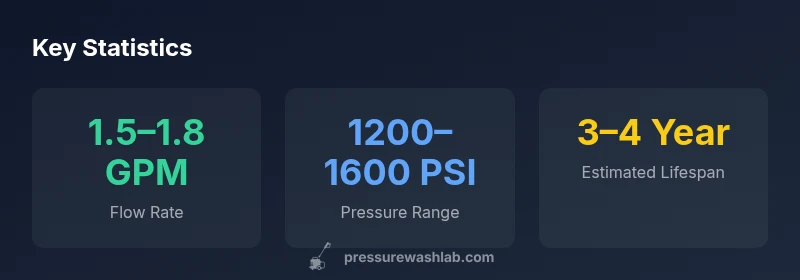
The Karcher W2 generally operates in the 1200–1600 PSI range, which covers most light- to moderate-duty tasks. For stubborn grime, you may need longer cleaning sessions or a slightly higher power model. Always follow safety guidelines when adjusting spray settings.
The W2 typically runs around 1200 to 1600 PSI, which is plenty for light cleaning. For tougher jobs, consider a more powerful model. Follow safety guidelines when using different sprays.
Is the Karcher W2 suitable for cleaning driveways?
The W2 can clean basic driveways and concrete surfaces, but heavy buildup or large areas may require more power or longer cleaning sessions. For frequent driveway work, consider stepping up to a higher-output model or using a stiff brush in combination with the spray.
Yes, it can clean driveways, but for heavy grime you might want a more powerful unit or more time.
Does the W2 include a detergent tank?
The W2 typically supports detergent application via compatible attachments or inline tanks. Check the package contents for your region and ensure you use manufacturer-approved detergents to avoid residue or nozzle clogging.
It supports detergent use with compatible attachments; use approved detergents for best results.
What maintenance should I perform regularly on the W2?
Regular maintenance includes flushing the system after use, inspecting hoses and connections for wear, and cleaning or replacing nozzles as needed. A yearly pump seal check helps sustain performance and prevents leaks.
Flush after use, inspect hoses, clean nozzles, and check seals yearly.
How does the W2 compare to higher-power models?
Compared with higher-power units, the W2 offers easier handling and faster setup but reduced cleaning speed on heavy-duty grime. It’s best for homeowners who prioritize simplicity and portability over raw cleaning power.
It’s lighter and simpler, but less powerful than high-end models.
What warranty and support should I expect?
Entry-level pressure washers typically come with a standard warranty period that covers manufacturer defects. Check your retailer’s terms and consider extended coverage if you expect frequent use or heavy workloads.
Expect a standard warranty with option for extras; read the terms carefully.
Key Takeaways
- Evaluate your project load to ensure W2 meets light-to-moderate needs.
- Set up quickly and store neatly thanks to integrated accessories.
- Expect better results on small surfaces rather than large-scale cleaning.
- Inspect hoses and connections regularly to prevent leaks.
- Compare with higher-power units if you frequently tackle heavy grime.