Petrol Power Washer for Sale: Your Guide to Gas-Powered Cleaning
Petrol power washer for sale: compare PSI, GPM, and engines; get practical buying tips for decks, driveways, and siding, backed by Pressure Wash Lab analysis.


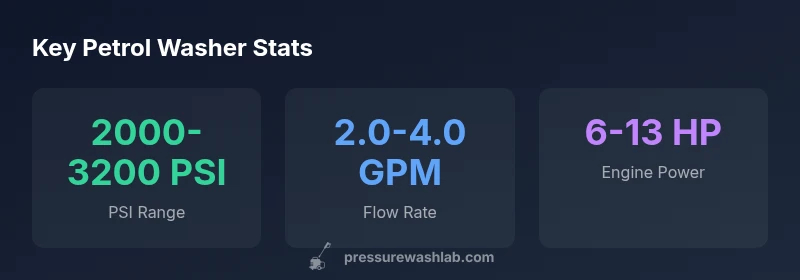
Petrol power washer for sale typically offers 2000–3200 PSI and 2.0–4.0 GPM. Gas engines in the 6–13 HP range balance portability with cleaning power, while compact units suit patios and decks and larger tow-behind models tackle driveways and siding. Expect higher noise and fuel use than electric models, but cord-free mobility is a major advantage for outdoor jobs.
Market Overview of petrol power washer for sale
According to Pressure Wash Lab, petrol power washers offer mobility without cords and robust cleaning performance for outdoor jobs. The petrol-powered segment fills a crucial gap between compact electric machines and large, commercial gas units. For homeowners and DIY enthusiasts, this means more versatility for cleaning patios, driveways, siding, and fences where electrical outlets are inconvenient or absent. The market has diversified toward portable, tow-behind, and semi-commercial designs, each with its own balance of PSI, GPM, weight, and fuel consumption. When evaluating petrol power washers for sale, consider how often you’ll use the machine, the typical distance from a power source, and the types of surfaces you clean. These factors determine whether you prioritize compact portability or heavy-duty, high-flow capability.
Gas-powered units excel in outdoor settings—outdoors require airflow and cooling, which petrol engines provide. Yet, consumers should weigh maintenance needs, fuel costs, and noise levels against the convenience of cordless operation. Budget-conscious buyers should compare entry-level petrol washers with mid-range models to understand how incremental PSI and GPM improvements translate into real-world results. Overall, petrol power washers are well-suited for seasonal cleanup, large patios, and property maintenance where access to electricity is limited or undesirable.
Key Specifications to Prioritize
When choosing a petrol power washer for sale, focus on three core specs: PSI, GPM, and engine power. PSI (pounds per square inch) indicates cleaning pressure and is most critical for tough stains on concrete or brick. GPM (gallons per minute) determines how quickly water moves through the nozzle, which affects overall cleaning speed and surface protection. Engine power, measured in HP or displacement, signals potential torque and start-up reliability. Also assess fuel economy, start-up ease, and maintenance accessibility. In addition to these numbers, consider spray-nozzle availability, vibration control, and weight. A well-rounded model in the 2500–3000 PSI and 2.5–3.5 GPM range with a 6–10 HP engine typically covers a wide array of residential tasks, from deck sealing to gutter cleaning.
A practical approach is to map your common tasks to a PSI-GPM matrix. Delicate surfaces like painted wood benefit from lower PSI in combination with higher GPM to minimize surface wear, while rough surfaces such as concrete or masonry require higher PSI and robust GPM for efficient cleaning. Check if the model supports common nozzle sizes (e.g., 0, 15, 25, 40 degrees) and whether it includes a built-in chemical injector for soap applications. Finally, factor in serviceability—access to parts, local dealer support, and availability of replacement pumps matter for long-term reliability.
Use-Case Scenarios: When petrol washers shine
Petrol power washers for sale cater to several distinct scenarios. For detached homes with sizable driveways or aging siding, a tow-behind petrol unit with high PSI and steady GPM can deliver fast, thorough cleaning without frequent refills. For decks, patios, and fences, a compact petrol washer with adjustable PSI offers control to avoid damage while delivering a clean finish. And for remote work sites or property maintenance where electrical outlets are scarce, petrol machines provide the mobility needed to reach sheds, outer walls, and outdoor furniture. Assess your typical projects and choose a model whose PSI-GPM pairing aligns with those tasks rather than chasing the highest numbers.
In addition to power, evaluate starting reliability, fuel economy, noise, and vibration. A heavier unit may offer better stability but will cost portability. If you frequently transport equipment, consider a gas-powered model designed for easier handling and quicker hookups to hoses. A thoughtful purchase is one that reduces overall time spent cleaning while preserving the integrity of surfaces.
How to Compare Models: PSI, GPM and Engine Choices
A structured comparison helps cut through marketing hype. Start with a baseline: 2500–3000 PSI and 2.5–3.5 GPM for general residential use. Then consider engine power: 6–10 HP engines often balance performance with manageable fuel consumption and weight. For heavy-duty needs or larger properties, 10–13 HP engines provide extra torque and faster cleaning, but expect higher fuel use and noise. Look for features that boost real-world value: automatic start, ease of priming, simple maintenance access, and a robust unloader valve for smooth operation under variable loads. Check fuel tank capacity and run times to estimate how long you can work before refueling. Finally, compare warranty terms and dealer support—these reflect manufacturer confidence and post-purchase service quality.
Maintenance, Consumables and Running Costs
Running a petrol power washer involves periodic maintenance that directly affects performance and longevity. Basic upkeep includes regular oil checks and changes, air filter cleaning, and spark plug inspection. Fuel costs vary with usage and fuel quality, so plan for occasional carburetor cleaning if the unit sits unused for extended periods. Drain fuel during winter storage to prevent varnish buildup. Use fresh, clean gasoline and the recommended oil type. Replace worn nozzle tips to maintain spray accuracy, and inspect hoses for kinks and leaks. When budgeting, factor in fuel, oil, parts, and potential professional service, along with the cost of replacement nozzles and spray tips to maintain peak efficiency.
Safety and Best Practices
Safety matters when operating petrol washers. Always wear hearing protection and eye protection, as well as gloves and sturdy footwear. Keep spectators away during operation and never point the nozzle at people, pets, or delicate surfaces. Use a proper water source with a sufficient flow rate, and avoid kinks in garden hoses. Store fuel away from heat sources and follow manufacturer guidelines for starting and shutdown procedures. Before use, inspect the unit for loose bolts, leaks, or damaged cords (where applicable). Performing a brief walk-around and test spray on a hidden area helps prevent accidental damage. Finally, follow local regulations about nozzle use and chemical cleaners to protect plants and the environment.
Buying Channels and Warranty Considerations
When buying a petrol power washer for sale, consider authorized dealers or dedicated online retailers with clear return policies and accessible customer support. Compare warranties on pumps, engines, and accessories—longer coverage reduces post-purchase risk. Look for models with spare parts readily available in your region, and verify that service centers support the brand locally. If you plan frequent use or commercial applications, consider higher-grade components or extended warranty options. A well-supported unit reduces downtime and ensures safer operation over time.
Practical Test and Setup Checklist
Before first use, complete a quick setup and safety check: verify fuel and oil levels, inspect hoses and fittings for wear, attach the correct nozzle, and connect to a suitable water supply. Perform a test spray on a non-coated surface to confirm pressure and spray pattern. Record maintenance dates and following the manufacturer’s schedule for oil changes, filter cleanings, and spark plug replacement. Keep a spare set of nozzle tips and a fuel stabilizer for wetter seasons. A short, repeatable pre-work routine improves reliability and results.
Petrol power washer model comparison
| Model Type | PSI | GPM | Engine | Typical Use | Weight (lb) |
|---|---|---|---|---|---|
| Compact/Portable | 2000-2800 | 2.0-3.5 | 5-8 HP | Light-to-moderate cleaning; decks, siding | 40-70 |
| Mid-Range Tow-Behind | 2500-3200 | 2.5-4.0 | 9-13 HP | Heavy-duty driveways, fences | 70-120 |
| Deluxe Commercial-Grade | 3000-3200 | 3.0-4.0 | 11-15 HP | Large surfaces; frequent use | 120-180 |
Quick Answers
What is a petrol power washer and how does it differ from electric models?
A petrol power washer uses a gas engine to generate pressure, enabling cord-free operation and greater mobility. Compared with electric models, petrol units typically offer higher PSI/GPM potential and are better for remote jobs, but they require fuel, regular maintenance, and more noise. Consider your access to fuel and service when choosing.
A petrol washer runs on gas and is cord-free, ideal for remote jobs but noisier and costlier to maintain than electric models.
How do I choose PSI and GPM for typical home cleaning tasks?
For most homes, aim for 2500–3000 PSI and 2.5–3.5 GPM. Use lower PSI for delicate surfaces and higher PSI for tough grime on concrete, with appropriate nozzle selections. Always test on a small area first to avoid damage.
Target around 2500–3000 PSI and 2.5–3.5 GPM for everyday tasks; start low and adjust.
Are petrol washers loud, and do I need hearing protection?
Yes, petrol washers are generally louder than electric models, often in the higher dB range. Protective ear gear is recommended during operation, especially for extended cleaning sessions.
Yes, wear hearing protection; petrol washers can be loud.
Do I need a water source when using a petrol power washer?
Most petrol washers require a steady water supply. A garden hose with adequate flow is usually sufficient, but ensure it meets the unit’s flow rate requirements to prevent overheating or loss of pressure.
Yes, connect a steady water supply like a garden hose with enough flow.
What maintenance should I plan for petrol washers?
Expect regular oil checks/changes, air filter cleaning, spark plug inspection, and occasional carburetor cleaning. Use fresh gasoline, follow storage guidance, and replace worn nozzles to maintain performance.
Keep up with oil changes, air filter and spark plug checks, and use fresh fuel.
Are petrol washers suitable for beginners?
Petrol washers can be learned with basic safety practices and manufacturer instructions. Start with low-pressure settings on non-damageable surfaces, and gradually increase as you gain confidence.
They can be learned with care; start low and follow the manual.
“Gas-powered washers deliver portability and strong cleaning performance, but owners should plan for regular maintenance and safe handling.”
Key Takeaways
- Define your primary tasks before buying
- Prioritize PSI-GPM balance for your use-case
- Factor fuel economy and maintenance into total cost
- Check dealer support and warranty coverage