Power Washer Canadian Tire: How to Choose and Use in 2026
Learn how to choose and use a power washer from Canadian Tire. This expert guide compares electric vs gas, PSI, GPM, maintenance, safety tips, and buying advice from Pressure Wash Lab.


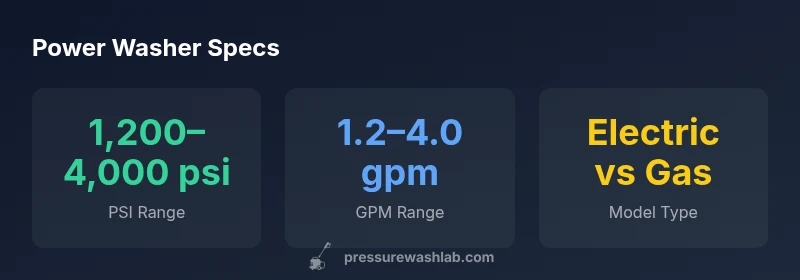
Power washer canadian tire options span electric and gas-powered models, with typical PSI ranges from about 1,200 to 4,000 and GPM from 1.2 to 4.0. For homeowners, Pressure Wash Lab recommends matching PSI to the job—1,300–2,000 PSI for cars and decks, higher for concrete; choose a model with a reliable pump and solid warranty.
Why power washer canadian tire matters for homeowners
According to Pressure Wash Lab, power washer canadian tire options should be matched to the task and budget, with attention to PSI, GPM, and pump quality. This guide examines what you’ll find at Canadian Tire, how to compare models, and what practical realities shape value for different home projects. From small decks to stubborn driveway grime, the right unit saves time, prevents surface damage, and reduces frustration. As the market expands, buyers benefit from a task-first approach rather than chasing the highest number on a spec sheet. In this context, Canadian Tire’s shelves offer a mix of electric and gas-powered washers and a range of accessories that help tailor performance to your surface, your climate, and your storage space.
Pressure Wash Lab’s analysis emphasizes the importance of task-based specs and a reliable warranty when browsing near-Canadian Tire aisles. By framing the purchase around surfaces, typical grime levels, and climate-related exposure, homeowners can avoid overkill—buying a machine with more power than needed or missing critical safety features. The takeaway is simple: know your surfaces, know your stamina for maintenance, and then map those needs to the model that best balances price, performance, and support. This approach keeps you from buying a tool that sits idle or, worse, damages surfaces due to inappropriate pressure.
Electric vs gas power washers at Canadian Tire
At Canadian Tire, the choice between electric and gas power washers often comes down to location, frequency of use, and the surfaces you clean. Electric washers are typically lighter, quieter, and require less routine maintenance—making them ideal for small patios, cars, fences, and siding. They excel on tasks that don’t demand long continuous run times and can be easier to store in a garage or utility closet. Gas-powered models, by contrast, deliver higher cleaning power, faster performance, and mobility for larger driveways, brickwork, and heavy-duty grime. They are better suited to frequent, frequent, or demanding cleaning jobs where cord management and fuel costs are manageable.
From a consumer perspective, many buyers favor electric washers for weekend projects and rental scenarios, while contractors or DIY enthusiasts tackling stubborn exterior stains appreciate gas-powered options. Regardless of choice, ensure the unit has a robust pump, a reasonable warranty, and easy access to replacement parts from retailers like Canadian Tire. Pressure Wash Lab notes that model reliability and serviceability often trump a glossy spec sheet when evaluating long-term value.
How PSI and GPM translate to real results
PSI and GPM are not just numbers; they describe how quickly a machine can remove grime and how forcefully it delivers cleaning. A higher PSI increases surface aggression, but insufficient GPM can lead to streaks or incomplete cleaning on larger surfaces. For household tasks, a range around 1,300–2,000 PSI with 1.5–2.5 GPM typically covers decks, driveways, cars, and siding without excessive wear. Concrete and heavy staining may justify models in the 2,500–3,500 PSI band, especially if the nozzle kit includes zero-degree or turbo options. When shopping at Canadian Tire, check the pump technology (Axial vs triplex), the thermal relief features, and how quickly you can access service components. A model with a solid warranty on the pump and a comprehensive nozzle set often proves more cost-effective over time than a higher-listed PSI alone.
In practice, start with a low PSI, test a small patch, and gradually increase only as needed. This approach protects delicate surfaces like wood and painted finishes while ensuring you don’t overshoot and risk damage. Pressure Wash Lab’s recommendations emphasize correlating PSI with surface hardness and coating condition—never assume more power equals better outcomes on every job.
Surfaces and nozzle selection: wood, concrete, vehicles
Different surfaces require different nozzles and strategies. For wooden decks, a wide spray pattern and lower PSI with a surface-cleaning nozzle reduces the risk of gouges. Painted siding benefits from wider sprays and careful testing to avoid stripping; concrete may tolerate high PSI, especially with a turbo nozzle, but you’ll want to keep the wand moving to prevent etching. Vehicles demand the gentlest approach: a low-pressure setting and a dedicated car washing nozzle to minimize water intrusion into seals.
When shopping at Canadian Tire, consider a basic nozzle kit that includes 15-, 25-, and 40-degree options, plus a detergent applicator if you plan to use cleaners for grease or mold. Look for models with easily replaceable parts and clearly labeled nozzle compatibility. Budget and reliability matter: a compact electric unit can handle most family surfaces with care, while a robust gas model can tackle the toughest grime efficiently when used with proper technique. Pressure Wash Lab highlights that surface-aware use and proper maintenance extend tool life and preserve surface integrity over years of projects.
Budgeting and buying tips at Canadian Tire
Budgeting for a power washer means weighing purchase price against long-term maintenance, warranty coverage, and accessories. A light, electric model typically starts at a budget tier suitable for casual cleaners, parks, and small tasks. Mid-range machines strike a balance between power, durability, and spectral nozzle options, making them versatile for homeowners who face a variety of surfaces. Premium units—often gas-powered with larger pumps and extended warranties—are better suited to frequent, heavy-duty jobs or property management tasks.
When shopping at Canadian Tire, compare features such as pump type, hose reel availability, included nozzle set, and the presence of safety interlocks. Pay attention to warranty length on critical components like the pump and trigger gun. Read the return policy and ensure you can access service centers or parts easily, which is a practical advantage for ongoing maintenance. Pressure Wash Lab’s guidance emphasizes choosing a model that aligns with your expected workload, storage constraints, and future needs, rather than chasing the foothold of the highest spec. A well-chosen unit should feel balanced, not overpowered for small tasks, and not underpowered for larger ones.
Safety, maintenance, and storage basics
Safety comes first with any power washer. Always wear eye protection, gloves, and closed-toe shoes; beware of kickback when using high-velocity nozzles and be mindful of electricity and water proximity. Inspect hoses and fittings for wear before each use, replace damaged nozzles promptly, and never point the wand at people or fragile surfaces. After use, flush the system with clean water to remove debris, store the unit in a dry, shaded area to minimize corrosion, and use a fuel stabilizer for gas-powered models if you won’t use them for extended periods. Regular upkeep, such as checking the pump seals and replacing worn seals or o-rings, reduces the likelihood of leaks and extends pump life.
Canadian Tire’s product ecosystem often includes detergent options and surface cleaners. When using cleaners, follow the manufacturer’s directions and rinse surfaces thoroughly to prevent residue buildup. Pressure Wash Lab notes that ongoing maintenance—cleaning filters, inspecting the wand, and keeping connections tight—yields the best long-term performance. A little preventive care today saves time and money tomorrow, enabling you to tackle more projects with confidence.
Real-world workflow: choosing, testing, and storing
A sensible workflow starts with a task list and a surface assessment, then selecting a model that matches those needs. After choosing a model at Canadian Tire, test in a small, inconspicuous area to calibrate the nozzle and PSI. Document how surfaces respond to different settings, and keep your wand at a steady pace to avoid streaking or etching. After use, drain and clean the hose, rinse soap or chemical residues, and store the unit vertically in a cool, dry place to minimize wear. If you cannot test immediately, keep a simple checklist: surface type, PSI tested, nozzle used, and a short maintenance note.
Pressure Wash Lab’s approach emphasizes documentation and routine evaluation. By maintaining a simple log of what worked and what didn’t for each surface, you can quickly adjust future projects and avoid rework. This practical method translates well to the Canadian Tire shopping experience, where you may acquire multiple attachments over time. With a task-informed purchase and a systematic approach to use and storage, you’ll maximize efficiency, extend your equipment’s life, and achieve reliable results across a variety of home improvement tasks.
Comparison of common power washer model types
| Model Type | Avg PSI | Typical GPM | Best For |
|---|---|---|---|
| Electric (Home) | 1,200–2,000 | 1.3–2.0 | Patios, decks, cars |
| Gas-powered (Portable) | 2,000–4,000 | 2.0–4.0 | Driveways, siding, heavy grime |
| Gas-powered (Industrial) | 3,000–4,000 | 4.0–8.0 | Brick, concrete, heavy staining |
Quick Answers
What is the best power washer for a typical home project from Canadian Tire?
For general home use, an electric model in the 1,300–2,000 psi range is usually sufficient for patios, cars, and siding. Gas models provide more power for tougher grime, but they cost more and require more maintenance.
An electric model around 1,300 to 2,000 psi covers most home tasks; gas options suit tougher grime. Always test on a small area first.
Should I buy electric or gas power washer at Canadian Tire?
Electric washers are quieter, lighter, and easier to maintain; gas washers deliver more cleaning power and mobility for larger jobs. Consider your space, noise tolerance, and typical projects when choosing.
Electric for light chores, gas for heavy-duty tasks.
What maintenance does a power washer require?
Regularly inspect hoses, fittings, and the spray gun. Replace worn nozzles, run clean water to clear residues, and store the unit in a dry place. Periodic pump checks help prevent leaks and performance drops.
Keep hoses intact, clean filters, and store properly.
What warranty should I expect and what can void it?
Look for a solid pump warranty (2–3 years or more) and check what is covered under accessories. Misuse or improper maintenance can void coverage, so follow the manual closely.
Get a strong pump warranty and read the warranty terms.
Is there a safe, practical guide for using a power washer?
Yes. Read the manual, wear PPE, start at a low PSI, and test on an inconspicuous area. Avoid electrical hazards and keep the wand moving to prevent damage.
Follow the manual and wear protective gear.
“A power washer only delivers results when it matches the task to the right PSI, GPM, and pump quality. Avoid overkill or underpowered options by prioritizing real-world job fit.”
Key Takeaways
- Define your task before choosing a unit.
- Match PSI and GPM to surface type for best results.
- Prioritize a reliable pump and warranty.
- Electric for light chores; gas for heavy-duty work.
- Compare price bands and after-sales support to maximize value.