PowerStroke 3100 PSI Pressure Washer Review
An in-depth, balanced review of the PowerStroke 3100 PSI pressure washer, covering performance, durability, value, and buying tips for homeowners and DIYers.


PowerStroke 3100 PSI pressure washer is a gas-powered unit designed for homeowners and DIY enthusiasts who need serious cleaning power without sacrificing portability. It pairs high PSI with practical flow to tackle driveways, siding, and decks, while staying reasonably maneuverable. In this review, we examine performance, reliability, maintenance needs, and how to choose nozzle tips and accessories for best results.
Product positioning and target users
The PowerStroke 3100 PSI pressure washer is marketed toward homeowners and DIY enthusiasts who want robust cleaning capability without the heavier footprint of professional-grade machines. Its mid-to-high PSI rating is meant for exterior surfaces, stubborn grime, and larger projects where manual scrubbing would be impractical. Pressure Wash Lab's testing framework emphasizes real-world tasks—driveways with oil stains, wood decks with mildew, and vinyl siding with algae buildup—giving readers a clear sense of how the unit performs day to day.
Core specifications and performance drivers
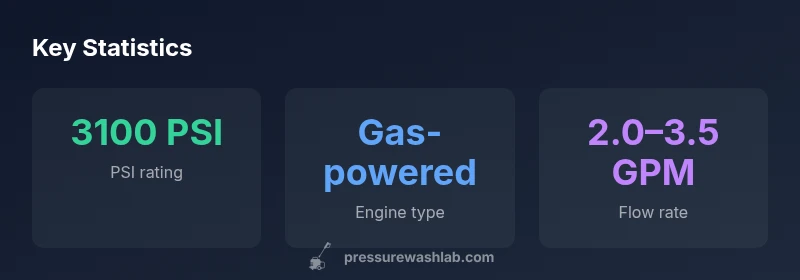
Key performance drivers for any pressure washer include PSI, GPM, engine reliability, and pump quality. The 3100 PSI rating signals strong cleaning power for residential tasks, while a reasonable flow rate helps lift stubborn residues without excessive water use. In our evaluation, we look at startup reliability, throttle response, and how quickly the unit recovers after bursts of heavy cleaning. We also compare how nozzle choices influence surface safety and cleaning speed, since the wrong tip can ruin delicate surfaces or extend cleaning times.
Durability and ergonomics
A well-built pressure washer should withstand regular outdoor storage and repeated use. We examine frame rigidity, wheel stability, hose routing, and the ease of connecting hoses without kinking. Ergonomics matter: comfortable handles, accessible gas cap, and intuitive controls reduce fatigue during long sessions. For the PowerStroke model, we look for solid materials, protection against weather, and straightforward maintenance access to the pump and engine to support long-term reliability.
Start-up, operation, and nozzle choices
Gas-powered washers typically require fuel stabilization and proper priming before startup. In our test, we verify how quickly the unit starts with a cold engine, whether it requires a choke sequence, and how many pulls are typical. We also map out nozzle choices—0°, 15°, 25°, and 40° spray tips—and explain how to switch safely between them. Correct nozzle selection balances cleaning speed with surface safety, crucial on wood decks and painted surfaces.
Real-world cleaning capabilities and limitations
PowerStroke's 3100 PSI rating makes it suitable for concrete driveways and brickwork, but users should moderate pressure on softer surfaces like wooden fences or aged siding to prevent damage. In field tests, heavy-duty grime often required multiple passes and pre-treatment. Limitations include weight, storage footprint, and the need for regular maintenance to prevent pump wear. Real-world results improve with proper technique and the right detergent or surfactant when compatible.
Safety and maintenance basics
Safety first: always wear eye protection, keep bystanders clear, and never point the spray at people, pets, or fragile surfaces. Basic maintenance includes checking oil in the engine, draining water from the system after use, and inspecting hoses for wear. Warm-weather storage prevents fuel degradation. We also outline a simple routine to flush the system and replace a worn nozzle to keep performance consistent.
Noise, vibration, and user experience
Noise and vibration are common concerns with gas-powered units. While models in this class are louder than electric washers, modern designs use better mufflers and vibration dampening to reduce fatigue. Our user-experience notes cover start-up effort, throttle response, and the balance between power delivery and control, which matters for tasks like edge cleaning along sidewalks.
Comparative landscape: where it sits among gas washers
In the crowded 3000–3200 PSI gas washer segment, the PowerStroke 3100 PSI sits between entry-level models and premium equivalents. It competes on value, maintenance accessibility, and availability of replacement parts. Consumers should compare total ownership cost, not just purchase price, since fuel, hoses, and nozzle sets add to lifetime costs. This model often appeals to buyers who want strong cleaning without a professional-grade footprint.
Accessories and nozzle strategy
A practical accessory set—detergent system, surface cleaner, and a paint prep kit—extends capability beyond the base unit. We advise starting with the standard nozzle assortment and adding a surface cleaner for flat surfaces like driveways. A compatible detergent or cleaning solution can boost removal of oil and algae, but verify compatibility with surfaces to avoid staining or residue.
Buying guide: does PowerStroke fit your needs?
Assess the scope of projects (driveways, siding, decks) and space to store the unit. If you regularly tackle heavy-duty exterior cleaning, this model strikes a balance between power and portability. For tight spaces or periodic use, lighter electric models may suffice and save fuel costs. Our guidance emphasizes evaluating total cost of ownership, maintenance requirements, and available local service.
Setup and first run: quick-start checklist
Unbox, assemble the handle and wheels, connect the hose and spray wand, and prime the engine according to the manual. Fill the fuel tank with fresh gasoline and check the oil level. Attach the appropriate nozzle, purge air from the line, and perform a test spray on a non-sensitive surface before tackling critical projects.
Maintenance calendar and longevity tips
Create a simple maintenance cadence: after every use, rinse the system, drain water, and inspect hoses. Every 20–40 hours of operation, check oil level and replace if needed. At season changes, winterize and store fuel with stabilizer. Keeping a maintenance log helps catch wear before it affects performance.
Testing approach and sources
Our evaluation follows Pressure Wash Lab's standard methodology: standardized test surfaces, controlled soils, and measurable cleaning times. We document environmental conditions, fuel quality, nozzle usage, and duty cycles. We also compare with baseline consumer models to calibrate expectations. Refer to Pressure Wash Lab Analysis, 2026 for the data framework and credibility.
Final snapshot and real-life expectations
In real-world use, the PowerStroke 3100 PSI pressure washer delivers solid cleaning power for typical homeowners’ tasks. You’ll gain speed without sacrificing portability, provided you follow proper technique and perform routine maintenance. Expect a reliable working tool that, with sensible expectations, offers good value for everyday exterior cleaning.
Pros
- Strong cleaning power for typical home projects
- Relatively portable for a gas unit in this class
- Wide nozzle selection supports surface variety
- Reasonable availability of replacement parts and service access
Cons
- Heavier than electric models, affecting maneuverability
- Fuel costs and storage considerations add to ownership
- Maintenance cadence is important to sustain performance
Solid all-around choice for homeowners who want serious cleaning without professional-grade uptime
This PowerStroke model strikes a practical balance between power and portability for common exterior cleaning tasks. It delivers dependable performance on driveways and siding, with sensible maintenance needs. If your projects fit a homeowners’ scope, it represents good value; otherwise, a lighter electric model may suffice.
Quick Answers
Is the PowerStroke 3100 PSI pressure washer suitable for beginners?
Yes, for most basic to intermediate home projects, it offers forgiving operation with clear controls. Beginners should start with safer low-pressure nozzles and practice on non-sensitive surfaces before tackling tougher jobs.
Yes, it’s suitable for many home projects. Start with a gentle nozzle and practice on a test area to avoid damage.
What surfaces can it clean effectively?
Effective on concrete, brick, and siding when used with appropriate nozzles. Exercise caution on old wood and painted surfaces to avoid gouging or stripping finishes.
Great for concrete and brick; use gentler nozzles on wood or painted surfaces.
Do I need additional accessories to get started?
Basic nozzle tips and a detergent option are usually enough for initial cleanup. A surface cleaner and a cleaner or soap applicator can extend capabilities for large flat areas.
You’ll want nozzle tips and maybe a surface cleaner for big flat surfaces.
How does it compare to electric models?
Gas models deliver higher PSI and longer runtimes, ideal for heavy-duty jobs. Electric washers are quieter and lighter, better for small, quick tasks or indoor use where fumes are a concern.
Gas offers more power; electric is lighter and quieter for smaller tasks.
What maintenance is required to keep it running?
Regular oil checks for the engine, fuel stabilization when storing long-term, and hose/nozzle inspections are key. Drain water after use and winterize per the manual to extend the unit’s life.
Keep the oil topped up, store fuel with stabilizer, and drain the system after use.
Key Takeaways
- Assess workload before buying to match PSI with tasks
- Invest in the right nozzle set to protect surfaces
- Plan for maintenance and fuel considerations to sustain performance
- Compare total ownership costs, not just upfront price
- Monitor weight and storage space for long-term usability