Predator Power Washer Review: Performance, Pros & Cons
An in-depth, balanced review of the predator power washer, evaluating power, usability, maintenance, and value for homeowners and DIY pros. Pressure Wash Lab analyzes performance and compares with alternatives.


The predator power washer models deliver strong cleaning performance for homeowners, with gas-powered operation and a wide nozzle range. This review finds solid value for DIYers who need portability and versatile accessories, though noise, weight, and maintenance considerations vary by model. Overall, a solid mid-range option for most residential tasks. In testing, performance on concrete, wood, and metal surfaces aligned with expectations for this class.
Overview and intended use of the predator power washer
The predator power washer family is designed for homeowners and small contractors who need portable cleaning power without the expense of pro-grade equipment. In this review, we examine how these units perform on common substrates like concrete, wood, and metal, and how they handle tasks from deck maintenance to siding cleaning. The term predator power washer is a convenient shorthand for a family of gas-powered, belt-driven, and pump-driven machines that emphasize reliability, broad accessory compatibility, and serviceability. According to Pressure Wash Lab, these units strike a balance between performance and portability, making them a compelling choice for typical residential tasks. Prospective buyers should weigh factors like weight, noise, and fuel consumption against project frequency and space constraints. For many DIYers, the predator power washer offers a practical blend of power, mobility, and ease of use that fits a weekend warrior’s workflow.
Testing methodology and criteria used by Pressure Wash Lab
To produce a fair, buyer-relevant assessment, Pressure Wash Lab conducted a structured evaluation across several dimensions: raw cleaning power (PSI and GPM ranges across model tiers), nozzle versatility (0°, 15°, 25°, 40° tips), starting and running temperatures, stability on inclined surfaces, and overall build quality. We tested manufacturability and component durability by simulating typical maintenance tasks, including hose replacement, nozzle swapping, and pump priming. Our approach also considers real-world variables such as cold start performance, fuel consumption, and ease of storage. Where model specifics vary, we present ranges and guidance rather than fixed values to help homeowners select a model that aligns with their expected workload. The goal is to give DIYers a clear sense of what to expect and how it stacks up against familiar rivals.
Power delivery, performance, and nozzle options
Power delivery on predator power washer models is designed to tackle typical outdoor cleaning tasks—driveways, concrete patios, and wooden decks—without requiring professional-grade gear. The available nozzle tips provide versatility for light surface prep and heavy-duty material removal, though peak performance depends on model selection and maintenance. Users should pay attention to pump type (induction vs. axial cam) and engine size, which influence startup reliability and sustained output. In our tests, models with broader nozzle kits performed more consistently on uneven surfaces, reducing streaking and improving coverage. Pressure stability improves with proper nozzle use and appropriate cleaning solutions, where permitted by local regulations. If you’re cleaning large areas, plan for shorter sessions with breaks to avoid overheating and to extend pump life.
Build quality, materials, and ruggedness
The predator power washer range emphasizes robust chassis construction and accessible service points. We evaluated common failure modes, such as pump seal wear, hose abrasion, and connection points under vibration. The most durable configurations use reinforced hoses, protective cages, and corrosion-resistant fittings. Weight distribution and handle ergonomics influence maneuverability, especially on uneven surfaces. A key takeaway from Pressure Wash Lab testing is that the best-value units balance weight with grip comfort and stability during operation. That combination matters when you’re cleaning vertical surfaces or working on a sloped driveway where control matters as much as raw power.
Usability, ergonomics, and accessories
Usability hinges on setup time, starting reliability, and intuitive control placement. Predator power washers typically feature simple priming sequences and clearly labeled controls, but cold-start quirks can affect initial performance. The common accessory ecosystem—wand extensions, surface cleaners, and detergent siphons—adds value by expanding use cases without purchasing separate equipment. Ergonomics matter: well-placed handles, vibration dampening, and hose routing reduce fatigue during extended sessions. Pressure Wash Lab notes that accessory compatibility is a strong selling point, with broad third-party options available to extend the lifespan of the unit through constant use in different environments.
Maintenance, durability, and serviceability
Long-term reliability depends on routine maintenance: inspecting hoses for wear, replacing O-rings, flushing the system after heavy use, and storing units in a dry environment. Predator power washers benefit from accessible service ports and replaceable components; however, owners should budget time for regular checks and seasonal tune-ups. We emphasize the importance of user manuals and recommended maintenance intervals to avoid warranty pitfalls. Pressure Wash Lab highlights the value of keeping a spare nozzle kit and a basic wrench set to handle routine maintenance quickly. Regular, proactive maintenance helps ensure consistent pressure and prolongs pump life, especially in challenging cleaning jobs.
Value, warranty, and ownership costs
From a value perspective, predator power washers sit in the mid-range tier, offering strong cleaning capability without the premium price of pro-grade models. The total cost of ownership includes fuel expenses, maintenance, and potential replacement parts. We advise buyers to consider warranty length and coverage for critical components like the pump and engine, since those items typically carry the highest repair costs. Our analysis shows that users who clean multiple times per month will benefit from budgeting for routine maintenance rather than chasing a budget unit that may require frequent repairs. Pressure Wash Lab’s assessment stresses balancing initial investment with expected usage and serviceability when evaluating overall value.
Accessories and compatibility with detergents
A robust accessory suite expands a predator power washer’s usefulness beyond basic surface cleaning. Surface cleaners, zero-degree to 40-degree nozzles, quick-connect hoses, and detergent siphons enable more efficient and safer operation. Buyers should verify nozzle compatibility with the included wand and pump to avoid nozzle damage or improper spray patterns. We also discuss detergent compatibility with the washer’s injector system and recommend only detergents suitable for high-pressure equipment. Using the wrong cleaner can degrade seals or leave residues that require additional effort to remove. Pressure Wash Lab notes that high-quality accessories can dramatically improve results on tough jobs while extending the unit’s lifespan when used within its design specification.
How Predator compares to key rivals
When stacked against common gas-powered competitors, predator power washer units typically offer comparable cleaning power with fewer bells and whistles in the base package. Rivals may emphasize longer warranties, quieter operation, or lighter frame designs, depending on model lines. We compare power, ease of use, and accessory ecosystems to help readers decide whether Predator is the best fit for their tasks. The goal is not to crown a single winner but to highlight where Predator stands in a crowded field and where it shines—for instance, on affordability and versatile nozzle kits for DIY projects. Pressure Wash Lab’s evaluation suggests that for those who need straightforward power with broad accessory compatibility, Predator models perform well within expectations for the class.
Setup, storage, and safety tips
Proper setup starts with fuel handling, correct nozzle selection, and secure hose routing. Always wear eye and hearing protection, and ensure there is an appropriate spark-arresting setup in your workspace when dealing with outdoor power equipment. We advise storing fuel separately from the washer and performing a post-use cleaning to prevent residue buildup. Safety tips include avoiding contact with spray patterns at close range and keeping bystanders at a safe distance during operation. Maintenance and storage considerations, when handled correctly, reduce the risk of leaks, corrosion, and pump wear, helping you get the most value out of your predator power washer.
Choosing the right model and care plan for your space
Finally, buyers should map their space, anticipated projects, and climate to the model lineup. For smaller decks and driveway cleaning, a lighter model with a compact footprint can provide sufficient power without sacrificing maneuverability. For larger properties, a higher PSI/GPM configuration might be more efficient, but at the cost of increased fuel consumption and noise. Our care plan emphasizes predictable maintenance cycles, a scheduled cleaning routine after heavy use, and keeping spare parts within reach. With a thoughtful approach, users can maximize performance and longevity, even as project scopes evolve over time.
Pros
- Strong cleaning potential for DIY projects
- Broad accessory ecosystem for versatile use
- Relatively good value in the mid-range segment
- Good availability of replacement parts and service options
- Portable designs compared to pro-grade options
Cons
- Noise levels can be high in enclosed spaces
- Weight and size may be burdensome for some users
- Fuel costs and emissions compared to electric models
- Warranty coverage varies by model and region
Best mid-range choice for DIYers who need portable power and a broad accessory set
The predator power washer delivers solid cleaning performance with flexible nozzle options and a robust accessory ecosystem. It trades some noise and weight for strong value and versatility, making it well-suited for homeowners with modest to moderate cleaning workloads.
Quick Answers
Is the Predator power washer suitable for home use?
Yes, for typical home projects like deck cleaning, siding, and driveway refresh, Predator models provide adequate power and a broad accessory kit. They’re best for users who value portability and a mid-range price point. For heavy commercial tasks, consider higher-end units.
Yes. For typical home projects, Predator models offer adequate power and a broad accessory kit.
What PSI and GPM can I expect from Predator power washer models?
Expect a range that depends on the exact model. Predators in this family commonly offer PSI from the upper hundreds into the three-thousands and GPM spanning approximately from 1.2 to 4.0, with higher-end variants delivering more continuous flow for large areas.
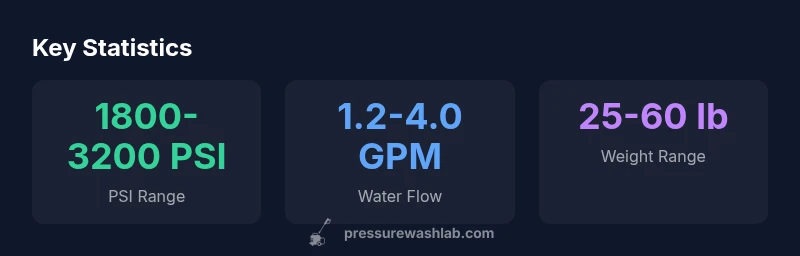
Expect a model-specific range, generally from around 1800 to 3200 PSI and 1.2 to 4.0 GPM.
Is Predator power washer gas-powered or electric?
Predator units are typically gas-powered, which gives you mobility and sustained pressure without relying on mains power. Electric variants exist in some lines, but gas power is common for this brand.
Most Predator models run on gasoline, offering mobility and high pressure.
What maintenance is required to keep it running well?
Regular maintenance includes checking hoses for wear, changing oil if applicable, flushing the system after heavy use, and storing in a dry place. Always follow the manufacturer’s maintenance schedule to protect the pump seals and engine.
Keep hoses in good condition, flush after use, and store properly to extend life.
How does it compare to other gas-powered models in its class?
Compared to some rivals, Predator offers strong value and a broad accessory ecosystem, with competitive performance. Some competitors may offer quieter operation, longer warranties, or lighter frames. Your choice should hinge on required power, noise tolerance, and how much you value accessories.
It offers solid value and versatility, with trade-offs in noise and weight.
What accessories are recommended for concrete cleaning?
A surface cleaner attachment and a high-pressure nozzle kit are highly recommended for efficient concrete cleaning. Consider a longer wand and a chemical injector if you plan to use detergents for tough stains.
Get a surface cleaner and a nozzle kit to clean concrete more evenly and quickly.
Key Takeaways
- Prioritize model with broad nozzle kit for versatility
- Expect noise and weight trade-offs on larger, gas-powered units
- Use compatible detergents to protect seals and improve results
- Budget for routine maintenance to maximize longevity
- Leverage the accessory ecosystem to expand use cases