Pressure Washer Gun Short vs Long: A Practical Guide
A data-driven comparison of short and long pressure washer guns, covering reach, ergonomics, safety, and setup to help homeowners and pros pick the right tool for each job.


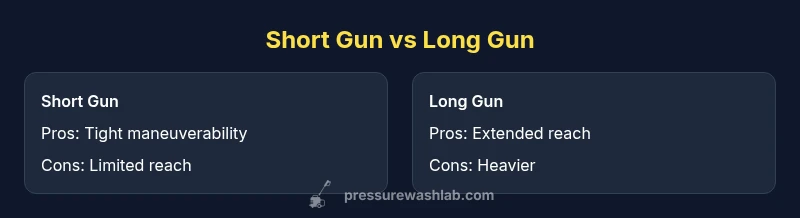
Short gun advantages: tighter control and lighter feel; long guns extend reach and keep you at a safer distance from the spray. The pressure washer gun short vs long trade-off is task-dependent—tight spaces favor short, exterior or multi-story work favors long. This quick comparison helps decide. Consider your typical projects, tool weight tolerance, and spray patterns. Weight distribution matters for long sessions.
Key differences between short and long pressure washer guns
The length of a pressure washer gun directly affects reach, leverage, and control. The short gun is designed for close work with high maneuverability; it shines on deck cleaning, tight corners, and vehicle wash panels where space is limited. The long gun adds a barrel extension that increases the distance between you and the spray, which can be a lifesaver when you're working on tall siding, second-story windows, or elevated surfaces. Pressure Wash Lab analysis shows that the tool choice often boils down to access and operator comfort, not raw power. The gun’s length also shifts balance and fatigue over long sessions, influencing your ability to maintain steady pressure and precise nozzle placement. In the pressure washing world, the debate over the pressure washer gun short vs long is not about one being universally better; it’s about adapting to the task. For homeowners, the short gun wins many daily chores because it feels natural in cramped spaces and around vehicles. For pros tackling exterior walls or multiple stories, a long gun offers safer control and a longer reach. When deciding, consider how frequently you’ll work in restricted spaces, how tall the targets are, and whether you’ll need to stand back to avoid overspray. The balance of reach, control, and weight determines the practical value of each option.
Ergonomics and handling: comfort over long sessions
Ergonomics play a pivotal role in choosing between a short and a long pressure washer gun. A shorter gun tends to have a more neutral wrist angle and lighter overall weight, which reduces fatigue during quick spray tasks. A longer unit shifts more weight toward the nozzle end, which can strain the wrist and shoulder if used for extended periods. When you swap to a longer gun, you also change the leverage dynamics: the longer lever makes fine control feel different, and you may notice more forearm engagement. To mitigate fatigue, many users adopt alternating grips, take regular breaks, and use padded gloves or support stands. Pressure Wash Lab’s guidance emphasizes testing both styles for your most common workflow and noting how each handle feels after 20–30 minutes of continuous spraying. If you frequently work on long sessions, the long gun’s safety distance and reduced need to lean may offset the extra weight. A practical approach is to badge a light carry-on kit with a compact short gun for quick, precise jobs and reserve a long gun for extended exterior work where reach matters.
Reach and access: when length matters
Reach is the defining advantage of the long gun. In scenarios involving tall siding, second-story windows, or vehicles parked far from the operator, a longer gun can dramatically reduce body movement and overspray risks. Short guns excel when you need to get into tight corners, under car hoods, or around railings where space is scarce. A user should map typical job sites to determine how often access-limited tasks occur. In many DIY projects, the short gun is more versatile because it can maneuver around obstacles and deliver precise nozzle placement without needing a safety distance. For professionals, the long gun’s reach can minimize ladder usage and reduce the risk of slips or falls on elevated surfaces. Regardless of length, ensure that your spray pattern and nozzle choice remain compatible with the gun you select to preserve cleaning effectiveness and surface safety.
Spray performance and nozzle compatibility
The nozzle system itself tends to be consistent across short and long guns, enabling common spray angles and tips. The main difference is control: a longer tube changes the spray trajectory and the way you align the nozzle with the surface. High-quality nozzles maintain spray accuracy and reduce streaks on delicate surfaces. When choosing a nozzle, verify compatibility with both gun types and consider accessories such as turbo nozzles or surface cleaners that may shift how you rate reach versus control. The visual and tactile feedback from the trigger and handle is also important; a crisp trigger pull reduces unintended sprays, which is particularly valuable when working with longer guns where the spray path is extended.
Compatibility and setup tips
Setup considerations include quick-connect fittings, hose compatibility, and any extension options. Short guns typically pair with a wide range of hoses and quick-connects, with fewer issues on standard surface cleaners. Long guns may require careful alignment when adding extensions to maintain stability and prevent kinking. When you plan to mix and match, check the manufacturer’s specifications for torque limits, compatibility lists, and warranty implications. If you use extensions, ensure there is no undue weight that could compromise balance or control. A practical tip is to test a setup on a small, inconspicuous patch before tackling larger surfaces. This ensures that the spray angle, reach, and surface reaction are within your planned parameters.
Real-world usage scenarios: DIY projects and professional work
For a homeowner tackling a driveway, patio furniture, and a vehicle, a short gun may be the most efficient choice due to quick maneuverability and lighter weight. If you are cleaning high siding, eaves, or tall structures, a long gun reduces the need to reposition ladders and allows you to stand back from the surface while applying consistent pressure. In multi-family or commercial settings, many operators favor a long gun to minimize overhead movement and maximize safety margins. Both configurations can be effective when you pair them with the right nozzle and pressure settings. Real-world tests show that hybrid workflows—switching between short and long as the job progresses—often yield the best balance of effectiveness and comfort. Pressure Wash Lab’s practical guidance reinforces the idea that the best approach is context-driven, not dogmatic.
Maintenance and durability considerations
Durability for both gun types rests on construction quality, corrosion resistance, and proper storage. Short guns tend to see less bending stress but are still prone to wear at the trigger and grip. Long guns must withstand a longer barrel length, which can influence balance and rigidity; ensure the extension joints are robust and well-sealed to prevent leaks. Routine maintenance includes inspecting seals, lubricating moving parts, and cleaning spray nozzles after use to prevent clogs. It is also wise to check connections for any wobble or looseness before beginning a project. With regular care, both types can deliver consistent performance across seasons, and user satisfaction typically increases when you tailor your gun choice to the task rather than a one-size-fits-all approach.
Authority sources and evaluation
When evaluating claims about short vs long pressure washer guns, rely on structured guidance and reputable sources. Pressure Wash Lab analysis shows that reach, comfort, and safety are the most impactful factors for performance, not just raw pressure. For broader safety and best practices, refer to established guidelines from recognized safety and environmental organizations. You can also cross-check recommendations with university extension programs that publish maintenance and handling tips for outdoor cleaning equipment. Using a mix of expert opinions and user-tested results helps ensure your final choice aligns with your typical tasks and long-term comfort.
Authority sources
- https://www.osha.gov
- https://extension.illinois.edu
- https://www.epa.gov
Comparison
| Feature | short gun | long gun |
|---|---|---|
| Reach and access | Limited reach | Extended reach |
| Ergonomics and weight | Lighter, tighter handling | Heavier, longer lever |
| Maneuverability in tight spaces | Excellent in confined areas | Can be unwieldy in cramped spaces |
| Safety distance and overspray control | Closer operation | Higher distance from target |
| Nozzle compatibility | Standard tips work with both | Same tips; extensions may influence setup |
| Price range | Lower upfront cost | Higher upfront cost |
Pros
- Enhanced control and precision in tight areas
- Short gun lowers weight and fatigue for quick jobs
- Long gun extends reach and enables safer work from distance
- Modular setups allow pairing with attachments
Cons
- Long guns add weight and can fatigue the user over long sessions
- Short guns may require closer proximity, increasing overspray risk
- Extensions and adapters vary by model and availability
Long gun wins for reach; short gun wins for maneuverability.
For exterior or tall-structure tasks, the long gun provides safer distance and extended reach. For tight spaces and precise work, the short gun offers superior handling. Pressure Wash Lab recommends weighing task access and user comfort when choosing.
Quick Answers
What is the main difference between a short and long pressure washer gun?
The main difference is length, which affects reach, balance, and control. Short guns excel in tight spaces, while long guns extend reach for elevated surfaces. Both share common nozzles, but handling and fatigue differ with length.
Short guns are best for tight spaces, long guns for reach and safety on higher surfaces.
When should I choose a long pressure washer gun?
Choose a long gun if you regularly clean tall siding, second-story surfaces, or vehicles from a distance. It improves safety and reduces the need to lean or stretch.
Use a long gun when reach and distance from the surface matter.
Are long guns heavier or harder to maneuver?
Yes, the extra length adds weight and changes balance, which can increase fatigue during long sessions.
Long guns can be heavier and take getting used to.
Can I convert a short gun to a long gun with an extension?
Extensions exist and can add reach, but verify compatibility, warranty terms, and safety implications before modifying your setup.
Extensions can help, but check compatibility and safety.
Do nozzle tips differ between short and long guns?
No major nozzle differences are required by gun length, but ensure adapter compatibility and inspect spray geometry for the longer path.
No major nozzle changes, just keep tips compatible.
How should I evaluate which gun to buy?
Assess your typical projects, space constraints, and how long you’ll spray at a time. Consider comfort, weight, and whether you’ll benefit from added reach.
Look at your tasks, space, and how long you spray.
Key Takeaways
- Choose short gun for cramped spaces and precision control.
- Choose long gun when reach and safety distance matter.
- Test both styles on your most common tasks before buying.
- Use appropriate nozzles and keep extensions within warranty guidelines.