Pressure Washer Hose Comparison: Best Hoses for 2026
A thorough pressure washer hose comparison guiding homeowners and DIYers through materials, fittings, length, and durability to optimize performance and safety in 2026.


Choosing the right pressure washer hose is less about top brands and more about matching material, fittings, and length to your cleaning tasks. In a pressure washer hose comparison, the best option balances durability, flexibility, and value: reinforced polyurethane or rubber hoses typically win for DIY use, while braided stainless steel hoses excel for frequent, heavy-duty work. Always verify PSI rating and quick-connect compatibility before buying.
Why a Quality Hose Matters for Pressure Washing
A high-quality pressure washer hose is one of the most overlooked yet essential components of a successful cleaning setup. The hose directly influences cleaning efficiency, safety, and machine longevity. A poor hose can kink, burst, or fail under pressure, forcing you to replace it sooner and potentially causing damage to the pump, fittings, or your property. In this pressure washer hose comparison, we examine hose materials, construction, and fittings to help homeowners and DIY enthusiasts select a hose that minimizes downtime and maximizes results. According to Pressure Wash Lab, material choice and connection quality are the two most influential factors in hose durability and performance, especially for consumer-grade machines.
When you’re weighing options, think about the most common tasks you’ll tackle, the PSI your machine delivers, and how the hose will be stored and handled after use. A hose that stays flexible in winter, resists kinking during door-frame access, and snaps quickly onto your nozzle will save time and reduce wear on the system over years of use. This section lays the groundwork for understanding how different hose types behave in real-world conditions.
Pressure washer hose comparison is not just about price; it’s about value over the life of the tool. A slightly higher upfront cost for a durable hose often pays off in fewer replacements, fewer leaks, and more dependable performance in unpredictable weather. For DIYers who clean driveways, siding, and cars, the right hose translates to cleaner results with less effort and downtime.
format':'markdown'
wordCount":161},
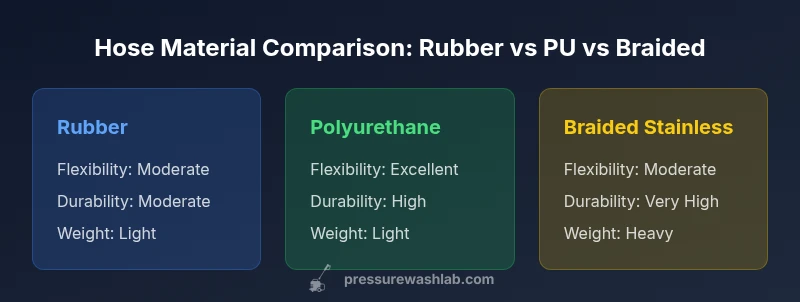
Feature Comparison
| Feature | Rubber Hose | Polyurethane Hose | PVC Hose | Braided Stainless Steel Hose |
|---|---|---|---|---|
| Flexibility | Moderate | Excellent | Good | Excellent |
| Durability under high PSI | Moderate | High | Low to Moderate | Very High |
| Weight | Light to Moderate | Light | Light | Heavy |
| Cost Range | Low | Medium | Low to Medium | High |
| Best For | Budget DIY | Frequent use/long life | Occasional use | Heavy-duty pro |
Pros
- Better durability and fatigue resistance under high PSI
- Improved kink resistance and flexibility
- Longer service life with proper maintenance
- Wider temperature tolerance
- Compatibility with common quick-connect fittings
Cons
- Higher upfront cost vs. basic rubber hoses
- Heavier hoses can be tiring to handle over long sessions
- Stiffer materials in very cold weather may hinder flexibility
- Longer hoses can reduce pressure at the nozzle
Balanced hoses offer the best all-around value for most homeowners.
For typical home projects, reinforced polyurethane or high-quality rubber hoses strike the best balance between flexibility, durability, and cost. Braided stainless steel is ideal for heavy, frequent use, but comes with a higher price. Choose based on your cleaning frequency and PSI needs.
Quick Answers
What is the main difference between rubber and polyurethane hoses?
Rubber hoses are typically cheaper and heavier, with decent flexibility but can kink and wear over time. Polyurethane hoses are lighter, more flexible, and resistant to kinks, making them a better choice for frequent use.
Rubber hoses are usually cheaper but heavier and can kink, while polyurethane hoses are lighter, more flexible, and resist kinks better.
Is a braided stainless steel hose worth the extra cost?
For high-frequency, high-PSI tasks, braided stainless steel offers exceptional durability and longevity, especially if you handle longer, aggressive cleaning sessions. For casual home use, polyurethane or rubber usually suffices.
Braided hoses last longer under heavy use, but for home tasks, PU or rubber often works fine.
What length should I choose for typical home use?
A 25-50 foot hose usually provides enough reach for most home projects while staying manageable in weight and pressure. Longer hoses add weight and may reduce nozzle pressure if the pump is not powerful enough.
Most homes do well with 25 to 50 feet; longer hoses can weigh you down and affect pressure if the setup isn’t strong enough.
Are there safety concerns with high-pressure hoses?
Yes. High-pressure hoses can injure if misused. Inspect for damage, replace worn sections, and avoid whipping the hose around people or delicate surfaces.
Yes, be careful—check for wear and avoid pointing at people or fragile objects.
How do I extend hose life?
Store properly, avoid sharp kinks, clean the hose ends after use, and use compatible fittings. Regular inspection for wear at fittings and along the length helps catch problems early.
Take care of it by avoiding kinks and storing it properly; check fittings often.
Can I reuse old hoses with new equipment?
Yes if the fittings match and the hose’s PSI rating is compatible with your machine. If ratings don’t align, replace the hose to prevent leaks or bursts.
Only reuse if the ends fit and the rating matches your washer.
Key Takeaways
- Prioritize flexibility and durability for long-term value
- Match hose PSI rating to your pressure washer’s output
- Opt for 25–50 ft lengths to balance reach and manageability
- Check fittings and quick-connect compatibility before buying
- Consider polyurethane for a blend of light weight and strength
- Invest in a hose designed for the climate you operate in